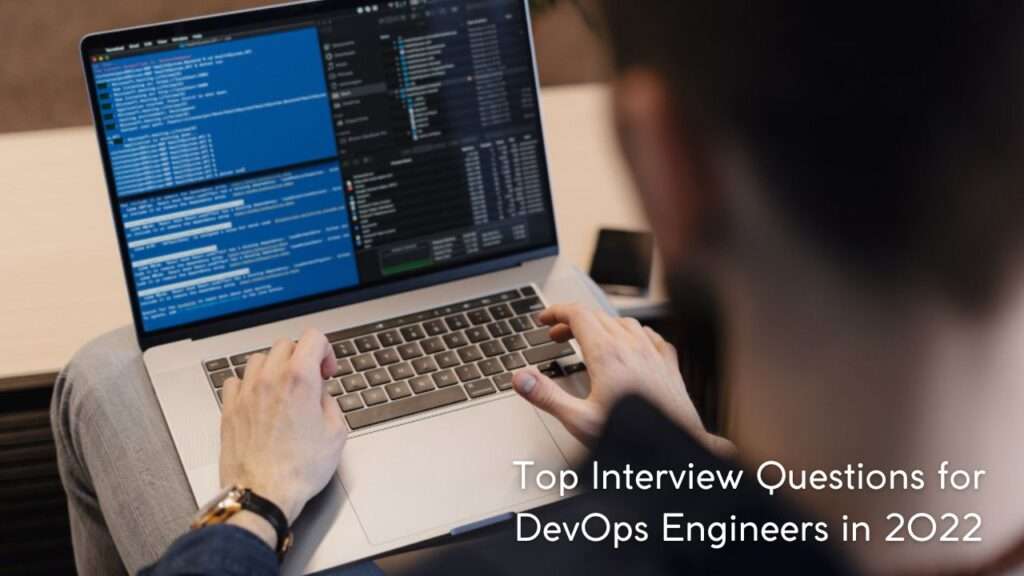
Top Interview Questions for DevOps Engineers in 2022
We had a little chat with our top IT Professional Mentors. They had some insights on the Top Interview Questions for DevOps Professionals. They conduct DevOps Training in Pune with Ethans Tech. Read on to know more about what kind of questions are asked in the technical interview. What is DevOps? In simple language, DevOps is a set of practices that combines software development and IT operations. This means it is a perfect blend of Development & Operations. It aims to shorten the system’s development life cycle and also provide continuous delivery with high software quality. DevOps is complementary to Agile software development. Several DevOps concepts have come from the Agile methodology. If you are someone who is looking forward to a wonderful career, Ethans Tech provides a DevOps course with placement in Pune. You can book a free session to gain in-depth knowledge about DevOps. Here are some top interview questions for DevOps Engineer [These questions are for beginner and intermediate level candidates] What do you think is the role of a DevOps Engineer? A DevOps engineer works with IT staff and software developers to ensure smooth code releases. In other words, DevOps engineers understand the Software Development Lifecycle and the automation tools used in CD/CI pipelines. DevOps is extremely beneficial in achieving frequent deployment deployments, quick bug fixes, quick release failure recovery, and much more. Because of its numerous advantages, most multinational corporations have adopted this methodology to improve organizational performance. Why is SSH used? SSH, which stands for Secure Shell, is an administrative protocol that allows users to access and control remote servers over the Internet via the command line. SSH is a secure encrypted version of Telnet, which was previously unencrypted and insecure. This ensured that communications with the remote server were encrypted. SSH also includes mechanisms for remote user authentication, input communication between the client and the host, and output delivery back to the client. What do you understand by Configuration Management? Configuration management (CM) is essentially the practice of handling changes in such a way that the system does not lose its integrity over time. This includes policies, techniques, procedures, and tools for evaluating, managing, and tracking change proposals, as well as maintaining appropriate documentation. CM contributes administrative and technical guidance to the appreciation’s design and development. Describe the different phases in DevOps DevOps Plan – In the very beginning, a plan for the type of application that needs to be developed should be created. Having a general idea of the development process is always a good idea. Code – The coding of the application is done to meet the requirements of the end user. Build – We then create the application by combining the various codes developed in the previous steps. The most important step in the development of an application is testing. If necessary, test the application and rebuild it. Integrate – Multiple codes from various programmers are combined into one. Deploy – The code is placed in a cloud environment for later use. It is ensured that any new changes do not interfere with the operation of a high-traffic website. If necessary, operations are performed on the code. Monitor- Application performance is monitored. Changes are finally made to meet the requirements of the end-user What is the full form of CAMS? What does it represent? CAMS stands for Culture, Automation, Measurement, and Sharing. It embodies the essence of DevOps. What is CI and why is it useful? Continuous Integration (CI) is the process of compiling the entire code base into the shared source code repository every time a member of the software development team checks the code. If a team member checks in a bugged code file, the build is broken. Other developers cannot synchronize the shared source code repository in this case without introducing compilation errors into their local workspaces. As a result, collaborative and shared software development is doomed. When a CI build fails, the issue must be resolved as soon as possible. A CI process frequently includes a suite of unit, integration, and regression tests that are executed whenever the compilation succeeds. If the tests fail, we consider the build unstable, and not broken. These were some of the questions that will help you get a better understanding of the type of questions to come. You can enroll with us to gain a deeper understanding. Ethans is one of the best DevOps Training Institutes in Baner and Kharadi. At Ethans Tech, you learn from the experts. Make sure to give us a call at +9195133 92223 to get proper guidance on Interview Preparation for DevOps Technology.