How to Improve Data Science Skills?

Improve Data Science Skills | Ethan's Tech

Data Science Skills – Overview As the demand for data scientists increases, the area offers an engaging profession direction for students and existing professionals. This consists of people who aren’t data scientists however are passionate about data and data science, which has left them asking about what data science skills and huge data skills are had to pursue careers in data science. Data science requires a numerous set of skills. It is an interdisciplinary area that attracts on components of science, math, computer science, enterprise and communication. Data scientists might also additionally advantage from a numerous skill-set that allows them to both crunch the numbers and successfully impact decisions. Top 6 Skills Required to Master Data Science in 2021 The area of data science comes with a steep learning curve. Data scientists want to master essential programming languages and statistical computations, in addition to strong communication and interpersonal skills. Aside from a strong basis in mathematics and statistics, data scientists want to be literate in sophisticated statistical modeling software program and feature a stable knowledge and understanding of programming. Skills required to master Data Science in 2021 are as follows: 1. Python Coding Python is the most common coding language I generally see required in data science roles, together with Java, Perl, or C/C++. Python is a splendid programming language for data scientists. This is why 40 percentage of respondents surveyed by O’Reilly use Python as their fundamental programming language. Because of its versatility, you could use Python for almost all of the steps concerned in data science processes. It can take numerous formats of data and you could effortlessly import SQL tables into your code. It permits you to create datasets and you may actually locate any sort of dataset you want on Google. 2. SQL Database/Coding SQL (structured query language) is a programming language that permit you to to perform operations like add, delete and extract data from a database. It can also assist you to perform analytical functions and rework database structures. You want to be proficient in SQL as a data scientist. This is due to the fact SQL is particularly designed that will help you access, talk and work on data. It gives you insights while you operate it to question a database. It has concise instructions that permit you to to save time and reduce the quantity of programming you want to carry out tough queries. Learning SQL will assist you to higher recognize relational databases and improve your profile as a data scientist. 3. Machine Learning and AI A massive variety of data scientists aren’t proficient in machine learning regions and techniques. This consists of neural networks, reinforcement learning, adversarial learning, etc. If you need to stand out from other data scientists, you want to realize Machine learning techniques which include supervised machine learning, decision trees, logistic regression etc. These abilities will assist you to solve different data science issues which are based on predictions of essential organizational outcomes. Data science desires the application of abilities in different regions of machine learning. Kaggle, in one of its surveys, discovered that a small percent of data experts are capable in superior machine learning abilities including Supervised machine learning, Unsupervised machine learning, Time series, Natural language processing, Outlier detection, Computer vision, Recommendation engines, Survival analysis, Reinforcement learning, and Adversarial learning. 4. Data Visualization The business world produces a massive quantity of data frequently. This data desires to be translated right into a layout in order to be easy to comprehend. People certainly recognize pictures in sorts of charts and graphs more than raw data. An idiom says “A picture is really well worth a thousand words”. As a data scientist, you ought to be capable of visualize data with the resource of data visualization tools inclusive of ggplot, d3.js and Matplottlib, and Tableau. These tools will assist you to transform complex outcomes out of your projects to a layout in order to be easy to comprehend. The factor is, plenty of people do not understand serial correlation or p values.  You want to reveal them visually what the ones terms represent to your outcomes. 5. Unstructured Data It is crucial that a data scientist be capable of work with unstructured data. Unstructured data are undefined content that doesn’t suit into database tables. Examples consist of videos, blog posts, client reviews, social media posts, video feeds, audio etc.  They are heavy texts lumped together. Sorting these form of data is tough due to the fact they’re now no longer streamlined. Most people mentioned unstructured data as ‘dark analytics” due to its complexity. Working with unstructured data lets you resolve insights that may be beneficial for decision making. As a data scientist, you ought to have the ability to recognize and manage unstructured data from different platforms. 6. Deep Learning It is a sophisticated form of Machine Learning. Nowadays, each company is deploying Deep Learning models because it possesses the ability to solve obstacles of traditional Machine Learning approaches. Other skills for Data Scientist jobs consist of basics of Neural Networks, the library used for developing Deep Learning fashions like Tensorflow or Keras, and the way Convolutional Neural Networks, Recurrent Neural Networks, and RBM and Autoencoders work.  7 Ways to Improve Your Data Science Skill Data Science is one of the most up to date jobs in the tech industry and a totally beneficial profession choice for individuals who need to step into the sector of Big Data. A data scientist is anticipated to be a ‘jack of all trades,’ be continuously learning, and evolving in their craft. Data scientists use numbers and statistics to make real-world selections and translate business requirements.  It’s clear there’s a large demand for experts however the problem is finding them. If you’re looking to enhance your data scientist skills and stick out from the competition, here is your roadmap to getting better fast. 1. Take an Online Data Science Course The current education system in India could be very different, … Read more

Is AWS a Good Career Option?

Is AWS a Good Career Option | Ethan's Tech

A Career in AWS Amazon Web Service (AWS) is always a great preference for enhancing your career paths as it is constantly a dynamic approach and seems like very much highlighted in amazon.com as up developing business unit to the whole world or globally. AWS has been starting their business on particularly in clouding from 2006 onwards, at that point it genuinely provided right require infrastructure platform into the cloud for a number of the organizations of different size. As AWS is especially supporting for the power of a computer, massive storage system, and other network or hardware associated vital services very easily and low cost in a cloud, it automatically popular to an entire essential organization. Now considering present day IT market, the usage of AWS is growing very well daily and plenty of small or large organizations are already focused to begin or move their very own enterprise whole in AWS for a better option. So it is automatically impacting in the Job market, professional people on AWS will constantly be highlighted in the current job market. Scope of AWS Professionals Amazon Web Services (AWS) certifications will open the golden door to many highest-paying jobs. So, If you’re an AWS certified, out there are numerous numbers of sought-after job possibilities which are to be had for you. Let’s have a examine the top eight AWS jobs that you may fetch together with an AWS certification. Operational Support Engineer Cloud Software Engineer System Integrator — Cloud Cloud Developer DevOps Engineer AWS Solutions Architect AWS SysOps Administrator Senior AWS Cloud Architect Here’s a listing of a number of the most captivating AWS facts and AWS stats. AWS Total Users- Amazon Web Services has more than 1 million energetic users. According to diverse consulting firms, enterprise-scale clients make up approximately 10 percentage of AWS users, and the rest are small and medium-sized businesses. AWS Services- AWS gives 175 fully-practical offerings through a dynamic ecosystem, permitting customers to set up application workloads with millisecond latency in only one click. AWS Partner Network- Most Fortune 500 organizations and over 90 percentage of the Fortune 100 companies leverage the APN (AWS Partner Network) to expand offerings and solutions for customers. Some of the world’s largest brands including Facebook, Netflix, Adobe, and BBC depend upon it to fuel their top projects. AWS Marketplace- The AWS Marketplace gives a virtual catalog offering 7,000+ data products and software program listings. The Marketplace allows data vendors and dealers to curate applicable third-party data products and software program by incorporating the virtual catalog into internet properties. A Wide Array of Databases- Amazon Web Services gives a huge variety of fifteen purpose-constructed databases. Amazon’s optimized database offerings supply advanced performance, availability, and scalability, making sure high-quality guide for demanding workloads. AWS Shares in the Market Amazon Web Services revenue of $13.5 billion for Q1 2021 – which surpassed analyst predictions of $13.1 billion. This is in comparison to $10.33 billion for Q1 2020. AWS revenue grew 32% in the quarter, accelerating from 28% increase in the fourth quarter. This quarter, AWS’s revenue accounted for 12% of Amazon’s overall revenue – and almost 47% of Amazon’s overall operating income. AWS keeps to strengthen the organization as an entire with its profitability. Source 7 Reasons to Choose Career in AWS Career in AWS is constantly be the great preference for selecting cloud environment in appealing cost with maximum iconic features. Amazon web service (AWS) is manifestly one of the main vendors of clouding environment, there has no doubt on the same. AWS certification is likewise a completely precious and highlighted certification presently in the IT industry. These certificates will offer one clear identity to the company that it immediately proven from an expert professional of AWS platform and as properly as it will open a key door for other company in IT industries. Whether you’re inclined to be a developer, administrator, architect, database administrator, or maybe enhancing profession in analytics component on massive data normal data, AWS continually be an excellent profession path to choose.  Here are a few benefits of AWS as a career: 1. Payment Per Use Out of the numerous top benefits of AWS, its aspect of cost-adequacy is a high-quality one. It forms no distinction in the occasion which you are a private organization that simply started out or you’re a usually present massive establishment, Amazon Web Services allows every one in all its customers to keep and set aside their cash through giving the choice of selecting just those administrations that one can be desiring after which procuring the ones as it were. A specifically affordable estimating approach is extremely prudent for the busines. 2. Far Reaching Switching among at the factor gathering to the particular cloud is easy amidst AWS due to the obligation they brought in making plans plus tutoring. Such a cloud substation offers a superb deal of information over its site. In addition, AWS comes with a Partner Network, which includes ace business about customers building, designer, create, lead, moreover control their positions nearby plus statements upon AWS. 3. Security Protecting one’s company from attainable data spills which includes a few vulnerability regarding hacking is of unequalled significance to AWS. Having astoundingly severe plus unsurprising protection rehearses from the complete way across the world. Expert centers are set up all day long non-stop amidst a organized protection gathering, plus outstandingly restricted permission is permitted beyond it. 4. Flexibility It doesn’t depend whether or not that is the preliminary occasion of an individual operating in the cloud or moving from a distinct cloud association stage, AWS contains all sources you require in remodeling the IT structure. Given a plan serves in figuring sources upward or downward, implying your organization doesn’t want to cope with any challenge while the amount creates a few problem or on the hour of necessity keeps advancing. An individual want not cause any stupid concerns or area assets into few sound assessments to benefit functionality the various requirements of … Read more

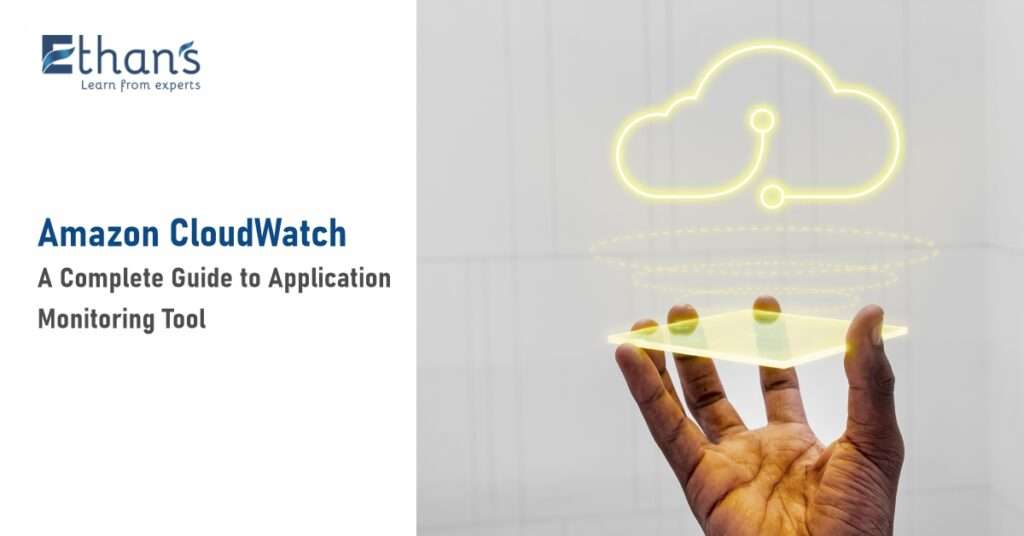
Amazon CloudWatch: A Complete Guide to Application Monitoring Tool

Amazon CloudWatch: A Complete Guide to Application Monitoring Tool

What is Amazon CloudWatch? Amazon CloudWatch is built for DevOps developers, engineers, site reliability engineers, and IT managers. It’s a service built for monitoring and observability. CloudWatch can monitor applications, respond to changes in system-wide performance, optimize utilization of resources, and give a unified operational health view. Data in monitoring and operations is collected by CloudWatch in logs, events, and metrics form. A unified view is provided of applications, AWS resources, and services that run on on-premises and AWS servers. Amazon CloudWatch: How Does It Work? CloudWatch collects data in monitoring and operations in logs, events, and metrics form. It visualizes using automated dashboards to have unified views of applications, AWS resources, and services, which run on on-premises and AWS servers. You can correlate metrics and logs for a better understanding of health and resource performance. Also, you can give specific metric value-based thresholds to create alarms or use machine learning algorithms that watch for anomalous metric behaviour. You can set automated actions to receive quick notifications if the alarm is activated which automatically starts auto-scaling. You can also analyse your logs, traces, and metrics to get a better understanding of improving application performance. Amazon CloudWatch: Uses  1. Troubleshooting & Monitoring Infrastructure Metrics and logs are monitored, visualized stacks of application and infrastructure, creates alarms, and correlates metrics and logs for understanding and resolving the AWS resources performance issues. This includes container ecosystem monitoring across AWS Fargate, Amazon ECS, Kubernetes, and Amazon EKS. 2. Improvement on Mean-time-to-resolution CloudWatch helps you to visualize, analyse, and correlate metrics and logs, which helps you act quickly in resolving issues and uses trace data to combine them from AWS X-Ray for continuous observability. Also, you can analyse requests from users to speed up debugging and troubleshooting, which overall reduces mean-time-to-resolution. 3. Proactive Resource Optimization In CloudWatch alarms, you can either specify the metric values thresholds or create using models of machine learning which detect anomalous behaviour. CloudWatch takes action automatically if the alarm is triggered to allow Amazon EC2 Auto Scaling, so capacity and resource planning can be automated. 4. Application Monitoring AWS or on-premises run applications can be monitored. CloudWatch collects every layer of data from the performance stack, which includes automatic dashboards having metrics and logs. 5. Log Analytics Explore, visualize, and analyse your logs to improve the performance of applications and address operational issues. Operational issues can be addressed effectively and quickly by performing queries. If there’s an issue, you can immediately start querying by using a query language that is purpose-built to identify potential causes rapidly. Amazon CloudWatch: Features CloudWatch gives actionable insights which will help you optimize the performance of the application, manage utilization of resources, and understand operational health system-wide. CloudWatch provides about 1-second of visibility of metrics and logs data, data retention from 15 months, and the ability to perform metrics calculations. 1. Collect Logs can be collected and stored easily: In CloudWatch, you can collect and store logs from applications, resources, and services in real-time. There are three log categories: Vended logs, AWS publishes logs, and custom logs. Built-in Metrics: CloudWatch permits you to collect metrics in default from 70 plus AWS services like Amazon DynamoDB, Amazon EC2, Amazon S3, AWS Lambda, Amazon API Gateway, and Amazon ECS without any action from your side. Custom Metrics: CloudWatch allows custom metric collection from applications of your own to troubleshoot issues, monitor operational performance, and spot trends. Curated metrics collection and aggregation and container ecosystem container logs are simplified by container insights. Container Metric & Logs: Curated metrics collection and aggregation and ecosystem logs are simplified by Container Insights. Compute performance metrics like CPU, network, disk information, and memory are collected from each container and generates custom metrics automatically used for alarming and monitoring. Lambda Metrics & Logs: CloudWatch Lambda Insights eases curated metrics and logs collection and aggregation from functions of AWS Lambda. Compute performance metrics like CPU, network, and memory are collected as performance events from each function of Lambda, while custom metrics are automatically generated and used for alarming and monitoring. 2. Monitor The operational view is unified with dashboards: With dashboards, you’ll be able to make reusable graphs and have a visual view of your cloud applications and resources in a unified manner. Metrics and logs data can be graphed in single dashboards, side-by-side to get context quickly, and from diagnosing problems, go to the root cause. Composite alarms: Composite alarms allow multiple alarm combinations and reduce alarm noise. If several resources are affected due to an application issue, the entire application will receive an alarm notification instead of each affected service resource or component receiving one. High-resolution alarms: Amazon CloudWatch alarms let you set a metrics threshold and trigger an action. High-resolution alarms can be created, percentiles can be set as a statistic and specify either an action or ignored as appropriate. For example, Amazon EC2 can create alarms, sets notifications, and takes actions to discover and shut down underutilized or unused instances on Amazon EC2 metrics. Metrics and logs correlation: Infrastructure and application resources generate lots of monitoring and operational data in metrics and logs form. In addition to the ability to visualize and access data sets on a single platform, correlating metrics and logs becomes easy on Amazon CloudWatch. Application insights: Application Insights provides an observable automated setup for enterprise applications for you to get visibility of the application’s health. It helps in identifying and setting up key logs and metrics across the stack of resources and technology of application i.e., web and application servers, database, operating system, queues, balancers, etc. Container insights: Container insights in CloudWatch provide automatic dashboards. These dashboards summarize errors, compute performance, and alarms by pod/task, cluster, and service. Lambda Insights: Lambda insights provide dashboards that are automatic in the console. The compute errors and performance are summarized with these dashboards. Anomaly Detection: Anomaly Detection applies algorithms related to machine learning to analyse metric data continuously and anomalous behaviour can be identified. ServiceLens: You can use … Read more

Python vs Java

Python-vs-Java

Introduction  Python and Java are two of the most popular programming languages used today. Python is a high-level programming language that emphasizes code readability and simplicity, while Java is an object-oriented language known for its speed and scalability. Choosing the right programming language is crucial for any developer, as it can impact the efficiency and success of a project. Python is a versatile language that is commonly used in fields such as data science, machine learning, and web development. It is easy to learn and has a large community of developers who contribute to its libraries and frameworks. Java, on the other hand, is widely used in enterprise applications, mobile development, and game development. It is a powerful language with strong security features and is ideal for building large-scale applications. Choosing the right programming language ultimately depends on the specific needs and requirements of a project. Factors such as the scope of the project, the target audience, and the available resources should be considered when making a decision. By choosing the right language, developers can create efficient, scalable, and successful applications. About Python Python is a user-friendly, interpreted programming language that has gained immense popularity since its creation in 1991 by Guido van Rossum. Its key features include simplicity, readability, and a vast library of pre-built modules.  Python is versatile, and it is utilized in a variety of fields such as web development, artificial intelligence, and data science. With the rise of big data and the Internet of Things, the future scope for Python is promising.  The language’s open-source nature and the large community of developers are continuously working to improve and expand its functionality. Python’s increasing use and adoption demonstrates its immense potential and value to the programming community. About Java Java is an object-oriented programming language created by James Gosling at Sun Microsystems in 1995. It is popular due to its speed, security, and scalability features, which make it an excellent choice for building enterprise applications, mobile development, and game development. Java’s key features include its “write once, run anywhere” feature, which allows developers to write code on one platform and run it on any other platform without modification. It also has a vast array of libraries and frameworks available, making it a popular choice for developers of all levels. While Java has a reputation for being difficult to learn, its syntax is similar to that of other programming languages, and it is designed to be intuitive and easy to use. With the right resources and dedication, anyone can learn to code in Java. Comparison between Python & Java  Python and Java are two of the most popular programming languages used by developers today. Each language has its unique strengths and weaknesses, making them better suited for certain tasks and applications.  In this comparison, we’ll examine some key factors that differentiate the two languages. Speed: Java is generally faster than Python due to its Just-In-Time (JIT) compiler, which translates code into machine language at runtime. Python, on the other hand, is interpreted, which can lead to slower performance. Legacy: Java has a long history and is more established in the enterprise space, making it a popular choice for large-scale applications. Python, on the other hand, is newer and has gained popularity in the data science and machine learning communities. Code: Python’s syntax is simple and easy to read, making it a favorite among beginners. Java’s syntax is more complex and requires more lines of code to accomplish the same task. Popularity: Both languages are widely used, with Java being more popular in enterprise applications and Python being more popular in data science and machine learning. Practical Agility: Python’s ease of use and a vast array of libraries and frameworks make it highly versatile and adaptable. Java’s robustness and stability make it a solid choice for building enterprise applications. Syntax: Python uses whitespace to delimit code blocks, while Java uses curly braces. This can make Python code easier to read, but also more susceptible to errors caused by indentation. Salary: Both Python and Java developers are in high demand, with competitive salaries in the tech industry. Whitespace: While Python’s whitespace can make code more readable, it can also lead to errors caused by inconsistent indentation. Performance: Java’s JIT compiler makes it faster than Python in most cases, but Python’s ease of use and a vast array of libraries and frameworks make it a popular choice for data science and machine learning applications. Overall, the choice between Python and Java depends on the specific needs of the project and the preferences of the developer. Uses and Applications of Java VS Python in diverse fields  Java and Python are both widely used programming languages in various fields. In game development, Java is preferred for mobile games, while Python is used for scripting and prototyping. For machine learning, Python is a popular choice due to its simplicity and a vast library of frameworks.  In contrast, Java is less popular for machine learning due to its complexity and limited library. Both languages are commonly used for web development, with Java being preferred for enterprise-level applications and Python for smaller-scale applications.  For data science, Python is the most popular language due to its simplicity and extensive libraries. Java is also used for data science, but its popularity is limited due to the lack of libraries and complexity. In summary, Python is preferred for simplicity and ease of use, while Java is preferred for performance and enterprise-level applications. Java vs Python: Comparison Table To better understand the differences and comparisons between these two programming languages, down below is a concise comparison table. Parameter  Python Java 1.             Syntax Easy to read and understand, Concise Difficult to read and remember, Complex 2.            Performance Slower Faster 3.            Type of Language Interpreted language Compiled language 4.            Typing Dynamically-typed Statically-typed 5.            Line of Code Less line of code More line of code 6.            Learning curve Easy to learn Difficult to learn 7.            Used best for Machine … Read more

15 Must-Have Skills to Become a Data Scientist

15 Must-Have Skills to Become a Data Scientist

Data Scientist Skills – Overview Data science is a niche field that is steadily growing in popularity and demand. With India set to become the world’s analytics hub, many students are pursuing education and careers in data science. Even professionals from other streams are taking up data science to switch or boost their careers. However, data science is a different subject compared to conventional education. Therefore, you need to have certain skills to do well in this subject. You may possess some of these skills naturally, but even if you don’t, you can work on them and develop yourself into an ideal candidate for data science. The right skills can ensure that you thrive in your education and career, and take advantage of one of the fastest-growing industries in India. Required Educational Qualifications to Become a Data Scientist To become a data scientist, you need formal education in this subject. Right now, many students are opting for data science, but many government universities and institutes still don’t have good data science courses. This sphere is dominated by private institutes that have strong data science certificate, diploma, and degree courses. Once you finish your data science training in Pune at a reputed educational institute, you can pursue a career as a data scientist. Important Skills Required for Data Scientists? Data scientists are one of the most important and highest-paying progressions of the digital age. Not everyone can simply just decide to pursue this career. You need to have certain technical and soft skills. It is important to know about them before you decide to pursue data science. Here are the required data scientist skillset of technical & soft skills: A) Data Scientist Skills: Technical Skills Data science will test your technical skills to the limit as this subject involves the use of a lot of technology. Here are the top 15 technical skills required to become a data scientist: 1. Fundamentals Fundamentals are the basics. So, if you want to become a data scientist, you need to know the fundamentals well. Apart from common terminologies, you need to have some working knowledge of Database Basics, Relational Algebra, Matrices & Linear Algebra Functions, Extract Transform Load, Hash Functions & Binary Tree. You also need to know the difference between machine learning and deep learning, supervised and unsupervised learning, and data science, data engineering, and business analytics. These are all things you can learn on your own, so get learning now. 2. Programming Skills You need to have programming skills to become a data scientist. From developing data models to creating analytical models, many functions in data science require programming, so knowing one or more programming languages is going to be important. However, knowing just any programming language isn’t going to help. You need to know either Python, R, Java, or SQL if you want to do well in data science. You can also benefit from knowing about programming packages and libraries like TensorFlow. 3. Statistics & Math Data science is not just about coding. If it was, any coder could have become a data scientist. Data science is about statistics and mathematics. Only if you understand them well, will you be able to use them correctly to develop data models with accurate assumptions. You can also derive accurate conclusions with statistical and mathematical knowledge. If you have already studied these subjects and have good knowledge of them, you can consider becoming a data scientist. 4. Data Manipulation Data manipulation is one of the key skills required to become a data scientist. You will need to organise, arrange, and change data to make it readable. This is important because the raw data received will not make sense. It needs to be manipulated. Data scientists use data manipulation languages (DML). If you have the opportunity to learn these languages in advance, it will help you in your quest to become a data scientist.  5. Data Analysis The raw data, once processed and manipulated, needs to be analysed. This is one of the most important steps in the whole process. Without analysing the data, you will not be able to derive sense and meaning. You have to spot patterns, discrepancies, and anomalies in unstructured data for which you need to have an analytical viewpoint. You also need to have the ability to go through vast amounts of data without missing important details. 6. Data Visualization Data visualization is the ability to create a visual representation of the results. You should have skills to create accurate and easy-to-understand graphical representations like pie charts, bar graphs, and histograms. These graphical representations are important if you want to have a career in data science. If you have had experience making them, you will have a much easier time using graphical tools like Datawrapper, Tableau, Kibana, and Google Charts. 7. Machine Learning & AI Machine Learning (ML) and Artificial Intelligence (AI) are important aspects of data science. Therefore, if you have skills pertaining to these two subjects, becoming a data scientist will be a lot easier. If you have degrees or certifications in ML or AI, you can pursue data science. Even if you don’t, but have enough knowledge related to the subjects, you can still pursue data science as you will get an opportunity to learn about these subjects if you choose the right course. 8. Big Data Another important aspect of data science is Big Data. Both data science and big data go hand-in-hand when it comes to creating data and reports that help businesses make informed decisions based on the findings. Everything we do in the digital sphere generates torrents of data. Therefore, if you have professional qualifications in big data, you can choose to pursue data science and get an even better career. Big data is not just a buzzword, it is one of the most important aspects of the digital future. 9. Deep Learning Deep learning is different from machine learning. Machine learning tends to have a few limitations, whereas, deep learning does … Read more

How To Start A Career In AWS?

How To Start A Career In AWS?

Considering a Career in AWS? Are you looking to take your career graph to next level? Do you want to work with the latest technologies? Want to have a secured job? If you have answered YES to all the questions then you must consider a career in AWS. Naukri.com – an online job portal said they have around 43000 jobs available for AWS professionals, which shows the huge potential of AWS. The youth of India always stay up-to-date and that is why they know the immense potential of AWS and this is the reason why hundreds of thousands of candidates, as well as working professionals, are enrolling for learning AWS in a reputed professional training institute. All these aspiring candidates know they will have a prosperous career if they learn AWS and have a certification in this niche. Did you know – according to BusinessWire, the spending on public cloud infrastructure and services is going to get more than double from $229 billion in 2019 to approximately $500 billion by 2023? This represents a CAGR of about 22%. The major areas of investment in the AWS public cloud for the next five-year window of exponential growth will be: Professional services (25.6%) Telecommunications (24.1%) Retail (23.7%) Resource industries (23.3%) Personal and consumer services (23.1%) Before delving deeper, let us first see what AWS is? According to Wikipedia, Amazon Web Services also known as AWS is a supplementary domain of Amazon that provides on-demand cloud computing platforms as well as APIs to enterprise organizations, start-ups, individuals, and government organizations. The service is on a metered pay-as-you-go basis which means the more AWS services you will use the more you have to pay. AWS renders cloud computing services in a variety of basic as well as advanced abstract technical infrastructure and distributed computing building blocks and tools. AWS Certification – Overview AWS certification is a type of certificate that validates your prowess in AWS. With an AWS certification, a candidate will have the ability to build effective and innovative teams for cloud initiatives using AWS. IT professionals as well as aspiring candidates looking to change their domain can take up AWS certifications to exhibit and prove technical cloud skills and knowledge. AWS provides different types of certification exams and it varies for cloud engineers, administrators, and architects. Generally, AWS certification lasts for 2-3 years (depends on the type of professional institute) and IT professionals have the chance to recertify their specific certification once it gets expired. AWS certification has a huge demand these days because top HRs and recruiters are looking for professionals who have AWS certification with them and that too from not an ordinary professional training institute. The reason being these HRs, recruiters, and employers know that the AWS certification from a non-reputed training institute doesn’t hold a candle in front of a professional training institute. A candidate who has a certification in AWS from a reputed professional institute will know almost everything about AWS but the other candidate will not have their concepts clear – in the long run, they can’t become an asset to an organization but the candidate from a reputed professional training institute will climb the ladder of success quicker than their peers. Why Are AWS Certifications Important? AWS certifications are important because they can fast-track your career; for instance, if you are stuck in your current job and looking for opportunities to switch organizations or domains then AWS certification can come in handy. AWS is the market leader in cloud services and if an aspiring candidate is willing to make a name for themselves in this niche then they must have AWS certification. One of the major importance of having AWS certification is that you can join almost any organization and public and private sector companies will welcome you with open arms and hearts. A statement by HostingTribunal proves that almost 94% of enterprises use the cloud. This statement alone is sufficient to express the importance of AWS certification in the highly competitive world. Saying all these, now let us see the top 6 reasons why AWS Certifications are important: Get ready for a rewarding future Show your commitment Better pay and position AWS certifications are reasonable and within reach Recession-proof career Enter the top-trending AWS community How to Start a Career in AWS?  It would be honest to say that the competition in this niche is very high and that is why it is wise and advisable to have AWS certification before starting a career in AWS. Before starting a career you should have a little or basic knowledge in cloud computing and then you can go for AWS course in Pune to prove your mettle in this domain. If you have prior knowledge in AWS then it will be a cherry on the top because you can easily learn advanced features about AWS as well as you can clear the certification in a hassle-free manner – but that doesn’t mean that having prior knowledge is compulsory; top professional training institutes will teach you everything about AWS and help you have a prosperous career. Here are the 7 ways to start a career in AWS 1. Have a Certificate As we have seen the importance of AWS certification in the earlier sections of the blog – you must possess this if you want to eliminate the competition lying ahead of you. Take AWS certification from a renowned institute so that the certificate has value in the market. Apart from online classes, practice the concepts for at least 2-3 hours per day to sharpen your skills. 2. Build Network for Reputable References You should start talking to AWS developers and other professionals who are working in this niche. Doing so will enhance your networking skills and you can make more friends who are proficient in AWS. When you have a strong network of AWS professionals you can ask them for references. They might be working in top organizations and they may have vacancies for AWS professionals in their respective companies – … Read more

Why Learn Python – Top 7 Reasons to Learn Python in 2021

Why Learn Python – Top 7 Reasons to Learn Python

Why Learn Python in 2021? One of the first and foremost reasons to learn Python is that the language is very easy to learn and that is why it is getting popular day by day in India as well as abroad. Python has a universal appeal and let it be data science, Big Data, application development, and coding Python can find its way anywhere and is applicable almost everywhere in any industry; that’s who much versatile Python is! For learning Python, you just have to know Basic English and Mathematics and that’s it. You don’t have to worry about syntax or anything else. Python in its simplest form always emphasizes simple readability and ergo, it has the potential to reduce the incurred cost of maintenance as well as programs. Python supports modules and packages while app development and coding and this feature of Python promote program modularity and code reusability to its core. For beginners as well as professional coders Python interpreter along with its standard library are always available to the programmer. This library is binary and it can be accessed without any in all platforms, this makes Python freely distributed everywhere. Python has so much to offer and for this simple reason, Python has been declared as one of the most loved programming languages of 2020. Python comes in handy if you want to get introduced to web development. So, if you are a candidate that aspires to become a web developer which is one of the most in-demand skills of the 21st century because every business irrespective of its size needs a website, Python can make their lives easier. Are you thinking how? For your information, Python comes with a wide range of innate web development frameworks such as Django, Flask, Pyramid, TurboGears, Web2Py, Bottle, CherryPy, Hug, Falcon, Sanic, and FastAPI, just to name a few; a web developer can utilize any of these or a combination of two or more to make web development look like a cakewalk. All these Python frameworks can assist web developers to code effectively and faster. A web developer can automate the implementation of standard solutions and with this, a developer can reduce the time required to develop a website. The saved time can be used to focus on other critical elements such as application logic. So, now you know why you should learn Python in 2021. But to be honest, this was just an introduction. When you will see other interesting (all covered in this blog) – your inclination towards Python will increase even more. So, without any further ado, let us see more reasons to learn Python. 7 Reasons Why You Should Learn Python According to LinkedIn, the world’s largest employment-oriented online service, Python is one of the top skills to learn in 2021. Python has huge demand in every industry and the growth has been drastic in the past 5 years and the reason is quite simple – usability! One of the best factors about Python is that it can be learned by anyone and within 6 months and 2-4 hours of practice every day, any enthusiast can become an intermediate programmer from a basic level programmer. Another programming language takes years but this is not the case with Python. Python is also utilized by several top MNCs for recruiting, healthcare, financial services, marketing, education, etc. For instance, a start-up organization names ‘Growth Marketers’ are nowadays taking their marketing decisions after getting the analysis done in Python. Many organizations are now abandoning the typical and legacy systems like Excel spreadsheets and are using Python as an effective business strategy. Even top-level civilian space programs like NASA are using NASA. This is difficult to believe but there exists a workflow automation system for NASA which was written in Python by a programmer in less than a year! If any other programming language would’ve been used it might’ve taken years to complete the task. Python is also interesting to learn because there are several books, online tutorials, videos, and bootcamps available online that make the whole process a lot easier. Learning Python in 2021 is a must if you want to get welcomed by private and public sector organizations. Remember, top HRs and recruiters are always looking for a candidate with a certification in Python. So, if you have determined to become a Python programmer, the time is high to start your journey in learning Python. With passion, dedication, and hard work you will become an expert coder in no time. Here are the 7 reasons why you should learn Python 1. Simple Syntax and Few Lines of Code Python has the simplest of syntax as compared to any other language and also, the lines of coder are fee; in Java and C++ you will have to write 10 lines of code to get a simple task done but it can be done in just 2-3 lines of code in Python. This is unique to Python and a learner would never find this cool feature in any other programming language. 2. Huge Demand for Python Python has a huge scope and in the coming time, the demand will hike even more because more industries are adopting Python for the ease of their operations such as robotics, healthcare, space and sea exploration, entertainment, and social media. This is the reason why hundreds of thousands of candidates are enrolling themselves to learn Python in 2021. 3. Myriads of Frameworks and Libraries  Another reason to learn Python is that you can get assistance from many libraries and frameworks while working on a project. For example, Django can be used for web development, PyBrain is used for data science, Tensorflow is used for machine learning, and more. All these ensure that the entire process of developing an application easier and smoother. The frameworks and libraries can be utilized as per the requirements of a developer. 4. Python is Extensible & Portable You will be glad to know that several cross-language operations can be done hassle-free on … Read more

A Step-by-Step Guide to Learning Python in 2023

How-to-Learn-Python

Overview Python stands as one of the most widely used programming languages globally, and it’s not hard to see why. Its straightforward and legible syntax, vast libraries; and adaptability have made Python the favored language for a wide variety of uses, from web development to data analysis to artificial intelligence; If you’re searching for a new programming language to master in 2023: Python should undoubtedly be at the top of your list. In this step-by-step guide, we will guide you through learning Python in 2023, regardless of whether you’re new to programming or an experienced developer aiming to broaden your skill set. We’ll cover everything from establishing your Python environment to mastering advanced topics like object-oriented programming, Once you complete this guide; you’ll have the skills and resources necessary to begin constructing your Python applications and contributing to the Python community. So, let’s start! Who Can Learn Python? Python is an adaptable programming language that is accessible to all: regardless of age, experience, or background; Whether you’re a novice or an accomplished programmer, Python has something to offer. Python is particularly suitable for beginners due to its clear and uncomplicated syntax. The language is designed to be user-friendly and concise; with minimal use of punctuation, making it ideal for individuals who are new to programming and wish to improve their coding abilities. However; Python is also a robust language that can handle intricate applications, such as: web development, data analysis, machine learning, and artificial intelligence. This implies that even experienced programmers can benefit from learning Python; as it can expand their skill set and enable them to tackle a wider variety of projects and challenges. Furthermore, Python is widely used in industry and academia, making it an important skill for job seekers and students; Numerous companies and organizations utilize Python for data analysis, web development, and machine learning, and there is an increasing demand for Python developers in the job market: In conclusion, Python is a language that can be learned by anyone, regardless of their background or experience level. Whether you’re a student, a professional, or a hobbyist, Python offers a range of possibilities and can equip you with the necessary tools and abilities to thrive in the programming world. Preparing for Learning Python Before diving into learning Python, you should take a few key steps to prepare yourself for success; These steps include setting up your Python environment, choosing the correct Python version: and familiarizing yourself with basic programming concepts. First and foremost: you’ll need to set up your Python environment. This involves installing Python on your computer and configuring your system so that you can write and run Python code; Depending on your operating system and preferences, there are a few different ways to set up your environment. One popular option is to use an integrated development environment (IDE) like: PyCharm or Visual Studio Code, which provides a user-friendly interface for writing, testing, and debugging code. Alternatively; you can use a text editor like Atom or Sublime Text and a command-line interface to run your code. Once you’ve set up your environment, you’ll need to choose the right version of Python to use; In 2023, the two most commonly used versions of Python are Python 3.x and Python 2.x. While both versions are still in use, it’s generally recommended that beginners start with Python 3.x; as it’s more up-to-date and has better support for modern programming features. By taking these steps to prepare for learning Python, you’ll be well-equipped to tackle the language and build your own projects, The following section will cover the step-by-step process for learning Python, starting with syntax and data types; In addition to setting up your environment and familiarizing yourself with basic programming concepts; a few other learning resources and tools can help you along the way. These include online tutorials: textbooks, video courses, and coding challenges. One popular resource for learning Python is Codecademy, which offers a comprehensive Python course that covers everything from basic syntax to advanced topics like object-oriented programming; Other popular online resources include: Udemy, Coursera, and edX, which offer a variety of Python courses at different levels of difficulty. Textbooks are another great resource for learning Python, as they often provide a more in-depth and structured approach to learning the language; Some popular Python textbooks include; “Python Crash Course” by Eric Matthes, “Learn Python the Hard Way” by Zed Shaw, and “Python for Data Analysis” by Wes McKinney. Video courses and coding challenges can also be useful for learning Python; as they provide hands-on experience and a fun way to practice your skills. Platforms like: HackerRank, LeetCode, and Project Euler offer various coding challenges and problems that can help you sharpen your Python skills and prepare for real-world applications. By taking advantage of these learning resources and tools; you can accelerate your Python learning and gain the confidence and skills to tackle more complex programming tasks; In the next section, we’ll dive into the step-by-step process for learning Python: starting with the basics of syntax and data types. Learning Python Step-by-Step After discussing the fundamentals of Python, it’s time to delve into a systematic method for acquiring the language; Although mastering any programming language can be arduous, by following a structured approach, you can break it down into smaller, more manageable pieces and progressively develop your abilities: Start Learning the Basics: Begin by learning the fundamental concepts of Python, such as: syntax, data types, and basic arithmetic operations. Practice writing simple programs that use variables; perform basic calculations and manipulate strings. Expand Your Knowledge with Control Flow and Functions After mastering the basics of Python; proceed to explore conditional statements and loops for program control, as well as functions for code reusability. Exercise your proficiency by composing programs that utilize these concepts: to address issues or accomplish particular tasks. Work on Data Structures and Algorithms As you gain more confidence in Python; expand your horizons by working with more intricate data structures such as: lists, tuples, … Read more

Why Python is Famous Among Freshers?

Why Python is famous among freshers?

In this dynamic world in which the whole thing adjustments at a speedy rate, the recognition of Python by no means appears to cease. Today, Python Certification is one of the maximum sought-after capabilities in the whole programming domain. Python has modified the IT sector with its ease-of-use and effective libraries, and its considerable packages and productivity. Python jobs pay nicely and developers are in demand. And due to the fact that Python is easy, many select to move for a moneymaking activity in Python. Python, as a programming language is simple and easy to learn. Python cuts improvement time in 1/2 of with its easy to study syntax and clean compilation feature. Also, it has masses of libraries that guide facts analysis, manipulation and visualization. Therefore, it has advanced because the maximum desired language and taken into consideration to be the “Next Big Thing” and a “Must” for Professionals. Today, we are able to talk diverse Python profession possibilities to be had for a Python programmer. Inclination toward being curious and hands-on is favored as Python needs that we get our hands grimy and prefer to mess around across the machine for mistakes and different issues. In this blog, we might be looking all such solutions to the questions concerning what is python all about, which are the industries considering python, Python Career Opportunities, scope of python and the boom it presents you. so, let’s get into it: What is PYTHON All About? Python is an interpreted, object-oriented, high-stage programming language with dynamic semantics. Its high-level constructed in data structures, blended with dynamic typing and dynamic binding, make it very appealing for Rapid Application Development, in addition to be used as a scripting or glue language to attach current additives together. Python is a general-motive coding language—this means that, not like HTML, CSS, and JavaScript, it is able to be used for different kinds of programming and software program improvement except web development Python may be used for matters like: Back end (or server-side) web and cellular app improvement Desktop app and software program development Processing big data and acting mathematical computations Writing system scripts (growing commands that inform a computer device to “do” something) Python is a growing star in the programming world for 2 foremost reasons: the large variety of responsibilities it may handle, blended with the reality that it’s virtually a completely beginner-friendly language. Python code syntax makes use of English keywords, and that makes it smooth for anybody to recognize and get began out with the language. Python’s syntax looks, it’s used for initiatives as complex sounding as artificial intelligence and machine learning. That approach Python is a extremely good healthy for a huge variety of users, including: Beginning coders Web and mobile app developers Software engineers Data Scientists AND anyone else working with or learning about computer programming Why are Freshers More Inclined Towards this Course? We have written plenty about how Python has a neat and clean syntax making it pretty likable amid the data science community. The constructs of this language make it simpler for a non-technical individual to seize it and is absolutely one of the simplest programming languages to learn. Even the newcomers from technical and non-technical backgrounds are taking a liking to the language. For instance, there are numerous MBAs and those from the e-commerce and finance background who latched onto Python to do BI and data analysis. There also are some who’ve taken as much as data science as a full-time activity constructing such things as fraud detection algorithms and different complex algorithms with Python. There are many that absorb to gaining knowledge of Python to enhance a hold close of data analysis or cope with different technical needs in their career. Python comes as a rescue for the ones who’ve continually cherished computer systems however gave up on the sector because of the complexity of different programming languages along with C++. Many of folks who gave up wondering that programming became too technical, are actually taking lower back to coding, way to Python. Today, with Python turning into the de facto industry preferred in financial analysis, e-commerce, retail biz, many determined the roles required it as a center competency and charted a learning route with YouTube videos and online courses. They ought to learn how to now no longer best code fluently however construct solutions locating them a area in analytics organizations as data analysts. Many have grew to become to be full-stack developers and business analysts as Python spoke to them evidently and efficiently. Python is a programming language that may be learned through – students, non-technical persons, working professionals, programmers, and entrepreneurs. As we’ve already acknowledged by now that Python is simple to comprehend – it’s miles excellent suitable to all. Python has a massive scope and it has end up a modern tool for survival in today’s world. If you understand Python then you’ll have the chance to work on your favorite organization because the excellent HRs and recruiters are continuously seeking out professionals who’re talented and prolific in Python. PYTHON Career Opportunities and Scope: In an independent 3rd party survey, it’s been observed that the Python programming language is presently the most famous language for Data Scientists worldwide. This declare is substantiated through IEEE, which tracks programming languages by popularity. According to them, Python tops the listing of the most popular programming languages. Python gives flexibility and simplicity for beginners like no different programming language. There are plenty of projects that may be constructed with Python and it suggests up everywhere even on embedded devices and on each server ever. Once learnt, Python permits possibilities in web development, data science, machine learning, game development, scientific and numeric computing and more. Python has witnessed large increase as one of the most famous languages amongst developers and organizations in India. Python has a prime position in the new-aspect technology of present day and upcoming instances like Machine Learning and Artificial Intelligence. It is probably … Read more

Python Certifications: The Best Ones

Python Certifications: The Best Ones

Python certification training courses assist you to grasp the concepts. It additionally offers an opportunity in order to gain an in-depth understanding of writing Python programs and use associated applications like SciPy, Pandas, NumPy, Lambda function, and Web scraping libraries. Some enhance stage Python course additionally lets you discover ways to write Python code for Big Data. As a part of the Python certification Online courses, you may be working on real-world projects and case research and get hands-on experience to expand numerous kinds of Python projects. These days, Python has turn out to be one of the maximum used programming languages and Python certification has emerge as one of the most renowned requirements in the whole programming landscape. This may also leave you questioning why nearly every tech-driven organization, from giants to startups, gives a lot of preference to the ones having a Python certification. In this blog, we will have a look into the various python certificate available in the market, the benefits of python certificates, why it is necessary to have a python certificate?. Through this, you can get an idea about what are the certificates and why it is beneficial in future. so let’s get into it, Various Python Certificates, Which You Can Go for  Python is one of the foremost well-known programming languages. As such, there are various courses, certifications, and specialization programs available for those curious about testifying to their programming ability in the well-known general-purpose programming language. Let’s have deep learning about the various python certificates- 1. PCEP (Certified Entry-Level Python Programmer) The PCEP certification gauges a candidate’s capacity to achieve coding tasks around the programming fundamentals in Python. A PCEP certification holder has: Ample information of the basic concepts of computer programming Good understanding of the syntax and semantics of the Python programming language The abilities to resolve normal execution challenges utilizing the Python Standard Library A PCEP certified person has gained information on all the basics of Python to study the programming language at the intermediate level and after that moves on to exploring it as a career avenue on the proficient level. It is the finest certification for python as a beginner. 2. PCAP (Certified Associate in Python Programming) Aside from building confidence within the candidates about the programming abilities, the PCAP certification too helps them to stand apart from the crowd in the work market when it comes to Python programming. The PCAP certification offers individuals a head begin for moving on to the proficient level in Python programming. Any PCAP certified professional is: Able to get it and work with the fundamental ideas and strategies utilized by object-oriented programming Capable of accomplishing coding tasks in Python. Recognizable with the: General coding techniques General computer programming concepts Object-oriented programming Python runtime environment Syntax and semantics of Python The Python Institute PCAP certification guarantees that the holder is totally familiar with the Python programming language for progressing in the Python programming language and to set out on the journey of getting to be a competent Python developer. 3. PCPP1 (Certified Professional in Python Programming 1) The PCPP1 certification recognizes advanced Python programming information and skills of a person. A PCPP1 certified professional is competent in: Advanced OOP Communicating with a program’s environment Engineering, math, and science modules GUI programming PEP conventions Text file processing The Certified Professional in Python Programming 1 credential demonstrates that the holder takes Python development genuinely. It permits the person to be recognized as an advanced Python engineer on a worldwide level. 4. PCPP2 (Certified Professional in Python Programming 2) The PCPP2 certification is perfect for any Python developer looking to reflect their wide programming skills and encounter in Python and related technologies in a certificate. Having PCPP2 accreditation implies that the holder is well familiar with: Creating and distributing packages Design patterns IPC (Interprocess Communication) Network programming Python-MySQL Database Access Testing principles and techniques A PCPP2 certified individual is one who has procured the most elevated level of skill in Python and is an eager, expert-level Python developer. Such an individual can mechanize processes utilizing Python and make frameworks, tools, and systems based on Python and related technologies. 5. Microsoft The tech tycoon Microsoft offers certifications for a extend of well-known technologies such as JavaScript, Java, and Microsoft Azure. These certifications are profoundly respected within the IT community. At present, Microsoft has as it were a single Python programming certification put up on the offering list, the MTA 98-381 certification, which we are aiming to talk about up next. Microsoft Technology Associate 98-381: Introduction to Programming Using Python The 98-381: Introduction to Programming Utilizing Python is a Python certification from Microsoft. The certification is implied for candidates who can: Recognize the various data types in Python Understand and modify existing Python code Write syntactically correct Python code Upon effective completion of the Microsoft Python certification examination, the candidates are granted the MTA (Microsoft Specialized Relate) credential. An MTA 98-391 certified individual can work with Python on a professional level and is prepared to investigate the progressed perspectives of the high-level, general-purpose programming language and related technologies.  Benefits of Python Certificate 1. It’s the evidence of your knowledge in Python- In today’s competitive landscape, it has emerged as more crucial than ever to gain recognition in your understanding of Python in order to display your skills. These days, potential employers don’t simply examine candidates’ portfolios. They additionally search for extraordinary approaches to validate the knowledge of candidates. When it comes to recruiting Python programmers, recruiters often search for Python certifications to shortlist applicants who’ll acquire a similar chance to demonstrate their talents at the subsequent interview rounds. Not having a Python certification will surely decrease your possibilities of having thru the primary round of the selection process. And this might be the most important advantage of acquiring a Python certification. 2. Gives you an experience of achievement- Even if you’re an amazing Python programmer, the experience of the success of a goal constantly motivates you to head … Read more