Best Full Stack Developer Course in Pune: Key Factors to Consider
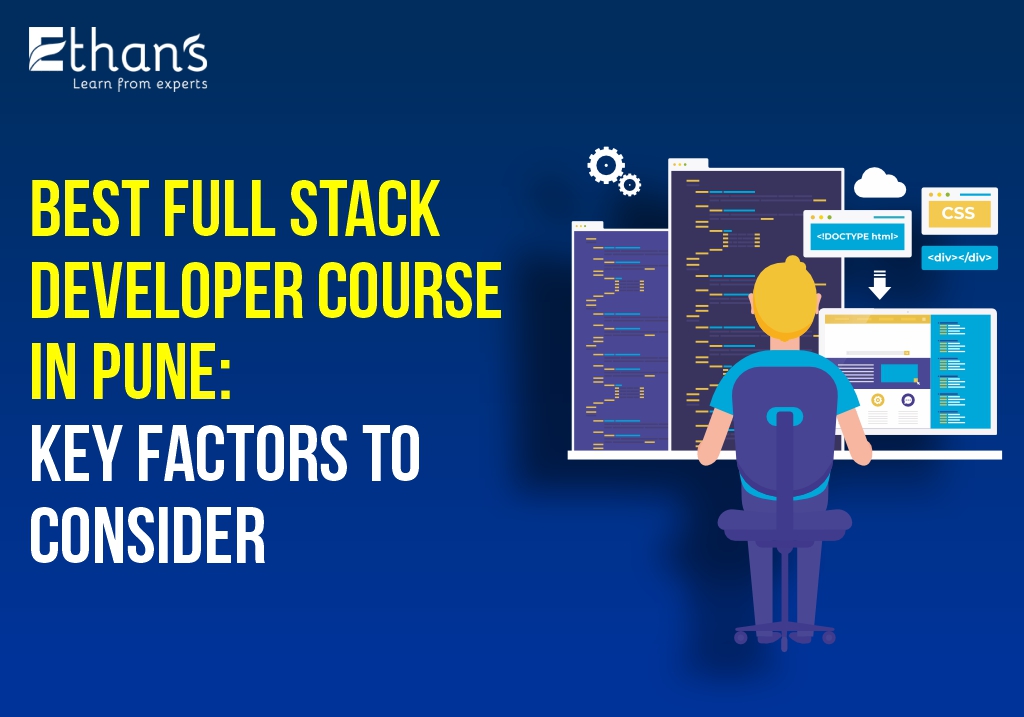
Key Factor of Full stack developer

Riddled with numerous choices available for a full stack developer course in Pune? Whether you are a tech student aspiring to launch your career or a working professional looking to enhance your skills, you must make the right choice. So, why wait? Let’s get to the point and look at the key factors you must consider while choosing a course for full stack training in Pune. What is Full Stack Development? Since you’ve been searching for a full stack developer course in Pune, most of you would already know the concept of full stack development. However, for those new to this space, let’s quickly overview to understand what it means. Full stack development refers to developing the front and back end of an application. Professionals specializing in it are called full stack developers. They are proficient in working on front (client-side) and back (server-side) technologies. Thus, their role encompasses a broad spectrum of activities. These include conceptualization, designing, development, implementation, testing, and deployment. In other words, full stack developers are involved in developing an application from start to finish, while working on numerous tools, technologies, and platforms. Employers prefer hiring full stack developers given the dual role they play, the expertise they bring to the table, and the outcomes they deliver. Considering the critical role of full stack developers, you cannot just choose any average full stack training in Pune – you need the best! So, let’s see how to choose one. 7 Factors to Consider While Choosing a Full Stack Developer Course in Pune From course curriculum to alumni and student feedback, here are seven crucial factors you must evaluate while selecting full stack training in Pune. Course Syllabus A comprehensive full stack course must go beyond dealing with just CSS and HTML.  It must delve into the various aspects of full stack development, helping you develop the skills to become a confident and in-demand full stack developer. Some must-haves include frontend (JavaScript, Angular or ReactJS), backend (ExpressJS, NodeJS, and RESTful APIs), databases (MySQL, MongoDB, and PostgreSQL), and version control (Git and GitHub), deployment (CI/CD, cloud platforms). Even better if the course covers Docker, DevOps, and Agile practices, given the demand they are in these days. Practical Exposure Next on the list is real-world exposure. You must check if the course provides abundant practical experience and exposure to real-world projects and technologies in use. Practicing real-world projects and technologies will help you gain a valuable first-hand understanding of the industry. The portfolio that this will develop you – priceless! Explore Your Path: Start Your Journey in Full Stack or DevOps Today! Faculty Expertise and Experience Trainers are at the core of every course curriculum.  While enhancing learning experiences, they also shape careers.  Accordingly, while evaluating other aspects of the course, you must also see who’s teaching you. The course must have trainers with field experience in application development, expertise in the latest tech stacks, a good track record, and openness to questions. Learning Environment Learning is a critical process. Hence, it must be joyous while gratifying.  Thus, while assessing a full stack developer course in Pune, you must also consider evaluating the learning environment of the institute. The environment must be supportive, encourage self-learning, provide access to useful educational resources, and include expert sessions and interactions. Placement Assistance Full stack development is a professional course. So, at the course’s end, every student expects a decent and remunerative placement in a reputed organization. Thus, you must check if the institute offers placement assistance – even better if it has a dedicated placement cell that works towards enhancing the placement experience. But don’t stop there. Tech interviews are often challenging and extensive. While technical skills matter, confidence and approach also play a pivotal role. Hence, you must see if the institute conducts mock interviews, conducts soft skills training sessions to build confidence, and helps you cut through the competition and intricate rounds easily. Learning Flexibility Professional courses usually train aspirants from various backgrounds, including students, beginners, mid-level working professionals, etc. Each has a unique learning need and schedule to adhere to. Therefore, the course you choose should offer flexibility in terms of batch schedules and learning methods, including online, offline, and hybrid. It will help you learn at your pace while keeping your current schedules unperturbed. Student Feedback Hear what the institute’s students say. Check the course’s alumni and placement records. Besides, look for online student testimonials and offline feedback. Speak with some students if possible. Try to gain specific feedback on the institute’s learning methodologies, course competence, trainers, post-learning support, and more. All Set to Become a Full Stack Developer? Join Ethan’s Tech for comprehensive full stack training in Pune! Our full stack developer course in Pune covers technology, practical exposure, real-world exposure, expert interactions, great trainers, and placement assistance. Want to know more for a complete evaluation of our course? Call us at +91 95133 92223.
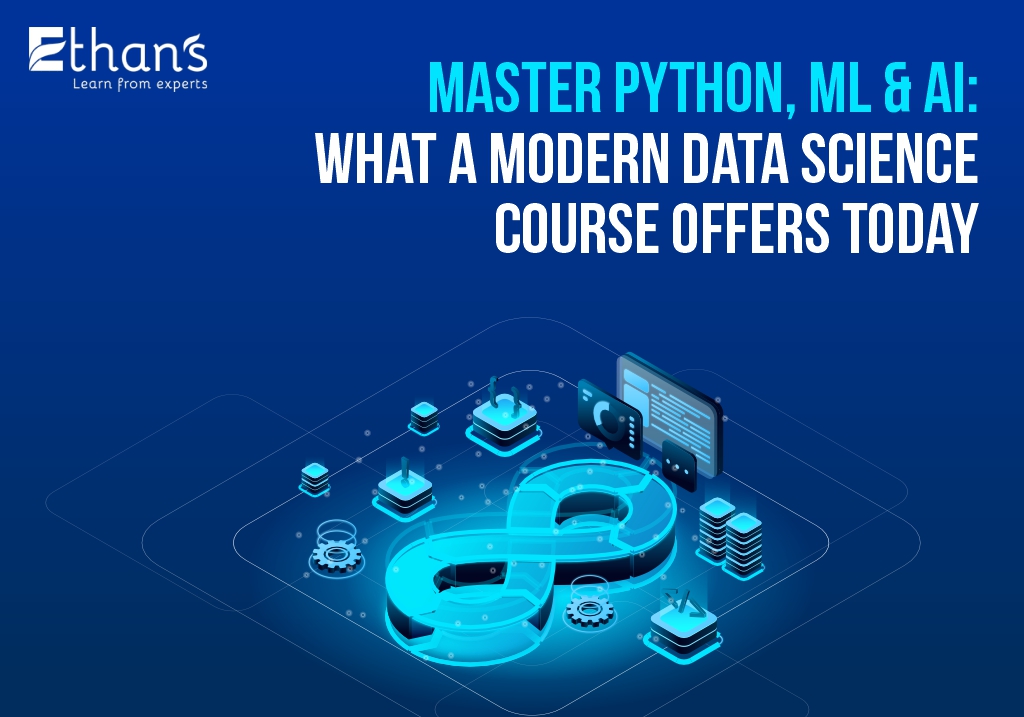
Master Python, ML & AI: What a Modern Data Science Course Offers Today?

Modern Data Science Course

Are you a beginner aspiring to a data science career? Or, a professional looking to upgrade your skills with data science? Then, the answer to it is a data scientist course in Pune! Modern data science courses cover a comprehensive curriculum and professional training to help you become a learned data scientist and accomplish your career goals. However, you must be wondering what modern data science courses offer today. Then, let’s answer your question and clear your way ahead. What is Data Science and What Does a Data Scientist Do? Amidst a highly data-driven world, data has become more crucial and useful than ever.  Companies spend millions of dollars every year to use the data they generate for business growth and to outperform their competitors. So, given the critical nature of data and the role you will play as a data scientist, let’s look at the basic concept of data science. Data science is a versatile field that leverages various algorithms, scientific methods, processes, and systems to derive insights from structured and unstructured data.  The science blends elements from computer science, statistics, and domain-specific knowledge to analyze and interpret complex data so that companies can use it for making decisions, formulating strategies, and setting their business trajectory. Now, what do data scientists do? Think of data scientists as chefs who sort ingredients, select the right ones, and cook them into perfect recipes.  Data scientists do the same thing with data. They collect, clean, and analyze data to provide meaningful insights that talk to businesses. Besides, they are adept at using various techniques and technologies, including statistical analysis, modeling, ML, and AI.  They can also interpret data and communicate it to drive actionable insights. Their expertise also involves deployment and monitoring to enable practical use and value. So, now that you’ve overviewed what data science and who data scientists are, let’s see what a comprehensive data science course in Pune would cover. Data Science Course in Pune – Course Curriculum Data science is an extensive field of study, involving various aspects. So, right from maths and statistics that form the basics, you will also learn relational databases, ML, AI, NLP and so many other things. So, if you are enthusiastic about a career in data science, here’s what you should know about the course curriculum you will be exposed to. Applied Statistics Maths Essentials: Foundational Maths for DS, Advanced Maths for DS Descriptive Statistics: Probability Theory, Data Summarization, Discrete Probability Distributions, Continuous Probability Distributions and Joint Distribution Concept Mastering Inferential Statistics:  Sampling and Statistical Inference, Concept of Confidence, Hypothesis Testing, and Experimental Design Relational Databases Introduction to SQL: SQL Basics for Data Analysis, Fundamentals of SQL Theory, Dealing with Multiple Tables, Advanced SQL Joins SQL Built-in Functions: Type Casting and Math Functions, DataTime and String Functions, Window Functions Machine Learning and AI Unlocking Machine Learning: Learning Objective, Mechanisms Behind Machine Learning, Supervised Learning – Regression, Supervised Learning – Classification, Decision Trees, Unsupervised Learning Deep Learning, NLP and GenAI Deep Learning: Neural Networks, Introduction to NLP, RNN, LSTM, Gated Recurrent Unit Generative AI: The GenAI Revolution, Personalized AI Applications, Technical Foundations Career Pathways: Skills, Knowledge, Freelancing Opportunities, Interview Preparation, etc. Additionally, the course includes mastering Python and R, the languages of data science. So, while learning data science, you also attend Python classes in Pune. However, this is merely an overview of what you will learn. Such an extensive course isn’t merely enriched with content but also value. Some features of such a course include; Practical exposure to various latest and real-world tools and technologies Learning with experienced faculty members AI and ML skill development – almost as good as machine learning training in Pune or an artificial intelligence course in Pune Interaction with industry experts Personalized attention to ensure effective learning Networking opportunities Placement assistance Why Pursue a Data Science Course in Pune – For Beginners and Existing Professionals The course benefits both in various ways. So, for instance, if you are a beginner switching from a non-technical role, a well-structured and delivered data science course can help you; Achieve a clear learning path Avoid analysis paralysis! Open up new career opportunities Build a broad and diverse portfolio Professionals looking to level up their skills can benefit in the following ways; Move to more impactful roles like ML engineer, data scientist, or data analyst Collaborate with other teams more productively Qualify for promotions into bigger leadership roles Potentially augment your salary Final Words! So, with everything you’ve read just now, you must be excited to begin or switch to a career in data science! At Ethan’s Tech, we too are just as eager to shape your career. So, join our data science course in Pune and benefit from our comprehensive course and its offerings as mentioned above. Call us at +91 95133 92223 to connect with our experts and seek answers to the questions you may have about this course and its value.

How Ethans Tech Prepares You for a Data Analytics Career

Data Analytics Career

So, you are all set to enter the world of data analytics! But are you prepared for it? And if yes, how well? Now, that’s a million-dollar question, isn’t it?  Data analytics is one of the hottest capabilities, given the value analysts deliver.  However, considering the expectations companies have from data analysts, pursuing merely technical education doesn’t suffice. You need comprehensive data analyst training in Pune and an institute that does justice to your career aspirations, while preparing you for the big race. Ethan’s Tech serves both. We adopt a comprehensive approach that involves building technical and career skills, transforming aspirants into professionals. Eager to know how we do it? Then, let’s get straight to the point. Not Just Jobs but Careers – 7 Ways Ethan’s Tech Creates the Career Advantage! From an industry-oriented curriculum to tantalizing placement opportunities, here’s how Ethan’s Tech proves to be an empowering choice. Industry-Based Updated Curriculum We understand how dynamic the data analytics domain is. Accordingly, we continuously update our course curriculum, ensuring students learn what’s latest and relevant for their careers. Furthermore, our data analytics courses in Pune are designed and recognized by industry experts who understand the industry’s current and future needs. Abundant Practical Exposure These days, companies look for professionals who can use the skills they’ve built during their data analytics classes in Pune. However, this calls for practical exposure during the course to the tools, technologies, and techniques the industry uses. At Ethan’s, we provide extensive practical exposure on various data analytics processes, tools, and technologies. Our students spend hours working on challenging assignments and dealing with complex datasets that put their abilities to the test and bring out the best in their capabilities. Thus, they step out as professionals prepared to take on real-world challenges. Use of Cutting-Edge Tools and Technologies Data analytics leverages various tools and technologies to analyze extensive datasets and deliver insights that drive informed decisions. Thus, it matters how proficiently you can use R, SQL, Python, Tableau, Power BI, etc. Ethan’s Tech offers comprehensive training on these platforms, ensuring adequate exposure to each. Experienced Faculty Members Trainers make or break a course’s experience! Ours make it with their technical skills, experience, and training abilities. We’ve handpicked trainers who empathize with the career needs of our students and resonate with our vision to deliver career excellence! While training students on technical skills, our trainers share their knowledge, enhancing the learning experience and amplifying its impact. Sessions from Industry Experts Apart from regular training, we conduct industry expert sessions during which students interact with industry experts directly. These sessions add value to the student’s knowledge, expertise, and experience. They are an excellent opportunity to broaden the network and ask questions concerning the industry. Challenging Assessments Data analytics is a professional skill that involves solving real-world problems. Accordingly, our students undergo extensive assessments that examine their skills and abilities across various areas of data analytics. These assignments are evaluated by experts who examine the process and outcomes, determining how prepared students are when it comes to addressing the industry’s problems.  Comprehensive Career Support Training isn’t just about covering technical topics. We live in a competitive world where professional skills matter as much as technical abilities. Thus, we provide end-to-end career support that involves soft skills development, mock interview sessions, and question-and-answer sessions to ensure our students prepare for everything that matters during the interview and their career. Joining our data analyst training in Pune refers to an unparalleled career advantage. So, now that you know why Ethan’s is the right place to launch your data analytics career, gear up for the enthralling opportunities in this field with us.  Call us at +91 95133 92223 to learn about data analytics fees, schedules, placement opportunities, alumni, and success stories.

Is Cloud Computing a Good Career in 2025? Insights from Pune’s Experts

Cloud Computing a Good Career

Yes. It is! Instead, in 2025, cloud computing professionals will be in more demand than ever! One can attribute many reasons to this demand. However, reports say that in 2025, 93-95 percent of companies worldwide will use cloud in some form, including public, private, and hybrid. So, in a way, this is almost all the companies in the world! Now, is that the only reason cloud computing is a good career in 2025? No! As an institute offering cloud computing classes in Pune, we consider it only the tip of the iceberg. We can give you various other reasons highlighting why cloud computing isn’t just good, but an excellent career in 2025 and beyond.  Prepared to explore? Let’s get going then! Cloud is Everywhere! Cloud is everywhere and growing with each passing day. From your favorite streaming services to advanced data analytics, the cloud is powering everything! Businesses, irrespective of their size, are increasingly switching their data, operations, and applications to the cloud faster than ever. The growth is such that global end-user spending on public cloud services will reach approximately USD 725 billion this year! Staggering, isn’t it? But this represents a 21-22 percent increase from 2024. Thanks to the rising influence and adoption of GenAI and application modernization. The cloud market is snowballing like never before! But this isn’t just a mind-boggling number. It signifies an extensive need for cloud computing professionals who will help companies accomplish their cloud goals. A Lot Depends on the Cloud Cloud computing has emerged to become the backbone of modern digital infrastructure. Hence, many factors depend on the cloud. Thus, companies, whether big or small, racing to migrate to the cloud, doesn’t come as a surprise. It is also because the cloud is scalable, affordable, secure, and enables remote working. The rise of AI, ML, edge computing, IoT, server less architectures and containers, multi-cloud and hybrid cloud strategies is contributing to the growth of the cloud. Since companies use all these technologies, migrating to the cloud becomes evident. Hence, cloud isn’t just nice to have but imperative for companies. And what does that mean for your career? Thousands of jobs! Diverse Roles Cloud computing has evolved greatly over the years. Companies require it across various areas. Hence, cloud computing offers various career opportunities. Some cloud roles and jobs you can look forward to include the following. Cloud Engineer: It involves designing, building, and maintaining cloud infrastructures. These earn an average annual salary of Rs. 6-11 lacs*. Cloud Architect: This is a senior position that involves devising high-level cloud strategies and solutions. The average annual salary range is Rs. 7-45 lakhs*.  Cloud Security Specialist: Cloud security specialists safeguard sensitive data and systems. The average yearly salary is around Rs. 8-40 lakhs*. Cloud Data Engineer: Cloud data engineers build and manage the pipelines that manage extensive datasets in cloud environments. These professionals earn an average yearly salary of Rs. 7-30 lakhs* Cloud Automation Engineer: Cloud automation engineers build, implement, and maintain automation as companies migrate to the cloud. The base pay of a cloud automation engineer ranges from Rs. 6-24 lakhs* annually. Note: Salaries are not accurate and are only for reference. Skills to Develop Cloud computing is a specialized and challenging job that requires aspirants to develop multiple skills. Alongside a cloud computing certification in Pune, here are some skills you must develop to become a successful cloud computing professional. Technical Skills: Programming languages like Java, Python, and Go, understanding of databases like SQL and NoSQL, knowledge of networking concepts, familiarity with Linux, experience in Docker and Kubernetes, proficiency in DevOps, and more. Soft Skills: Working as a cloud computing professional involves performing in a highly demanding environment. Hence, soft skills matter as much as hard ones. Accordingly, cloud computing professionals require developing skills, including problem-solving, communication, time management, collaboration, and adaptability. Why is Ethan’s Tech Your Cloud Computing Launchpad? Learning cloud computing involves a hard learning curve. It is particularly given the challenges cloud computing experts tackle and the solutions they provide. Ethan’s Tech offers comprehensive cloud computing training in Pune that covers various technical topics and prepares you for the big race in the world of cloud. Our faculty members are successful cloud professionals themselves who enrich the learning experience by sharing real-world experiences. Additionally, our cloud computing classes in Pune involve abundant practical exposure to the latest tools and technologies. Our students are exposed to real-world challenges and are taught to devise solutions so that they step out more prepared. So now that you know why cloud computing is a remarkable career option and where to pursue a cloud computing course in Pune, all you have to do is gear up to enhance your skills and kickstart your career in the cloud. Ethan’s Tech is prepared to be your guide in this journey. Call us at +91 95133 92223 to learn more about our cloud computing certification in Pune, placement record, alumni, and other factors like course fees and batch schedule.

AWS vs Azure vs Cloud Computing: Which Certification is Right for You?

AWS vs Azure vs Cloud Computing

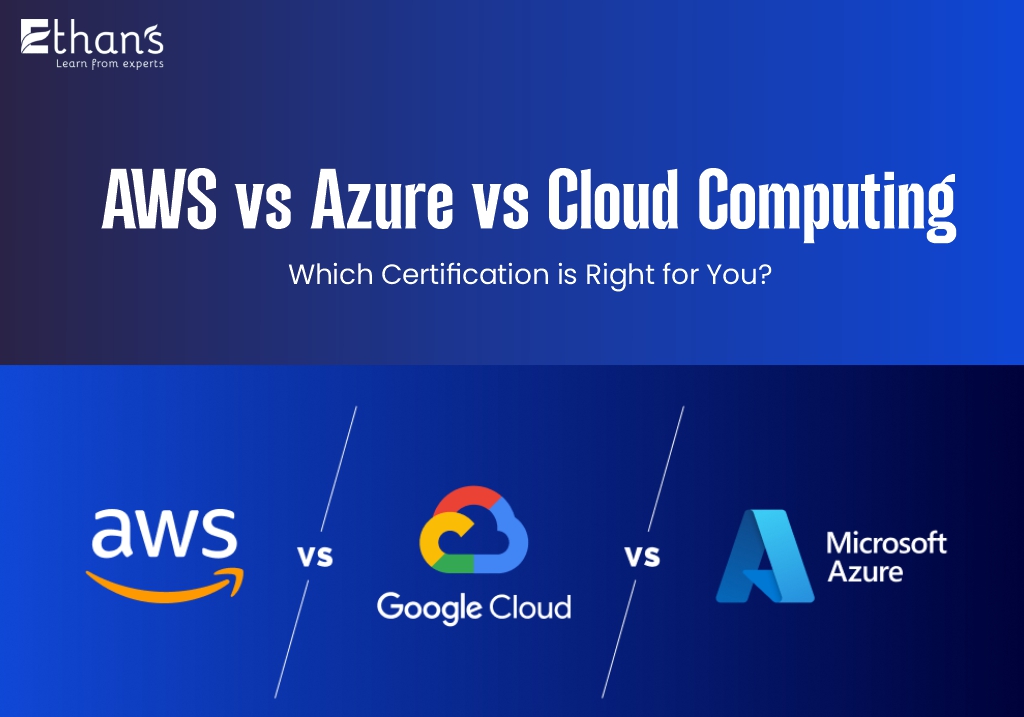
Bingo! You’ve asked the right question. Cloud computing is booming and one of the hottest technologies around. But yes, following your question, we agree that choosing the right certification matters. So, to everyone looking to pursue a career in cloud computing but confused about whether to do AWS training in Pune, join Microsoft Azure classes in Pune, or take up general cloud computing, you’ve come to the right place. We’ll provide a detailed comparison of all these options and provide unbiased insight to help you choose the right certification in your context. AWS Certifications Amazon Web Services (AWS) is a global market leader. Hence, it has a comprehensive and well-evolved certification program. AWS offers certifications across various tiers, including foundational certifications, and associate, professional, and specialty training programs. AWS certifications are profoundly technical and focus on their platforms and services. They usually require learners to have hands-on experience with the AWS console and a practical understanding of AWS’s architectural best practices. After an AWS training in Pune, you can work across various roles, including DevOps engineer, cloud architect, security specialist, and systems administrator, particularly with companies that work on AWS platforms and adopt the AWS cloud. Some key AWS certification programs include; Certified Cloud Practitioner: Entry-level certification for cloud newbies that validates a basic understanding of AWS concepts, terminologies, and services. Certified Developer – Associate: Particularly for developers, this one validates your ability to develop, deploy, and debug cloud-based apps that use AWS services. Certified SysOps Administrator – Associate: Focuses on the operational aspects of deploying and managing systems across AWS. Certified Solutions Architect – Associate: This focuses on designing and deploying scalable, highly available, and fault-tolerant systems on AWS. Professional Level Certifications: Advanced certifications that demand extensive experience and proven technical expertise in domains within the AWS cloud. Azure Certifications Second to AWS, Microsoft Azure is rapidly growing, gaining traction worldwide. Just like AWS, Azure’s certification programs have also evolved over the years. Accordingly, it offers various role-based certifications that serve different career needs and aspirations. Microsoft Azure certifications insist on gaining a broader understanding of cloud concepts and their integration with Microsoft’s ecosystem, including .NET, Windows Server, etc. The courses are technical, while also focusing on how-to aspects within Azure. Azure certifications are useful for people working in companies that use Azure and a broad array of Microsoft products. Some roles include solutions architect, Azure administrator, security engineer, and data engineer. Let’s look at some of the key Azure certifications. Azure Fundamentals: Basic certification covering basic cloud and Azure concepts Azure Administrator Associate: Focuses on implementing, managing, and monitoring a company’s Microsoft Azure ecosystem. Azure Solutions Architect Expert: Emphasizes designing and implementing robust and scalable Azure solutions. Azure Developer Associate: Validates skills in designing, developing, testing, and maintaining cloud solutions on Azure. Azure Security Engineer Associate, Azure Data Engineer Associate: Specialty certifications that focus on specific Azure areas. Generic Cloud Computing Certifications Of course, the cloud exists beyond these platforms or providers. So, you can also choose to pursue generic cloud computing certifications that focus on broader cloud concepts, best practices, and principles that you can apply across various cloud platforms. These certifications don’t focus on a single platform. This is unlike AWS and Azure which are specific to their own ecosystems. Instead, they provide a more comprehensive understanding of cloud computing, while covering topics like security, governance, cloud architecture, and cost management from a platform-agnostic viewpoint. Accordingly, these certifications benefit roles that require a broader understanding of cloud technologies and that involve working with different cloud platforms or providing consulting solutions to companies for their overall cloud strategy. AWS vs Azure vs Cloud Computing – Key Differences So, let’s make the comparison even easier for you to follow. Aspect AWS Certifications Azure Certifications Vendor-Neutral Cloud Computing Certifications Platform Focused on AWS platform and services Azure platform and services Broad concepts applicable across multiple platforms Technical Depth Technically comprehensive, insisting on hands-on skills within AWS Technically profound, with potential integration with the Microsoft environment Technical depth can vary based on the course’s objectives. Some are basic, while others are specialized Suitability For people already working with or planning to use AWS environments For individuals already associated with Microsoft-based ecosystems People who want a broader understanding of cloud and become generic experts Entry Level Certification AWS Certified Cloud Practitioner Microsoft Certified: Azure Fundamentals Google Cloud Digital Leader Industry Recognition Very high High Moderate to high Career Roles DevOps, Solutions Architect and Cloud Engineer Cloud Consultant, Data Engineer and Azure Admin Tech Generalist, Entry-Level Cloud Support So, Which Certification is Right for You? Let’s answer the core question. Which certification amongst AWS, Azure and generic cloud computing is right for you. The choice depends on various factors, including; Existing Role and Experience: If you are beginner, you can pursue a foundational certification from AWS or Azure (Cloud Practitioner or Azure Fundamentals) or a vendor-neutral alternative. But if you are experienced, you can take up speciality certifications in your area of focus or interest. Career Objectives: If AWS interests you and you want to work with companies using AWS, you can pursue AWS training in Pune. And so, it is with Azure. But if a generic role that involves working with multiple cloud platforms intrigues you or you want to enter a strategic cloud role, you can go for generic cloud certifications. Employer’s Requirements: If your company uses Azure, you can pursue Microsoft Azure classes in Pune. But if your employer uses Azure, you should enroll in AWS classes in Pune and work towards the certification you want to obtain. Final Thoughts! Cloud computing is on the rise. Hence, any choice is great, whether AWS, Azure or generic cloud computing course. However, individual situations and choices may vary. We hope the above helps you make an informed choice. Nevertheless, for a detailed and specific discussion, we recommend calling us at +91 95133 92223. Our course experts will help you navigate our course offerings and also answer various other questions concerning … Read more

Data Science vs Artificial Intelligence: What’s the Difference?

Data Science vs Artificial Intelligence

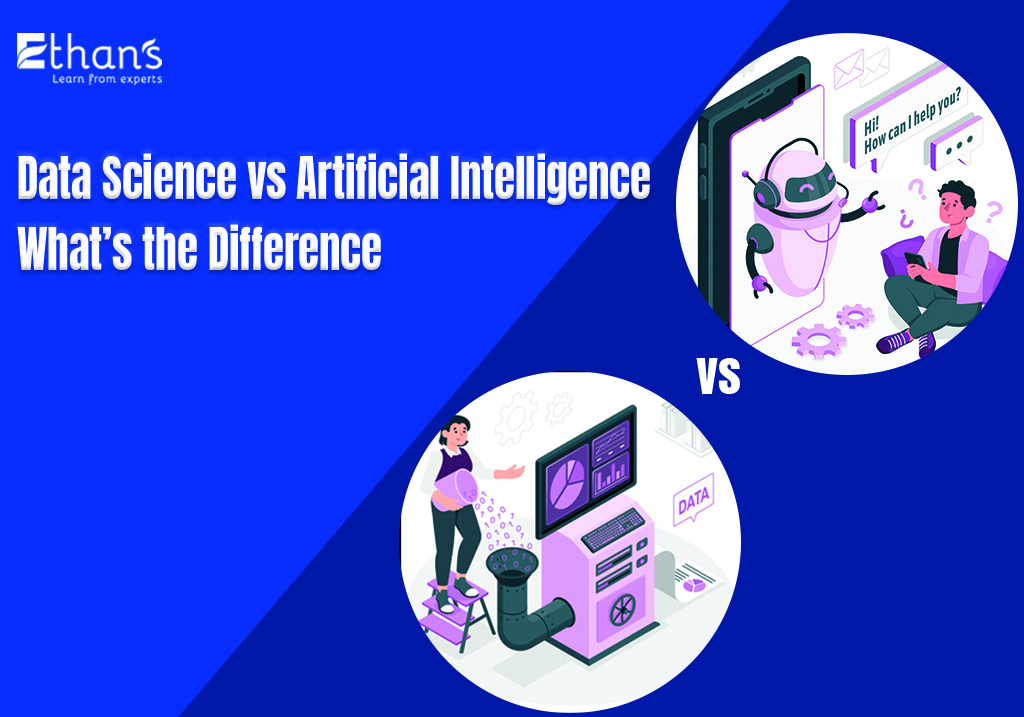
Data science and artificial intelligence (AI), are terms almost everyone has heard! Do they deal with data? Yes! Are they useful? Undoubtedly! But are they the same? No. Both are unique in various aspects.  As someone looking to enter the tech world and searching for a data scientist course in Pune or an artificial intelligence course in Pune, you must know what makes both different. So, why wait and lengthen the introduction? Let’s get to the topic! What is Data Science? A subset of AI, data science involves collecting data and analyzing it. It uses various scientific methods, algorithms, processes, and insights from structured and unstructured data. Essentially, data science is about exploring answers to complex questions with data.  Hence, it is widely used across businesses, governments, etc., where transforming raw information into useful insights is crucial. Data scientists play a core role in data science. They work like detectives, sifting through clues to uncover patterns, valuable information, and trends by using mathematics, statistics, and programming to perform data-related processes, including; Collection: Gathering large amounts of data from multiple sources Cleaning and Preparing: Ensuring data accuracy, completeness, and formatting Exploratory Data Analysis: Analyzing data to understand its patterns and properties Building Predictive Models: Extracting insights with statistical and ML techniques Communicate Findings: Presenting observations and insights clearly For example, data science can help restaurant owners analyze which dishes are sold the most during monsoons in Pune. Data scientists can then build a model to predict its demand, enabling the owner to make an informed decision about their inventory. What is Artificial Intelligence? The talk of the town, the hero and so much more, AI is the hottest technology right now! It is evolving and improving to become more powerful with every passing second. But what is it? Let’s see with the help of an example. AI is a broader domain that intends to create machines that can perform tasks that conventionally require human intelligence. You can think of it as building systems that can learn, reason, resolve problems, and make informed decisions – as much as a human. An example of AI is voice assistants like Alexa, which are AI-driven and respond to voice commands to deliver the desired outcome. Some key components of AI include; Machine Learning (ML): These are algorithms that enable systems to learn from data and keep improving with every interaction and experience. Natural Language Processing (NLP): It involves enabling machines to comprehend and respond to human language. Deep Learning: Deep learning is a subset of ML that uses neural networks with several layers to process complex data. Computer Vision: This is a capability that allows machines to interpret and make decisions, depending on visual inputs and insights. Now that you have a basic understanding of data science and AI, let’s look at the differences that make them unique. Data Science vs Artificial Intelligence – Key Differences Here are the different areas in which data science and AI are different. Aspect Data Science Artificial Intelligence Basic Concept It primarily involves pre-processing, analysis, visualization and prediction. AI is a broad term used for machine-based applications that replicate human intelligence. Primary Objective Deriving insights from data. Create intelligence systems to perform tasks otherwise performed by humans.  Data Types Data science deals with different types of data, including unstructured, semi-structured, and structured. AI involves using standardized data like embeddings and vectors. Key Techniques Involved Data visualization, statistics, data mining and machine learning, binary classification, anomaly detection, linear regression, logistic regression and more. Deep learning, facial recognition, reinforcement learning, natural language processing, knowledge graphs, generative AI machine learning, robotics, computer vision, etc. Tools Data science uses many more tools than AI as data science involves numerous procedures to analyze data and derive insights from it. AI doesn’t use as many tools as data science. What is Used? Data science uses graphical representation. AI uses algorithms and network more representation. Essential Skills Mathematics, data visualization, extensive domain knowledge and statistics  Algorithms, computer science, exclusive AI domains, and machine learning Applications Data science has applications in multiple domains, including predictive modeling, business intelligence, process optimization, data-driven decision support, etc. Virtual assistance, autonomous vehicles, facial recognition, intelligent robots, content generation, robotics, automation, etc. Data Science and Artificial Intelligence – Similarities AI and data science aren’t different in every aspect. They have some similarities as well. Both fields are data-driven Both use ML to analyze data and build predictive or intelligent models Both integrate knowledge from various disciplines Both use programming languages R and Python Both intend to solve business problems Prepare to Fulfill Your Data Science and AI Career Aspirations with Ethan’s Tech! We hope the above cleared the differences between AI and data science.  And yes, similarities as well. However, did we forget to mention another similarity? The one associated with careers! Yes. Be it data science or AI, both are great careers, given the increasing importance of data, solving problems accurately and quicker decision-making. However, how do you enter these domains? The answer is Ethan’s Tech. We offer a comprehensive artificial intelligence course in Pune and data science classes in Pune that help you transform into a learned and prepared professional. Our courses help you learn the various techniques of data science and AI, develop a practical understanding, work on various challenging real-world projects, and transform yourself into a learned and prepared professional. Moreover, our faculty members enhance the learning process by sharing their experiences, training you extensively on different concepts, and conducting abundant practical sessions. Besides, we offer 100% placement assistance to help give you a start to your career. Want to know more about our courses? Call us at +91 95133 92223.

Data Analyst Interview Tips: How to Crack Your First Job?

About to finish your data analyst course in Pune a butterflies in the stomach – that’s common to appear for your first interview? A lot of excitement and somen.  They say cracking the first interview is often challenging. You don’t know what will happen during the session. Whether you will fall flat or rise!  We understand first interviews involve a significant amount of challenge. However, confidence is the key to success. We help our students build it with the right tips provided and discussed through the numerous mock sessions we conduct. Adhering to these tips helps them walk in confidently and step out happily. And they may help you as much as our students! So, why wait? Let’s look at some crucial tips to prepare for a data analyst interview. Tell Me Something About Yourself OK. Something doesn’t mean anything. The interviewer doesn’t want to know about your first half-century in gully cricket or how you bunked your first lecture. Focus on your data analysis journey, highlighting relevant skills and your projects. Do not forget to mention your passion for data and what proves it. So, begin your current status, whether a recent graduate or a transitioning professional. Run through your educational background and relevant certifications. After that, pivot to your interest in data analysis, specific skills in Excel, Python, etc., and the projects you’ve worked on and applied your skills. Tailor your expertise to what matters the most to your prospective employer.  For instance, if they value SQL, emphasize your expertise in SQL. Your Interest in Data Analysis Candidates usually say it is a growing domain and that’s what interests them the most. While that’s true, you shouldn’t confine your answer to it. Say it at the end if you want.  Before that, focus on points that excite you. These could include uncovering data patterns, solving problems, visualization, etc. Share an experience that made you realize data analysis is for you and that you must pursue it as a career. Try to connect your answer with the company’s mission and the job description. However, do so naturally. Don’t let your answer sound fabricated or a deliberate attempt to impress! Research the company’s needs, objectives, and the role it expects you to play. Frame answers that align with their needs to increase the chances of cracking the interview. Your Strengths and Weaknesses People usually begin with weaknesses in an attempt to display honesty and courage. But that’s not necessary. Companies hire candidates for their strengths not weaknesses. So, think strategically. Highlight your strengths relevant to data analysis and articulate weaknesses as areas of improvement and growth. Strengths include problem-solving skills, analytical thinking, proficiency in tools, communication, etc. Support your answer with an example where your strength helped the project and drove positive outcomes. On the other hand, while discussing weaknesses, choose a genuine one you are working on. For example, something like your proficiency in Python but you are enhancing your skill set and broadening your knowledge base through online courses can help. Avoid overly rubbed answers like I am a perfectionist and similar ones.  Ensure your strengths are relevant to the job description and display self-awareness about your limitations, highlighting the steps you’ve been taking to overcome them. Explain a Project You Worked on Avoid vague or short answers. Interviewers want detailed ones, highlighting your process, your approach, and how you completed a particular project from start to finish. Choose a project with clear goals, the tools you used, the challenges involved, and value. Provide details about the project as to how you started, what challenges you identified, how you went about building the model, the processes you followed, and how you presented the insights. Don’t forget to highlight the value delivered. It matters the most! Handling Missing or Dirty Data You will never receive a perfect set of data in the real world. Thus, the interviewers would want to know how you will deal with imperfections and cut your way through it. Answer this question, explaining processes like identifying the missing data, investigating the cause, handling missing data and dirty data, documenting, and your steps. Display your understanding of the uniqueness of every problem and your abilities to provide a custom solution as a data analyst. Stay Confident and Truthful As said earlier, confidence is one of the keys to cracking the first interview. You may be nervous from within. But you don’t have to necessarily show it or be vocal about it. Doing so may indicate you haven’t prepared enough. And when it comes to data analysis, preparation is key! So, the interviewers may fail you in the very basic attributes of every data analyst. Nonetheless, practice as much as possible. Posts like these and many others can help you understand the commonly asked data analyst interview questions and their answers. Besides, be truthful.  Many candidates often cook up stories and fumble when the interviewer asks them questions. Remember, an experienced interviewer can quickly make out whether you are speaking the truth or lying. So, avoid the latter. Be genuine while sharing your experiences. Explaining Technical Concepts to a Non-Technical Person This is another area you must prepare for while preparing for a data analyst interview. Often, data analysts must communicate their findings to non-technical stakeholders. So, if the interviewer asks you to do it (which is very likely as it is a crucial skill), choose a concept you understand well. For example – correlation, specific algorithm, or regression. Explain it with simple examples and analogies. Avoid jargon as they are confusing. Focus on the what and why, instead of the how as the making process of a movie usually doesn’t interest audiences. They want to see the final product and enjoy it. For example, while explaining correlation, you can explain the relation between dipping temperatures and woolen fabric sales. That’s a positive correlation. Prepare for Technical Questions and Answers The interviewers will ask you several technical questions. While the list is excessively long, some commonly … Read more

Common Mistakes Beginners Make in Data Science and How to Avoid Them

Common Mistakes Beginners Make in Data Science

Prepared to venture into the data science cosmos? Then, it may feel like an infinite horizon of ML models, Python scripts, and a gargantuan (yes, absolutely gigantic) amount of data! Feels exciting, right? Yes. It certainly is! But honestly, tripping up during your data science journey, particularly as a beginner, is much easier than you think! So, whether a self-taught maverick or someone who has pursued a data science course in Pune for beginners, you are likely to commit some common mistakes. Pursuing a course can minimize the chances of mistakes. However, knowing some of the most common ones can help you avoid them consciously. Let’s look at five of them. Venturing into Modeling Without Understanding the Problem As a data scientist, people will look up to you as a problem-solver. But what if you aren’t clear about the problem? You won’t be able to understand it, let alone resolve it! Now, that’s what many beginners in data science do. They jump into modeling without comprehending the requirements, pain points, and the problem. However, where exactly do novices go wrong? They rush to build models without grasping the business problem or mindset. It is like solving a jigsaw puzzle without looking at the picture you are expected to create. You may do something but that won’t be right. So, how to avoid this? Simple. Begin with understanding the domain and ask the right questions. For instance, you must understand what problem you are trying to solve, the users who will benefit from or use the insights and what is the ideal success vision. Remember, asking the right questions and seeking answers are foundational practices that will guide your model to a significant extent. Neglecting Data Validation Beginner data scientists usually feel happy when they create their first model to derive an output from it. It is because they’ve trained the model and it has started giving predictions. And they think they deserve a pat on the back! But without validating the predictions and checking if they even make sense? That’s precisely the next mistake on this list. Imagine, a student giving a senseless answer to a question in the classroom. He responds to the question but his response is pointless! If the teacher doesn’t validate it, other students may consider it right and follow it. Of course, data validation isn’t interesting at all. But this is where the actual wonders take place and hence, that matters. To avoid this, you must make data validation a part of your data science discipline.  You must cross-validate, check confusion matrices, or even perform a sanity check to inspect the usefulness and accuracy of the predictions of the model. Ignoring Data Cleaning and Preprocessing Imagine beginning a heavy workout without warming yourself up! You may strain a particular muscle, injure yourself, or suffer some major damage. That’s exactly what many new data scientists do on the data science playground. They ignore basic steps like data cleaning, preprocessing, transforming, and comprehending every feature in the dataset. Remember, a data science model is only as good as the data you train it on.  Thus, a dataset that doesn’t undergo the basic processes will have poor data that can lead to flawed analysis and inaccurate assumptions. Again, we understand data cleaning and preprocessing aren’t glamorous jobs. However, skipping these steps can lead to a messy model that can cause a major blunder. As for you, you can prevent this in your case. How? Make it a habit to invest time handling missing values, encoding categorical data, removing outliers, and scaling features. Learn the Core of Data Science – Enroll in Statistics for Business! Clean and high-quality data is the foundation of a useful and trustworthy model. If you want to build one, ensuring clean and accurate data is one of the keys. Focusing Only on Accuracy We won’t blame data scientists here. The more accurate something is, the better. Since childhood, we’ve been taught this. So, often, all we do is chase accuracy!  Of course, accuracy matters in data science. However, you cannot focus on it solely.  As a data scientist, you would feel tempted to chase the highest accuracy score for your model. However, here, what most data scientists forget is they are preparing models for the real world where accuracy isn’t always the only or even the most crucial parameter. As a result, they over-optimize their model for accuracy on a particular dataset without considering interpretability, business impact, generalizability, and the existing problem. You can prevent this in your case with tips, including; Understanding the business context and being mindful of the real-world problem. Additionally, comprehending business goals, and addressing concerns like the implications of false positives and false negatives also helps. Considering different assessment metrics, including precision, AUC, recall, etc. You must select the one that best signifies and suits the project goals. Prioritizing interpretability as required and keeping generalization in mind. Excluding Feature Engineering As mentioned earlier, data scientists must not ignore basic steps like data cleaning, transformation, model selection, etc. However, in their pursuit, they often forget to perform feature engineering – a crucial step in data science. Features are the inputs that drive the predictions of a model. The richer the features, the better the prediction. Similarly, poor features can result in suboptimal outcomes. To avoid this, you must; Understand the data and the domain to identify impactful and suitable features. Build more features from the current ones. Work with domain experts to learn which features may be the most predictive. Conduct Sharp analysis to comprehend the more effective features. Learn and Become a Prepared Data Scientist with Ethan’s Tech! Data science is a welcoming spectrum of opportunities.  However, performance matters here as much as it does everywhere else. Thus, the more you prepare while learning, the more sensibly you can work as a data scientist. So, join Ethan’s Tech. We are a tech training center with a comprehensive data science course in Pune with placement. Our course helps students … Read more

How to Build a Career in Machine Learning Without a Tech Background?

How to build career in ML

Curious to learn machine learning (ML) but don’t have a tech background? As an institute for machine learning in Pune, we receive many such ML aspirants.  While some have degrees in psychology, some are economic graduates. Many others have been accounting professionals, travel consultants, marketing experts, etc. So, if you are one, you aren’t alone! You’ve thought about the right career. A career in ML is a futuristic choice. But is it possible to build a career in it without a tech degree? Let’s explore the possibilities and answer this question! What is Machine Learning – Let’s Begin with the Basics! Most of you must have already researched what ML is. But for those who haven’t or need a better explanation of ML, here’s some help. Technically speaking, ML is a subset of AI. It allows computers to learn from data and enhance their performance without explicit programming.  The technology uses data to analyze it, identify patterns, and make decisions. Any routine examples of ML? Of course, there is! Ever wondered how your favorite OTT platform recommends your next watch? Or, how your phone instantly translates languages for you, making it easier for you to understand the content? That’s precisely where ML is at play. Interesting, isn’t it? And what’s even more intriguing is that you, as an ML professional, could be the magician behind this.  But then, a voice creeps in, reminding you that you don’t have a technical degree to support your aspirations. So, can you not become an ML professional without a tech certificate? Can You Become an ML Professional Without a Tech Degree? The answer is a resounding YES! Entering ML with a technical degree is conventional. It is more natural for people with statistics, programming, and computer science to enter the burgeoning field of ML. But guess what, ML is evolving. And it is doing so at a pace quicker than you think.  This evolution is creating space for people from different domains and backgrounds so that they can contribute more meaningfully. It is because ML isn’t merely about writing code. It extends to understanding problems, devising solutions, and communicating insights. Thus, ML would have room for you even if you aren’t a technical expert.  So, let’s say you are an airline professional. Your understanding of the field and experience in it can form valuable data to enrich ML’s application in the airline domain. But how do you bridge the gap between your expertise and the door to ML? Let’s explore. Ready to dive into the world of Machine Learning? Start your data science journey today and unlock the power of intelligent insights with expert guidance! Believe in Your Potential We know this sounds generic. But what if we tell you this is the key to your entry in ML? Yes. Your non-technical background isn’t a hindrance but an advantage.  It can bring a fresh perspective, domain expertise and communication and strong problem-solving skills, valuable in real-world ML applications. Develop Technical Skills You cannot fully overlook the technical aspect as that’s integral to becoming an ML expert. But instead of being paranoid about it, make it your friend and develop the required skills. Begin with the basics like the fundamentals of Python, data structures, basic syntax, and libraries like NumPy, and Pandas for data manipulation. Besides, learn statistics concepts. You don’t need an advanced degree. However, learning concepts like hypothesis testing, probability distributions, and regression is critical. Furthermore, you must understand the core concepts behind ML, common algorithms, and concepts like bias-variance trade-off and model evaluation. Imagine you are learning a new language and this is the basic grammar for it! And where to learn all this – Ethan’s Tech’s machine learning course in Pune. Use Your Domain Expertise You aren’t a tech ninja. Fine! But you are a domain expert. And that’s one of the keys to unlocking an exciting and fruitful career in Ml. Recall every challenge you faced and how you tackled every situation. Leverage your technical expertise to provide solutions that can transform the domain. For instance, if you are a marketing expert, and you understand customer behavior well, you can learn ML to develop recommendation systems or forecast churn. Begin Small Practical experience is crucial in the early stages. So, begin with smaller projects or assignments to get hands-on experience and develop preliminary expertise. For example, you can begin with small datasets and attempt to apply ML concepts while learning. Platforms like Kaggle offer several free datasets and beginner contests. Further, focus on building a robust and diverse portfolio and showcase your platforms like GitHub. This will serve as proof that you can apply your knowledge. Join a course that offers abundant practical experience. Ethan’s machine learning training in Pune can be a great choice in this regard. Build Your Network Don’t work in isolation. ML keeps evolving with every passing day. Thus, the more you stay connected with the world, the better. You can do so by joining online communities through platforms like Reddit and LinkedIn groups to ask questions and seek answers. On the other hand, you can attend ML conferences and webinars to gain insights into the industry and broaden the scope of your knowledge. Develop Soft Skills Soft skills are a must for every profession, including ML. Some prominent soft skills to develop include problem-solving, critical thinking, teamwork, and communication.  Additionally, you must continue developing your domain expertise to ensure a constant supply of updated information and develop competent solutions. Prepared to Take the Leap? Then, enroll with Ethan’s, one of the leading names for a machine learning course in Pune.  We offer what it takes to make you an empowered ML professional even if you don’t have a technical background. We help you use your domain expertise and knowledge to become an ML professional with a difference. Our course, faculty members, learning environment, practical exposure, and placement assistance – everything is targeted to give you your first break as an ML expert. Want to … Read more

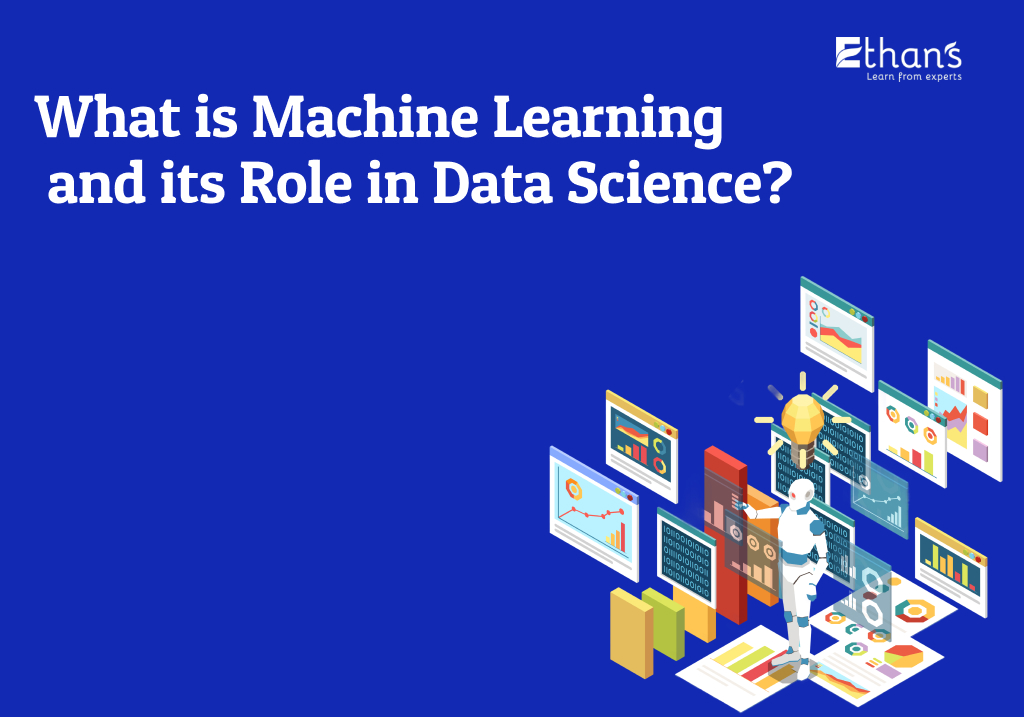
Understanding Machine Learning and its Role in Data Science

Machine Learning and its Role in Data Science

Imagine walking into your food delivery app and it just knows the delicacy you are in the mood to eat! Or YouTube suggests precisely what you’ve been searching for. Feel like this is magic? For everyone else, it may be. But for someone like you, interested in machine learning training in Pune, it isn’t. It is machine learning (ML) at work! Machine learning, popularly known as ML, may sound a little complicated. But don’t worry as we will explain it with some easy examples in this blog. Besides, since it is fundamental to data science, we will also understand its role. What is Machine Learning – Beginning from the Basics! In simple language, ML is a way of teaching computers how to learn from data without explicitly programming them for every task. So, instead of providing step-by-step instructions, you give the machine examples and allow it to find patterns. Imagine you are a teacher, teaching students about cars. Instead of saying a car has four wheels, four doors, one roof, etc., you show them multiple pictures of cars. Eventually, the children get it. This is precisely how ML works. It learns from examples. Types of machine learning include; Supervised Learning: The machine receives labeled data (for example, animals with names) and it learns to predict the labels. Unsupervised Learning: This involves only raw data (without labels) and the machine finds hidden patterns or groups. Reinforcement Learning: The machine tries, errs, and learns. What is Data Science – Let’s Also Understand This! Data science refers to deriving meaningful insights from structured and unstructured data.  It combines various fields like computer science, domain knowledge, and statistics to transform data into usable information. The process involves collecting data, cleaning it, analyzing it, visualizing it, and making informed predictions based on what the data says. For example, data science helps retail companies analyze consumer shopping habits, understand what they want, and make suggestions that align with their needs. While contributing to quicker decision-making, it also helps enhance and expedite sales. How Does ML Contribute to Data Science? Let’s not get into the technicalities as of now as you will do that during your machine learning training in Pune. We’ll stick to simple examples for an easier understanding. ML is a data scientist’s tool. Thus, if data science is the engine, ML turbocharges it, enabling data scientists to develop predictive models, uncover insights, and automate the overall decision-making process for companies. Another way of understanding it is thinking of data science as a journey of uncovering a treasure and valuable insights from a massive mountain of data. You must work like a detective, sifting across clues to solve the mystery. ML works as your tool. It serves as a smart engine that learns from the clues, helping you make forecasts and decisions. Let’s look at some simple, yet real-world examples to enhance your understanding. Spam Detection: Ever thought how your inbox categorizes your emails into spam and legitimate, relieving you from the tedious process of sorting them manually? The answer is ML algorithms, trained on vast amounts of emails, labeled as spam or not spam. Here, they learn to identify patterns, including sender addresses, specific keywords, or email structure – characteristics of a spam email. So, when you receive a new email, the algorithm analyzes it based on the patterns learned and decides an email’s category. Weather Forecasts: The mechanism of weather predictions is a little complicated. However, it involves ML at the backend. The algorithms receive data like historical weather data, including wind, temperature, speed, etc. They then learn the relationship between these factors and then make weather forecasts based on the data they have. Fraud Detection: Custodians of millions and billions of rupees, banks are also responsible for identifying and flagging suspicious transactions. This is possible with ML that discovers unusual patterns, for example, a sudden purchase in a foreign country, and flags it red. Why Does Data Science Love ML? It is because ML and its algorithms are capable of doing many things. Some include; Processing and learning from massive datasets – something beyond human abilities to do manually Uncovering subtle relationships and insights within data, otherwise difficult for the human eye to identify and process After training, ML models can predict based on new and unseen data or automate various decision-making processes They continuously improve with exposure to data, refining their understanding and improving accuracy over a period Prepared to Take Up Machine Learning Training in Pune? We hope the above helped you enhance your understanding of ML’s role in data science. Given the importance of data in the contemporary environment and the role ML plays in data science, a career as an ML professional can unlock several remunerative opportunities for you. However, the machine learning classes in Pune you enroll in also matter. So, join Ethan’s Tech, one of the leading institutes for machine learning courses in Pune. Our comprehensive curriculum, extensive practical exposure, portfolio development assistance, experienced faculty members and an encouraging learning environment shape you into an in-demand ML professional and pave the way to success in this field. ML is growing and evolving rapidly, requiring qualified professionals. And guess what, it is a career that pays well and has abundant opportunities. So, connect with us if you want to be part of this exciting industry! Our experts are available at +91 95133 92223.