Top IoT Project Ideas & Topics For Beginners

top iot projects ideas

Overview With good cause, the term “Internet of Things” (IoT) has gained popularity in recent years. IoT has transformed how we interact with technology and created countless opportunities for innovation and automation across a wide range of industries; The Internet of Things (IoT) is a network of physical objects such as cars, appliances, and other household items that are equipped with sensors, software, and network connectivity to collect and share data. As IoT technology develops, it has become easier for beginners, students, and hobbyists interested in investigating IoT’s potential through practical projects to access; We’ve gathered a selection of the best IoT project ideas and subjects for newcomers to experiment with in this blog article. There are IoT project ideas that you can investigate, regardless of your interests in smart homes, healthcare, agriculture, transportation, retail, or education. Thus, if you’re new to the Internet of Things and intrigued about its potential, or if you’re seeking for ideas for your next IoT project; keep reading! We hope that these project suggestions will give you a head start as you begin to investigate the seemingly limitless potential of IoT. Top IoT Project Ideas & Topics For Beginners IoT Project Ideas for Smart Homes 1. IoT-based Smart lighting System Modern houses are increasingly using intelligent lighting systems, and the Internet of Things (IoT) can help these systems become even more advanced and energy-efficient; With a mobile app or voice commands, owners of an IoT-based smart lighting system can remotely manage the lighting in their homes. Installing IoT-capable light bulbs that can link to your home network, like Philips Hue or LIFX, is necessary to build a smart lighting system; The illumination can then be controlled via a smartphone app or voice assistance like Amazon Alexa or Google Assistant. 2. Automated Air Conditioning And Temperature Control System An additional well-liked IoT solution for smart houses is an automated system for controlling temperature and air conditioning. Using a mobile app or voice commands, owners of this system can remotely regulate the temperature and air conditioning in their houses; Installing IoT-capable thermostats, like Nest or Ecobee, that can link to your home network is necessary to build an automated system for controlling temperature and air conditioning; The temperature can be set on these thermostats to change depending on the time of day, your daily routine, or even your location. 3. An IoT-Based Home Automation System With Voice Control A voice-controlled IoT-based home automation system enables users to control a variety of home equipment, including lighting, appliances, and temperature, using voice requests; Popular voice assistants like Google Assistant and Amazon Alexa can be linked with this technology. You must select IoT-enabled devices that can connect to your home network and be operated through a voice assistant if you want to build a voice-controlled IoT-based home automation system; The voice assistant can then be programmed with routines or “skills” to carry out particular activities in response to voice commands. 4. Energy Monitoring System For Home Appliances Based on IoT Users can monitor and manage the energy usage of their home appliances, such as refrigerators, washing machines, and televisions, with the help of an IoT-based energy monitoring system; Users of this technology can lower their carbon footprint and save money on their energy costs. You need to install IoT-enabled smart plugs or power strips that are connected to your home network in order to build an IoT-based energy monitoring system; These smart plugs can track your energy usage in real time and measure the energy use of your appliances. IoT Project Ideas for Agriculture 1. An IoT-Based Smart Irrigation System Users can tailor their watering schedules based on the unique requirements of their plants and the weather with the help of a smart irrigation system that uses IoT sensors; Users of this method can save water and lessen the possibility of overwatering or underwatering their plants. Install IoT-capable sensors that can assess soil moisture, temperature; and other environmental parameters that affect plant growth if you want to build an intelligent irrigation system; The data gathered by the sensors may then be monitored using a mobile app or web-based dashboard, and your watering schedule can be modified accordingly. 2. An IoT-Based System For Managing and Monitoring Crops Using sensors that collect data on soil moisture, temperature, humidity, and other environmental conditions that affect crop growth, an IoT-based crop monitoring and management system enables farmers and gardeners to remotely monitor and manage their crops; This technique can assist growers and farmers in maximising agricultural productivity and lowering crop failure risk, It is necessary to install IoT-enabled sensors to detect the environmental elements impacting crop development in order to build an IoT-based crop monitoring and management system; After that, you may keep an eye on the information gathered by the sensors using a mobile app or a web-based dashboard; and you can modify your crop management techniques as necessary. 3. An IoT-Based System For Managing and Monitoring Greenhouses Users can track and control environmental factors inside a greenhouse, such as: temperature, humidity, and illumination, using an IoT-based monitoring and management system. This technique can assist growers and farmers in maximising plant growth and raising productivity. Installing IoT-enabled sensors that can gauge the greenhouse’s environmental conditions is necessary to build an IoT-based monitoring and management system for greenhouses; The conditions within the greenhouse can then be adjusted based on the data gathered by the sensors using a mobile app or web-based interface. IoT Project Ideas for Healthcare 1. A Patient Monitoring System Powered by IoT Using IoT-enabled sensors that gather data on vital indicators like heart rate, blood pressure, and oxygen levels, a patient monitoring system based on the internet of things enables healthcare providers to remotely monitor patients’ health; This method can support medical professionals in early health issue detection and prompt response. Installing IoT-capable sensors that can measure the patient’s vital signs is necessary to build an IoT-based patient monitoring system. These sensors can be placed in the patient’s home … Read more


How Long Does It Take to Learn Python?

How Long Does It Take to Learn Python?

What is Python? Before delving deeper into the blog, let us first see what Python is? Python is a programming language that is interpreted, object-oriented, and turns out to be a high-level language that consists of dynamic semantics. Its high-level logic that is developed in data structures in combination with dynamic binding and dynamic typing makes it highly attractive for all kinds of Rapid Application Development. Python is also used as the glue or scripting language in order to connect the already existing components together. For your information, Python is easy to learn as it is simple to comprehend the syntaxes. It emphasizes strict readability and ergo, it reduces the incurred cost of the program and its maintenance. Python supports packages and modules, which in turn, encourages code reusability and program modularity. The Python interpreter and its wide-ranging standard library are available throughout in the source or binary form without any kind of charge for all types of major platforms, and hence, it can be freely distributed. Why Learn Python in 2021? Python is getting popular day-by-day and hundreds of thousands of students, as well as working professionals, are trying to enrol themselves in a reputed college, institution, or university so that they can learn Python and make their career recession-proof and future secure. Python has more job opportunities than ever and myriads of top-notch MNCs and organizations are looking for professionals who are great in Python. Did you know – according to the Stack Overflow survey, Python is one of the most loved programming languages of 2020? So, in short, if you have Python mentioned in your updated resume, then your chances of selection in an interview will increase drastically as compared to the person who has never even heard of Python in their life. Python training in 2021 is a must if you want to survive in this competitive market and want to work in your dream organization. Here are the top 5 reasons why you should learn python: 1. Python is Simple to Learn One of the sweetest things about Python is that it is very simple to learn. If you ask the majority of today’s programmers that which programming language is the easiest to learn – more than 90% of them will mention Python. Even a person who has no idea about coding and programming can learn the basics of Python in a few days of practice. 2. It Has Fewer Lines of Code Python has fewer lines of coding than other languages such as C, C+, and Java. In the case of Python, simplicity is the key and it is this concept that lets you do more with Python than any other language. You can save a lot of time with Python! For example, to print “Hello World” in Python you just have to write a single line of code whereas in the case of Java you will need to write at least 4 lines of code. 3. A Stepping Stone to Learning Other Programs A cool fact about Python is that it can serve as a stepping-stone for all the developers who are new to the world of coding. Python’s highly object-oriented principles are 100% compatible with all other programming languages such as – JavaScript, Ruby, Perl, and C#. So, in short, once you’ve mastered the real concepts of Python, other coding languages would seem easier to you and the syntax will come naturally to you. 4. Perfect For Building Prototypes Python is always considered ideal for building prototypes. It is the true fact that Python always lets you do more with less code also helps you build the simplest ideas and prototypes quickly. In a programming language, ideation is most of the time an often-overlooked aspect but in the case of Python, one can easily come up with the theories of functioning prototypes quickly and it can help you solve complex problems in lesser time. It can also help you save money and satisfy the needs of clients more effectively. 5. Tons of Resources at Your Disposal If you’re a Python developer then it would not be boasting to say that it’s practically impossible for you to get stuck in complexity with a large number of resources always available and keeps getting refreshed constantly. It also supports an extensive library that possesses built-in functionality that has the ability to explain why so many of the programming languages are written in Python. Another amazing fact about Python is that it also has a built-in unit-test framework that ensures your written code always works as you intended. How Should I Approach Learning Python? Approaching to learn Python is quite simpler than other programming languages. Write a few lines of code every day and try to interact with mentors or seniors who have prior experience with Python. If you have any doubts about Python then you must resolve them by asking questions to senior programmers. Join Python-related communities and groups on social media to find real-time answers as most of them have lots of active members. In short, surround yourselves with people who are either proficient in Python or are a learner just like you. When you have indulged yourself in Python then a time will come that you will see “Bugs” in your program but don’t let that disappoint or demotivate you; even the best of the best coders have bugs in their code but what makes them great developers or coders is that they find those bugs and utilizes a methodological approach to solve them. Last, but not least, you can use the concept of paired programming. Pair programming is a highly advantageous technique that involves exactly two developers who are working at a single workstation to complete a given task. These two developers sometimes switch between being the “navigator” and the “driver.” The “driver” always writes the code, while a “navigator” assists or guides the “driver” in problem-solving techniques. They also review the written code and always switch frequently or several times unless … Read more

What Are the Benefits of DevOps?

benefits-of-devops

Benefits of DevOps DevOps or Development and Operations is not just a fancy or buzzword these days; numerous SMBs, as well as top enterprises, have adopted the concept of DevOps to deliver the applications with an expedited approach. One of the most popular benefits of DevOps is that it assists an organization to improve and evolve their products at a much faster rate in comparison to using traditional software development models and tedious infrastructure management processes. Using the DevOps model helps an organization to better serve its clients/customers and thrive more effectively in the highly competitive market. This is just one part as DevOps has myriads of benefits and is highly recommended when the time is less and an enterprise has to deliver a high-quality product. Another benefit of using DevOps is that it boosts the productivity of IT and business teams as they have to deal with lesser clutter than traditional models. Also, the DevOps model assists an organization to save costs on critical upgrades and maintenance. Related Blog : What is DevOps: A Comprehensive Beginners Guide We are going to explore more benefits of DevOps in this blog! So, without any further ado, let us start with: Business Benefits of DevOps DevOps has so many business benefits that is why hundreds of thousands of organizations are adopting this concept. Truth be told, DevOps have become the rule of thumb in several organizations; business managers and IT leaders are appreciating the DevOps model as they can achieve more than before. DevOps has nearly replaced the legacy models and has minimized the scope of human errors in business processes. In a business model, the DevOps model guarantees that the money invested in IT architecture, infrastructure, data management, and analytics isn’t wasted at all. Also, DevOps skyrockets the success rate for transformation projects and digitalization strategies in an enterprise – which is not at all possible if an organization adopts any random business model to achieve its corporate goals. Now, let us see why DevOps is revolutionary! Here are the 8 most compelling business benefits of DevOps:  1. Super-Fast Delivery: DevOps is simpler than other models; it follows the process of – quick feedback, automation, and continuous delivery and is always aimed to deliver a quality product at a quicker rate when compared to using older models. DevOps ensure the frictionless flow of the Software Development Life Cycle and promote a collaborative culture between business processes and IT teams that is hard to find in other models. 2. Smooth Collaboration Between Development, Business, and Operations DevOps model helps to achieve smoother collaboration between business, operations, and the development team. One of the best advantages of using DevOps is that it breaks the “working in silos” thinking and enhances the business agility by rendering the much–needed ambiance of mutual communication, integration, and collaboration. 3. Exceed Customer Experience DevOps can increase deployment rates by 200%, recovery time by 24x, and reduce failure rates by at least 3x for enterprises. Automating the delivery pipeline improves application stability and reliability with each new release. 4. Prior Defect Detection The collaborative DevOps ambiance in an enterprise nurtures the demanding culture of knowledge-sharing across several teams. The automated, nonstop testing and continuous monitoring of the code helps to boost the overall build quality of an application. The IT teams are authorized to share their valuable feedback to lower the faults which helps in early defect detection. Related Blog – Become an AWS DevOps Expert — Join Ethans Tech’s Certification Program Now! 5. Easy Deployment and Release Nowadays, software development practices demand the teams to constantly deliver quality software, reduce the scope of go-to-market timelines, and adapt to fewer and shorter release cycles. Attaining all these can be difficult but DevOps enables this through the process of automation. Automated CD or CI pipeline allows the Development and Operations teams to integrate and develop the coding almost instantaneously which is not possible in any other models. 6. Inventive Mindset DevOps reorganizes the complete process; propagates efficient releases, and guarantees quality builds. This simply means that the deployment phase is hassle-free. The IT and business teams are better relaxed, and there is a huge scope for bringing an intuitive approach for resolving the most complex of issues. 7. Eliminates High Competition There is a saying “every business is a software business” and this is becoming indisputably true in the modern age; the current boom of software development companies verifies the statement. The implementation of DevOps can be used as the trump card when it comes to providing that additional competitive advantage. The major differentiating factors that assist an enterprise to be competitive are – faster software releases, best quality features, continual incorporation of feedback, and improved ROI. 8. Boost Quality, Reliability, and Reusability of Components The quality of software that one develops is always one of the most important factors for obvious reasons, and the DevOps model can assist you to maximize this particular quality. DevOps changes the way an organization performs the process of traditional software testing. DevOps makes testing a crucial component throughout the entire SDLC and dispenses its responsibility to all the engineers involved in the development role and beyond. Benefits of DevOps Adoption in Projects Adopting DevOps in projects has become a must if an organization wants to thrive in the era of cutthroat competition. Adopting DevOps provides a cultural change in the mindsets of employees by enabling the designated engineers to overcome the existing barrier between the operations teams and development teams. In lieu of having two completely disjointed groups, DevOps brings them together under the same AGILE experience which is most common in several organizations. DevOps introduces numerous advantages to an enterprise that is concerned with diminishing error reduction and improving efficiency. Promoting cohesion among departments that traditionally operate independently, DevOps fosters a more integrated approach to collaboration. DevOps, in turn, assists acceleration in production and improves quality reassurance in app development. Now, here are a few benefits of DevOps adoption in projects: 1. Process … Read more

Is DevOps a Good Career?

is-devops-a-good-career

What is DevOps? DevOps is a combination of Development (Dev) and IT Operations (Ops) and the respective practices. DevOps makes it possible to make the development life cycle of the software application more efficient and render better quality as well. The methodology used here is referred to as Agile methodology. The automation and integration of the processes become easier with DevOps. Related Blog: What is DevOps: A Comprehensive Beginners Guide [2021] DevOps Career Guide Since it can save time, money and, resources, DevOps is being adopted by several businesses. Therefore, the career options in the field are vast and providing as well. It has a great demand for software companies in the country as well as across the borders. Below you can find everything you need to know if you are about to start a career in DevOps. What are the Career Objectives of DevOps? Given that it combines the practices from development and IT operations, there are certain objectives that DevOps engineers must adhere to. These are extremely important for the related services. The DevOps objectives are given as follows: Analysis: The business requirement must be understood in its entirety and all the necessary data should be collected before beginning with the project. This also helps in determining the time required and draw out a mock design. Design: When the information is collected from the client, it needs to be assembled to form a sample design. The format needs to be accurate to move ahead with the development of the software. Code: The development team is responsible for drafting or optimizing a code for the software to be generated. These codes can differ depending on what computer language is being used. Compilation: Code compilation is essential to ensure proper execution of the development process and the functioning of the software application. The compilation also helps in keeping the code quality in check. Test: This is the most important phase of developing a software application. Handing over the product before testing its accuracy is insanity. The application must be deployed only after it has been tested for various functions it performs. Is DevOps a Good Career in 2021? Well, there is no doubt that more and more businesses are going online, and the upcoming businesses will be significantly digital. While making this transition smoothly, software applications constitute major importance in the process. This is one of the reasons why a career in DevOps can be rewarding. Besides, there is also a great demand for DevOps engineers in developing and developed countries. Is DevOps a Good Career for Fresher’s? Joining DevOps as a fresher can have various benefits. Such as – DevOps engineers are in demand in different kinds of industries; given the complexity of the job, even the freshers are paid well; there is scope to learn from experience and experts, and others. Also, several companies are preferring freshers so that they can be trained to adapt to the company’s specific requirements or the industry. Therefore, freshers can look forward to a fulfilling career in DevOps. Is DevOps a Demand? As per the research conducted by the Global Market Insights, it has been observed that DevOps is to become a multi-billionaire market and generate jobs in the global technology market. As mentioned previously, most businesses are going online and digitization has become a revolution for upcoming businesses. Therefore, it would be an understatement to say that DevOps is in demand only in the technical market. Does DevOps Pay Well? Companies ranging from small scale to larger enterprises, all require technical expertise and therefore, have a demand for DevOps. Companies like Tata Consultancy Services and Accenture hey how far packages ranging from 5.6L per annum to 6.8L per annum. However, the software engineers are paid more than the lower-level executives that work in DevOps. There are several factors that affect the salaries of the professionals that work for DevOps. Average DevOps Salary in India An average salary for DevOps engineers, who are experienced, is estimated to be 6.7 lakh per annum. For freshers, salary will range from 2L to 3L per annum. Some of the factors that affect the salaries include – the institution from where the education was pursued, experience gained through internships and other kinds of training programs, and other such factors. What are the Career Opportunities for DevOps in India? Apart from DevOps engineers, there are various other kinds of career opportunities that can be found in the field. Some of such major career opportunities for DevOps are given as follows- 1. Application Developer These professionals are responsible for the development part of a software application. An application developer will create a source code for the software to be developed. The developers not only create but also execute, test, and deploy the software application or product. 2. Security Engineer As the name suggests, a security engineer is responsible for the planning and implementation of security measures. They must also manage and keep upgrading the security measures depending on the requirement of the issue. Security managers are also responsible for securing the network systems and then saving them from breaches. 3. Integration Specialist These specialists work with computer systems to enhance networking. This networking is important for efficient communication between the software applications and the hardware. Usually, integration specialists are employed in large-scale companies where there is a requirement for extensive computer networks and technology. 4. System Admin A system admin or system administrator is responsible for configuring, operating, and maintaining computer systems. They are in-charge of servers as well. A system admin must ensure that the resources are being conserved and the company does not have to go over its budget. 5. Automation Engineer These are the engineers who are responsible for ensuring that all the systems are working efficiently in their care. The work of automation engineers mainly constitutes of controls where they are to automate various processes. These processes include designing a business model, developing a system or software, and others. Job Opportunities in DevOps … Read more

Python Project Ideas & Topics for Beginners [2021]

python-projects-ideas-topics

Looking for Python Project Ideas? Python is one of the most popular programming languages in web development, game development, data analytics, and machine learning currently. It looks like this trend is about to continue in 2021 and beyond because of ease of its use and readability. Python is a multi-purpose programming language, with libraries for almost everything, which means you can do endless things with Python. After knowing the basics of this language, don’t just stop with the theoretical knowledge. Go ahead, and Explore!! You will find out numerous good projects to work on. In this article, I’m going to show you a list of exciting project ideas using python for beginners, intermediates, and experts to improve your skills and build your portfolio. Top 30 Interesting Python Projects Ideas Theoretical knowledge without practical knowledge, won’t be of help in a real-time work environment. The best way to hone your skills and boost your confidence is to work on some real-time python projects at python classes in pune. It will help you to get hands-on experience on Python and transform your theoretical knowledge into practical experience. By building Python projects you’re learning by actually doing what you want to do and hence increasing your chances of success exponentially. A) List of Python Project Ideas for Beginners Below is the list of Python project Ideas for beginners and can get started off with their Python flight shortly. Henceforth, these projects will provide a clear picture with all the practicalities that are required in your career as a Python programmer. Here are best mini and simple python project ideas and topics for beginners: 1. Mad Libs Generator One of the creative ideas till date to start off experimenting a fine Python Project for Beginners is a kick start on Mad Libs generator. This project excites any student as it focuses on Strings, variables, and Concatenation, this python project majors attracts on how to manipulate user inputted data. Mad Libs Generator is a program design that asks users to enter a series of data which is planned by Mad Lib and then it goes under consideration in the software. The Inputted data could be anything, like a metaphor, noun or a pronoun, etc. Once all of the data is entered, the Application software runs according to the data entered and provides an output into a Story Type template Form. Sounds Exciting, right?  2. Number Guessing: Another Most Exciting Python Project is Number Guessing, a great fun gaming Experience for Python Beginners. Under this, the program generates a random number between 1 to 100 of any specific range and then the user must guess out a number after receiving a hint from the computer. Each time a user’s guess work is wrong they generate more hints to make it easier for the user to guess the number but the cost will be a reduction in scores. The hint can be anything to multiples, divisibility, greater or smaller sign or a combination of all. The program specially requires functions to check if an actual number entered is right or wrong. Number game is always going to trick you up in a jungle of numbers. 3. Text-Based Adventure Game: One of the Basic elementary games is Text-based Adventure Game. It focuses on totally Text based visuals. In this game, users are tilted to move text through different rooms within an individual setting and based on the user entered input, the software provides descriptions for each room. This is one of interesting yet basic python projects. The major part of this game is the Movement Direction. You must develop walls and series of directions from which the users can move through the rooms, set movement barriers and include a GPS sort of tracker so that you can have a notice of how far the user has walked or moved in the game. The Best part is that Python Projects can help your resume look more professional and interesting than others. 4. Dice Rolling Simulator: The game itself is named after Dice, which resembles Rolling dice. This is one of the most imitating python projects and will create a random number each dice the program runs and the player rolls the dice for the time he wants. After rolling the program will generate any random number that will be between 1 and 6. After displaying the Number to the user, the program also asks if the player wants to roll again. For this Kind of Program, the maker should include a function to grab the number within 1 to 6. One of the major python beginner level projects to build a strong foundation for Fundamental programming concepts. Want to try the Game though.  5. Binary Search Algorithm: As the name suggests. It’s an algorithm game, in which you create a list of numbers which are between 0 till the range you want, for every succeeding number having a difference of 2 in between the numbers list. The program is designed in such a way that the user enters a random number to be searched. The program begins its search by dividing the list into 2 halves. In the First Half, the searching for the required number and if found, the other half is denied and then vice versa. The search of the Number is continued until the Number is found or Subarray Size comes down to Zero. This Project is entitled majorly to write a program to search an element in the list. It’s like finding a needle out of the lot, smart mind perhaps. 6. Hangman: It’s one of the great times of Game wherein guessing the word skills is programmed. While working on this project you will develop areas which include variables, random, integer, input, strings, output and Boolean. In this game, the users will have to enter letters to guess out and each user will have only a few chances to guess the word, this is where the interesting part begins. Hence, you create a pre-organized … Read more

What is Microsoft Azure – A Complete Beginners Guide [2021]

What-is-Microsoft-Azure-A-Complete-Beginners-Guide

What is Cloud Computing? Cloud computing is a high demand delivery of pay-as-you-need IT services over the internet. Cloud computing allows users to store data in servers instead of buying, maintaining and securing it on data servers. Cloud computing also allows you to access computing technology services, provides faster innovations, easy digital transformation and flexible resources, and securing data. Cloud computing is cost-efficient as you only pay for what you use. This makes cloud computing help your organisation run smoothly, build IT solutions for your business and scale your business accordingly. What is Microsoft Azure? Microsoft Azure is a cloud computing platform launched by Microsoft. Microsoft Azure is a free, open, global, economic and flexible platform that helps IT businesses scaling, developing and smooth the running of the organisations. Microsoft Azure can be used for services like analytics, Virtual computing, Networking and security, along with being used as supplement or organisation servers. The azure cloud platform is the culmination of more than 200 products that help businesses build solutions that bring the most out of current systems and increase the output of the business to bring stronger ROIs for the organisation. Types of Azure Clouds Microsoft Azure is categorised in mainly three types. These types are different from each other based on the service they provide to the organisations. These three types are mainly use-specific for different organisations. The types include: 1. IaaS Iaas, also known as the infrastructure as a service, is a platform layer on the basis of foundational aspect. IaaS offers efficient portability of design time. It is recommended for the organisation’s request that requires full control. IaaS provides rapid cloud-based services. It seems that IaaS releases you from the worries that several physical or virtual devices are installed. IaaS helps you connect, monitor, and maintain data centres. IaaS comes with its limitations, though; it involves a number of security risks due to unpatched servers. IaaS cannot be used in testing and updating servers of organisations that have a defined and set method of organisations. 2. PaaS PaaS or Platform as a Service is a cloud computing platform that includes an operating system, programming language execution environment, database or web services. Platforms as a service are most commonly used by developers and application service providers. As the name indicates, software development and deployment framework are offered to the client. One of the basic principles of Azure enables the customer to concentrate on application growth instead of being concerned about hardware and infrastructure. It also addresses issues with operating systems, networking, and servers. The basic advantages of PaaS include low total costs since resources are allocated on request and servers are added or subtracted automatically. Azure is less insecure because all known security issues are automatically reviewed on servers. The creator cannot see the whole process, so there is no chance of data being violated. PaaS drawbacks include that there may be portability problems when using PaaS services. The environment at Azure could be different, and the programme needs to be adapted to suit the developers choice. 3. SaaS SaaS is Software as a Service, includes providing software services to organizations that are managed and hosted centrally. The technology is used as a single version for all customers. There are several instances you can scale up. This helps to ensure the best possible results at all places. The app has a monthly or an annual licence. Dynamics are available as a SaaS, Office, MS Exchange. In comparison to the conventional models for business installation, SaaS provides several possible advantages such as Lower upfront cost, Quick setup and deployment, Easy upgrades, Accessibility and scalability. While these are the certain pros of SaaS, it comes with its snags like lack of control, security and data concern due to access management, limited range of applications due to certain amounts of application that don’t provide hosting. Connectivity issue that occurs as SaaS is a web delivery service. SaaS can run a little slower than on-site client or server applications, so having the programme out of a local machine in mind is worthwhile. Azure Key Concepts  There are a plethora of concepts required to learn in Azure. Below is a list of crucial concepts that one needs to be well-versed with. Regions Azure is an international cloud-based platform that is offered around the world in different regions. Initially, you have to define a region when requesting a service, application or VM in Azure. The area chosen for the application is a datacenter. Datacenter You deploy applications in Azure in a number of data locations globally. It is therefore recommended that you pick an area closer to most of your customers. It significantly reduces network demand latency. Azure Portal The Azure portal is a system of web service framework for creating, managing and removing Azure resources and services. Resources Azure resource is an entity, independently charged device, networking data or application-hosting services. Some popular tools are VM, storage accounts or SQL databases. Resources Groups Azure is a group of resources that contains a brand leading resolution for Azure. It can contain any resource or resource you want to handle. Resource Manager Templates It is a JSON that describes an asset to use in a resource category. Dependence among deployed resources is also created. Automation Azure enables you to automate the development, management and removal of resources through PowerShell or the Azure interface (CLI). Azure PowerShells PowerShell is a series of plugins that provide Azure management cmdlets. The command cmdlets for almost similar tasks you carry out on the Azure portal is most often allowed to use. Azure command-line interface(CLI) The Azure CLI is a command-line tool you can use to build, manage and eliminate Azure resources. REST APIs Azure has a collection of REST APIs which will allow you to do the same work as in the Ul portal of Azure. It enables the manipulation of your Azure resources and apps through any software application by third parties. Azure Domains (Components) Controlled domain … Read more

What is Data Science: A Comprehensive Guide for Beginners

what-is-data-science

In this blog, you will have all the information you need to know about data science. From what data science is all about to the various data science courses to the skills required for data science, the following is a comprehensive guide for beginners who are thinking of education and a career in data science. What is Data Science? Data science is the study and processing of data and analytics through technologically advanced methods like software and tools powered by machine learning. It allows us to gain an insightful look into data and derive meaningful information that will help in making predictive models that can be used to make smart business decisions. Data science helps us tap into the power of data in a big way. Thanks to widespread digitisation, today, humans produce a vast amount of data through their daily routine. This data can be used to make life better. Companies can use this data to drive innovation and market the right products and services. Governments can use it to become efficient and make their citizens’ lives safer. The applications are vast, and the possibilities arising from them are innumerable. Therefore, data science has emerged as the fastest rising subject of education in the world. Data Science With Example The best way to understand something is by seeing a live example in action. Similarly, you will truly understand the importance and application of data science through a live example that you might be familiar with, but not know that it is being powered by data science. Here are some excellent data science examples:  1. Netflix – One of the biggest platforms that makes use of data science is Netflix. In network television, only 35% of TV shows get renewed for a second season, whereas, in 2017, 93% of Netflix’s shows got renewed for a second season. This decision was possible through the use of data science. The superhit show Stranger Things was renewed for a second season only after a thorough study of its data analytics. Needless to say, the second season was also successful. 2. Amazon – eCommerce giant, Amazon, employs the best data scientists in the world to improve sales and user experience. Once you search for a product, you start seeing ads related to that product. You even get updates on alternate products, related products, and price drops. This is possible through data science. The data you generate through online shopping is used to optimise your shopping experience. You are even shown products according to the region you live in. That’s how detailed data science can get. Data Science Goals and Deliverables The foremost goal of data science is to improve business decisions. Data science gives such an in-depth look into data that one can make near-accurate predictions based on this data. These predictions can be used to negate risks, improve user experience, drive innovation of products & services, and increase profits. Data science is going to make lives better and safer. It has applications in all aspects of our lives. It will make healthcare and medicines better and more efficient. Technology will evolve faster. Industries will function better. There will be more jobs, but lesser working hours. Commutes will become more efficient and safer. Mankind will have a better understanding of the world and universe. Data science is going to make every aspect of human life better. Why Data Science? Data science is not a passing trend. It is an important subject that is going to be a permanent feature in education and business. But you still need to have strong reasons to pursue this field because data science is a specialized field. Here are some reasons that are answers to the question, why data science is important: Data science is the fastest rising field in education all over the world. The best universities and institutes in the country and world have introduced full-time data science courses at the undergraduate and postgraduate levels. Currently, data scientists find themselves amongst the highest-paid professionals in the world. Data scientists are making INR 12.6 lakhs annually which is even better than software engineers, and this figure is going to get even better. Data science is a field like no other. It is one of the most technologically advanced and challenging fields in the world, meaning, there are not going to be any dull moments in data science careers. Just in the past decade, many fields of education and careers have become irrelevant, but this won’t happen to data science. The demand for data scientists is only going to get higher. If you want to work overseas and find high-paying jobs in multinational companies, data science is the best way to achieve that because data scientists are in huge demand in the international market. Components of Data Science To truly understand data science, you need to know about the components of data science. Each component is like a gear and their functioning is dependent on each other. Therefore, knowing about these components will help you understand data science as a whole: 1. Statistics The collection and arranging of numerical data and analysing it and deciphering important findings is statistics. Numbers are an important part of data science as it uses many statistical models for analysis and predictions. Accurate recording and analysis of statistics are one of the most integral parts of data science. 2. Data Engineering Once the data has been acquired, it needs to be properly stored, retrieved, and processed. This is where data engineering comes to the fore. How, when, where, and what needs to be done with the data is all a part of data engineering. Data engineering also deals with metadata. 3. Domain Expertise Data science is always used to process data of a particular domain and for this, input from a domain expert is needed. Domain expertise brings data science together and gives it a direction, and lets you decide how to best make use of all the insightful findings. 4. Advanced Computing … Read more

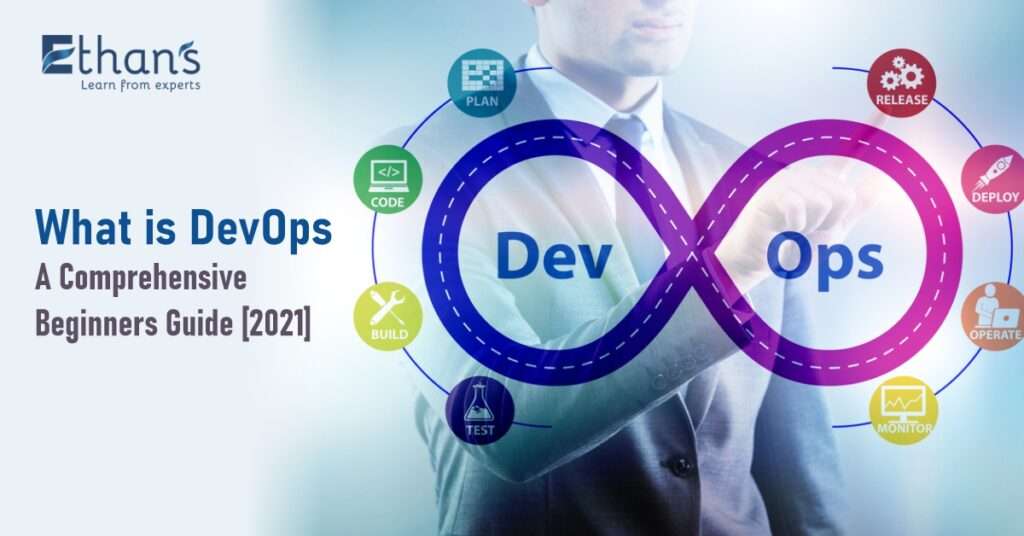
What is DevOps: A Comprehensive Beginners Guide [2021]

what-is-devops-comprehensive-beginners-guide

This blog will help you to obtain a clear understanding of the basic concepts of DevOps. From what are the DevOps tools, fundamentals, career opportunities to the highest paid salary. Our Comprehensive DevOps Guide for Beginners will assist aspirants who are passionate about upscale their career in modern tool & practices. What is DevOps – Overview The term DevOps was devised by incorporating the words “development” and “operations”. DevOps is a set of applications that enables to automate and integrate to bridge the gap between development and operation teams. It merges humans, technology and process with various tools and practices to constantly impart value to customers, enhance the ability to better respond to customer needs, increase confidence in the applications they develop to achieve fruitful business goals. The process is devised between the software development, IT operations, quality engineering, and security team—to coordinate and collaborate to produce build, test, and release software better, faster more reliable products.   What Are The Best DevOps Tools? As technology advances, numerous DevOps tools have been developed to make collaboration and development easier. To help you understand better we have mentioned 10 top DevOps tools: Here is the list of the best DevOps tools to learn and master: 1. Docker Docker is a Linux-based open-source technology suite that allows DevOps teams to secure packaging, deploying and running of applications. This tool allows portable to assemble with components or several other tools. It is highly secure, and the user can integrate with any language. The app has reduced the infrastructure costs of the organizations. 2. Ansible Ansible is a leading DevOps tool. This ideal tool is utilized for introducing new changes within the existing system, manage complex deployments and configure newly deployed machines. It is an easier tool to scale automation and speed up the development process. It helps to avoid complexity in the software development process & eliminates repetitive tasks that result in strategic and productive work. Lowers the infrastructural costs increasing the replication speed of scalability. 3. Git Git a highly popular one of the top DevOps tools utilized by industry giants such as Microsoft, Amazon, and Facebook. It allows the developer team can make rapid iterations to the code, track the progress of work, notify and coordinate work among team members. Git allows you to experiment more. In case of any error, immediate rollbacks can be done to the previously saved version within seconds. You can also create discreet branches and add-on in the new features when they’re ready. You will require to host a repository for the work as well, such as GitHub. 4. Puppet Puppet allows you to manage and automate the entire infrastructure as code. Without multiplying the resources and the size of the workforce, it helps you to execute software inspection, delivery, and operation. This open-source tool has thousands of modules that can be easily integrated with many other platforms. Puppet eliminates manual work for the software delivery process. It helps the developer to enhance the delivery pace. 5. Chef  A chef is a Cloud-based system. It is useful for achieving speed, scale, and consistency. This powerful open-source configuration management tool is used to ease out complex tasks, perform automation, accelerate cloud adoption, effectively manage data centres, manage multiple cloud environments and maintains high availability. Besides, Chef can manage configurations across your network and automate your application deployment and infrastructure configuration. 6. Jenkins Jenkins is a free, open-source DevOps deployment tool designed for monitoring repeated tasks and integrating project changes efficiently. Its key feature, the Delivery Pipeline, enables real-time testing and reporting of changes. With a vast plugin ecosystem, Jenkins seamlessly integrates with Windows, Mac OS X, and Linux. It automates tasks across the software development lifecycle (SDLC), facilitating code commits, test execution, and report retrieval. Highly customizable, it supports continuous integration and delivery, providing instant feedback on potential issues. Jenkins boasts easy setup and configuration via a web interface and offers over 400 plugins for diverse project needs. It requires minimal maintenance and includes a built-in GUI tool for hassle-free updates. 7. Nagios  Nagios is another useful tool for DevOps that assist in monitors components like applications, services, OS, network protocols and infrastructure. There are two Nagios editions: Nagios Core and Nagios XI; the latter offers many more features for even greater functionality. This tool simplifies the process of searching log data and provides complete monitoring of desktop, Java Management Extensions, server operating systems and all mission-critical infrastructure components on any operating system. The log management tool comes in as a great help for large organizations which have a countless number of routers, servers, switches, etc. in the backend. It alerts the users It frequently tracks a performance chart and monitors trends to alert the user in case a particular fault occurs on the backend or any device failure occur. Nagios is one of the most popular free and open-source monitoring tools used to find and correct problems in networks and infrastructure. 8. Splunk Splunk is a DevOps tool that makes logs and machine data accessible, usable and valuable to everyone in the team. It analyzes, visualizes, and delivers operational intelligence data to the team, enhancing productivity and efficiency. With actionable insights, it stands out as one of the best software for data-driven analytics. Next-generation deployment ensures companies become more productive, competitive, and secure, providing a unified view analytics solution. 9. Bamboo Bamboo is quite similar to Jenkins; however, it’s a paid version. Additionally, it offers prebuilt functionalities, resulting in fewer plugins. Moreover, Bamboo boasts a spontaneous and user-friendly interface, with its primary attribute being auto-completion. Depending on your goals, Bamboo can significantly save you time compared to other open-source tools. 10. ELK Stack ELK Stack has compiled three open-source DevOps tools which are Elasticsearch is a search and analytics engine Logstash collects input from various sources, and Elasticsearch stores that information Kibana is the visualization layer Together, they are managed by Elastic and are often used for centralized logging in IT environments. This tool is … Read more

Top Technical Skills to get hired in 2023

Top-Technical-Skills-to-get-hired-in-2023

The technological industry is developing quickly. Technology abilities that were once thought to be evergreen are now out of date. Technology’s ongoing development is creating new job opportunities that are in high demand for people with technical expertise. The projections predict a 12% increase in IT employment by 2024, which means that IT experts will have access to an increasing number of jobs.  Even though there is a tonne of job openings and few qualified professionals, there is fierce competition for high-paying positions. To stand out and land high-paying tech jobs in 2023, one needs to have some of the most in-demand tech skills. After graduation, when you begin to map out your career alternatives — what industry you want to work in, what further certifications you’ll need for it, etc. — is one of the most important periods in one’s professional life. Nowadays, there are so many options available that it’s normal to feel confused about which course is best for you to take and will help you land one of the highest-paying professions available. Money, career advancement, and work security are the main factors influencing people’s career decisions. And if these are significant considerations for you as well, this essay will assist you in choosing your next course of action. Here is a selection of the best career-focused programmes you might want to look into! Let’s discuss the top qualifications needed to land the best jobs in India. Tech skills that are hot commodities among employees Programming The process of designing and creating a computer programme to carry out a given task is known as programming. Coding, commonly referred to as programming, has always been a crucial tech skill in the world of technology and can help you take advantage of a plethora of job prospects. JavaScript, Java, and Python are the three most popular coding languages on the market today.  Compared to C and C++, Python is a high-level language that is fairly simple to learn. Python’s user-friendly design has helped it become incredibly popular. It is perfect for both beginners and experienced. According to the TIOBE index, it was ranked third on the popularity chart. A Python specialist typically makes around 5 lakh rupees per year in compensation.  There are no prerequisites that must be met before beginning a Python course. It is regarded as being simpler than c and c++, making it a great option for beginners in both IT and non-IT sectors.  One of the top universities in Pune offering python courses is EthansTech. The course material is structured so that it begins with the fundamentals of Python programming and progresses to more complex ideas. Following the completion of the programme, Ethan’s also offers 100% placement support. Data Science Data science is the process of extracting information and practical insights from the mind-boggling amount of data that an organisation has access to, utilising a variety of tools and algorithms to enable data-driven decision-making. Businesses increasingly rely on data to guide their decision-making because they don’t want to fall behind. Nearly every industry, including banking, finance, and healthcare, needs data scientists. Data-driven talents are highly valued, which is why the demand for professions such as business analysts, database administrators, data analysts, and related positions is on the rise. According to LinkedIn, data science will have the fastest job growth in 2017. From 2022, data scientists and analysts will be in high demand, according to a forecast by Future of Jobs. Since the beginning of 2019, the demand for data scientists has increased by almost 40%. Data science occupations are here to stay and are one of the most in-demand IT skills, as seen by the enormous growth in data science jobs. One of the highest-paying professions in data science, and in India, data scientists make an average salary of 7,57,190 annually. Fundamentals of data analysis, data intuition, data storage, and data interpretation to other domains, such as finance, sales, and marketing, are essential for these positions to derive meaningful patterns and information for the firm. Data scientists with strong data visualisation abilities are in high demand.  To begin a career in data science, no coding knowledge is necessary. In Pune, some schools provide precisely crafted data science courses to enable students to pursue profitable careers in the field. Cloud Computing The transmission of computing services such as servers, storage, software, analytics, and intelligence on an as-needed basis over the Internet (the “cloud”) results in widespread accessibility, more inexpensive resources, and quicker operation. The number of businesses moving to the cloud has increased dramatically, demonstrating the enormous expansion in the potential for the cloud computing sector. In 2020, cloud computing will likely be one of the most lucrative IT industries. Engineers who can plan, create, manage, maintain, and support cloud computing will find employment prospects there. The firms provide lucrative packages to cloud computing professionals because they are in charge of managing crucial applications on the cloud platform. According to PayScale, the average annual compensation for a cloud computing engineer in India is about INR 1,830,766.  Google Cloud Platform (GCP), Microsoft Azure, Amazon Web Services (AWS), Java, and Kubernetes are the most in-demand cloud computing technologies. EthansTech provides all the prominent cloud computing courses in Pune. For more info, you can visit AWS course in pune- AWS Training in Pune | AWS Classes in Pune-Course by Experts (website.ethans.co.in/) Azure course in pune- Microsoft Azure Training in Pune | Best Azure classes in Pune by Ethans Tech GCP course in pune- Google Cloud Platform Training in Pune – Ethans Tech Kubernetes course in pune- Kubernetes Course | Training Certification in Pune – CKA|CKD (website.ethans.co.in/)   Internet of things The internet of things (IoT) is a concept that envisions everyday physical objects becoming connected to the internet and having the ability to recognise other devices as their own. IoT is a young area of technology that has the potential to generate a lot of jobs in the future.  Electrical and electronics students would be very helpful in … Read more

Career as an AWS Engineer

AWS-Training-in-PUNE

A new golden gate that leads to numerous high-paying employment and a promising in-demand career opportunity with excellent pay packages has been opened by AWS in 2020.  An extremely well-known firm called Amazon provides a cloud computing platform known as Amazon Web Services (AWS). The on-demand, pay-as-you-go delivery of IT resources over the Internet can be referred to as cloud computing. The adoption of cloud computing as a method of data storage by all businesses in the modern world has had a significant impact. It is predicted to continue to expand in the future with no signs of slowing down.  Therefore, if you are considering a successful career in AWS, you have come to the perfect place. What is AWS? Many businesses and individuals use AWS (Amazon Web Services), the most complete cloud service platform available today.  AWS is currently available everywhere in the world and provides more than 175 fully featured services of various kinds from data centres. Data management, Migration, Monitoring, Security, Development Tools, Hybrid Cloud, Storage Databases, Security, Mobile Development, Artificial Intelligence, and Big Data Management are just a few of the categories that these services fall under.  AWS is an obvious choice for both large corporations and startups since it offers a secure, affordable infrastructure platform in the cloud. The adoption of and migration to AWS has been steadily declining in the digital market in recent years. AWS Training in Pune Learning how to use the skills needed to create and manage software solutions on Amazon’s well-known cloud platform is possible through AWS certification training. Because AWS is the top cloud platform in the world, people who are qualified and certified in the most recent cloud computing solutions will have access to a variety of work opportunities and competitive pay scales. AWS course in Pune with placement will include lessons given by instructors using real-world case studies, followed by assignments supervised by business experts. AWS Certifications: Are They Worth It?  You must comprehend the significance of an AWS Certification before making a choice. Pursuing an AWS Certification is useful since it verifies a person’s abilities and knowledge. Certification demonstrates a person’s commitment to and credibility in their cloud computing career. The AWS certification’s reputation as the highest-paying tech certification will lead to more job interviews at prestigious multinational corporations (MNCs) willing to pay more money.  An IT professional’s career progression must place a high emphasis on AWS certification. Organizations that use AWS-certified personnel  The AWS cloud services have a promising future. Since AWS offers a wide range of services to its clients at lower costs with the highest level of security, many of the top IT companies have made the switch. AWS has gained widespread acceptance, whether it is a start-up or a million-dollar business. Startup Customers Million Dollar Customers   According to a report, the monthly spend of the top ten AWS users are: Netflix: $19 million. Twitch: $15 million. LinkedIn: $13 million. Facebook: $11 million. Turner Broadcasting: $10 million. BBC: $9 million. Baidu: $9 million. ESPN: $8 million. What are AWS-certified Jobs? Let’s have a look at the top 8 AWS jobs that can fetch you the highest-paying jobs. There are many coveted job opportunities available for AWS professionals. Operational Support Engineer: The national average salary for an AWS Operations Engineer is ₹15,00,000 in India. Cloud Software Engineer: The typical Amazon Cloud Support Engineer salary is ₹13,23,489 System Integrator — Cloud: The national average salary for a Systems Integrator is ₹5,45,423 in India. Cloud Developer: The average AWS salary in India starts from Rs. 6,07,000 per annum DevOps Engineer: The average DevOps salary in India, according to PayScale, is Rs 674,202 per year, inclusive of bonuses and profit-sharing.  AWS Solutions Architect: The average AWS Architects salary for a mid-level architect is ₹1,800,000 per annum. AWS SysOps Administrator:  Average salary of a sysops administrator is around ₹5-6 lakhs per annum. Senior AWS Cloud Architect: Senior AWS Architects earns more than ₹3,000,000 per annum. AWS-certified salary scope in India Let’s start by looking at some of the current AWS salary statistics for India. According to Glassdoor’s most recent update from December 2021, the average base salary is INR 5 lakh annually. Keep in mind that this is base pay, which is the employee’s starting pay without taking into account any bonuses, benefits, or raises.  AWS employees’ national average pay is INR 4,57,900. These wage projections, however, are only based on 9 salaries provided by AWS employees and are hardly an accurate reflection of the actual figures. However, we may use them as a jumping-off point to investigate actual AWS salaries in India in 2022. If we examine these salaries according to seniority levels and various job responsibilities, we discover:  L2: Solutions Developer Lead earns around INR 9 lakhs a year L3: Technical Manager Lead earns around INR 6 lakhs a year L4: Technical Manager Senior Lead earns around INR 15 lakhs a year Beyond the average, wages might range from INR 3 lakhs to INR 27 lakhs annually. However, where you live in the nation also affects your wage. Additionally, you will earn more money as an AWS developer or architect as you become accustomed to your roles and responsibilities and pursue higher qualifications. Which Amazon Web Services training is the best?  To begin your journey of cloud learning, familiarise yourself with the AWS ecosystem and basic services. EthansTech’s AWS Courses in Pune are regarded for their practical training and top lab procedures. The training has been created so that both IT and non-IT professionals can benefit from it. At AWS Classes in Pune, our trainer, who is engaged in numerous intricate real-time projects, introduces a variety of project-based use cases, which we may utilise to practise using AWS services. The experience you gain is comparable to actual project experience overall.