Growing Demand for Data Science and Artificial Intelligence

demand for data science and ai

The field of technology has been rapidly advancing, and two prominent areas that have gained significant attention are data science and artificial intelligence (AI). These disciplines have become vital in solving complex problems, making informed decisions, and enhancing various industries’ efficiency. In demand for professionals skilled in data science and AI has been steadily growing, driven by the country’s digital transformation and the need for innovative solutions. This article explores the demand for data science and artificial intelligence in the demand, highlighting the opportunities, challenges, and future prospects in these fields. In today’s data-driven world, organizations across the globe are harnessing the power of data science and AI to gain valuable insights, automate processes, and improve overall productivity. The demand for data science and artificial intelligence, with its vibrant economy and thriving technology sector, is no exception to this trend. Data science involves extracting actionable insights from large volumes of data, while AI focuses on developing intelligent systems that can mimic human cognitive abilities. These disciplines complement each other and play a pivotal role in shaping the future of numerous industries. Overview of Data Science and Artificial Intelligence Data science encompasses a wide range of techniques, including statistical analysis, machine learning, and data visualization, to uncover patterns, correlations, and trends within data sets. It involves collecting, organizing, and analyzing structured and unstructured data to generate meaningful insights. On the other hand, artificial intelligence refers to the development of computer systems that can perform tasks that typically require human intelligence. This includes natural language processing, computer vision, speech recognition, and decision-making. Growing Demand for Data Science and Artificial Intelligence Increasing Adoption in Various Industries India has witnessed a significant increase in the adoption of data science and AI across multiple sectors. Industries such as healthcare, finance and banking, e-commerce and retail, and transportation and logistics have recognized the potential of these technologies to drive innovation and gain a competitive edge. For instance, in healthcare, AI algorithms can analyze medical images and assist in diagnosing diseases more accurately and efficiently. In finance and banking, data science techniques enable the detection of fraud and the identification of patterns in financial transactions. In e-commerce and retail, AI-powered recommendation systems personalize customer experiences and improve sales. In transportation and logistics, data analysis optimizes routes, reduces delivery times, and enhances supply chain management. Job Opportunities and Market Growth The demand for skilled professionals in data science and AI is rapidly increasing in India. As companies strive to harness the power of data and automate processes, there is a growing need for data scientists, AI engineers, machine learning specialists, and data analysts. These professionals are sought after by both local and international companies, creating a competitive job market with attractive remuneration and career growth opportunities. The market for data science and AI is expected to witness substantial growth in the coming years, offering abundant prospects for individuals passionate about these fields. Industry Applications of Data Science and Artificial Intelligence The applications of data science and AI are widespread across various industries in demand. Healthcare In the healthcare sector, data science and AI are revolutionizing patient care, medical research, and drug discovery. Predictive analytics can help healthcare providers anticipate disease outbreaks and allocate resources efficiently. AI-powered diagnostic tools enable the early detection of diseases, improving treatment outcomes. Additionally, AI algorithms can analyze large volumes of medical research data to identify potential drug candidates and accelerate the development of new treatments. Finance and Banking Data science and AI have transformed the finance and banking industry, enabling smarter decision-making, risk assessment, and fraud detection. Machine learning algorithms can analyze financial data to predict market trends and optimize investment strategies. AI-powered chatbots provide personalized customer support, improving customer satisfaction. Furthermore, fraud detection systems utilize anomaly detection techniques to identify suspicious transactions and prevent financial losses. E-commerce and Retail In the e-commerce and retail sector, data science and AI play a crucial role in enhancing customer experiences, optimizing inventory management, and predicting consumer behavior. Recommendation systems leverage machine learning algorithms to suggest products tailored to individual preferences, boosting sales. Data analytics help retailers gain insights into customer purchasing patterns and optimize pricing strategies. AI-powered chatbots offer personalized product recommendations and assist customers in making informed decisions. Transportation and Logistics Data science and AI have transformed transportation and logistics by improving route optimization, demand forecasting, and supply chain management. Machine learning algorithms analyze historical data to predict demand patterns and optimize fleet operations. AI-powered systems enable real-time tracking of shipments and route optimization, reducing delivery times and costs. Furthermore, data analytics help logistics companies optimize warehouse operations, inventory management, and distribution networks. Challenges and Opportunities in the Field While the demand for data science and AI in the demand is growing, several challenges need to be addressed for sustainable growth. Ethical Considerations As data science and AI become more pervasive, ethical considerations arise regarding data privacy, bias, and fairness. It is crucial to ensure that algorithms and models are developed responsibly, without reinforcing discriminatory practices or compromising privacy rights. Developing ethical frameworks and industry standards is vital to maintain trust and transparency. Data Privacy and Security The increasing reliance on data for decision-making raises concerns about data privacy and security. Organizations must prioritize data protection measures, adhere to data privacy regulations, and implement robust cybersecurity practices. Safeguarding sensitive information and ensuring responsible data handling is essential to maintain public trust. Upskilling and Continuous Learning Given the rapid evolution of data science and AI technologies, professionals in the field need to continuously upskill and stay updated with the latest advancements. This includes mastering new algorithms, programming languages, and tools. Lifelong learning and engagement in communities and industry events are crucial for professionals to remain competitive and drive innovation. Government Initiatives and Support Recognizing the importance of data science and AI, the government has taken steps to support the growth of these fields. Various initiatives focus on promoting research and development, providing funding opportunities, and fostering collaborations between academia, industry, and government agencies. The … Read more
Top 5 Data Science Applications of 2023

Top 5 Data Science Applications

Data science has become an integral part of various industries, revolutionizing the way businesses operate and unlocking new opportunities for growth. In 2023, we can expect significant advancements in data science applications, enabling organizations to leverage the power of data to drive innovation and make informed decisions. In this article, we will explore the top five data science applications that are poised to make a significant impact in 2023. Top 5 Data Science Applications Data science encompasses the process of extracting insights and knowledge from vast amounts of data using various techniques, including statistical analysis, machine learning, and artificial intelligence. With the continuous evolution of technology, data science applications have found their way into numerous sectors, leading to remarkable advancements in several fields. Let’s delve into the top five data science applications of 2023. Application 1: Predictive Analytics Definition and Importance Predictive analytics involves the use of historical data, statistical algorithms, and machine learning models to forecast future outcomes and trends accurately. By leveraging predictive analytics, organizations can make data-driven decisions, identify patterns, and anticipate customer behavior, enabling them to optimize processes, improve customer satisfaction, and drive revenue growth. Real-world Examples In the healthcare industry, predictive analytics helps identify patients at high risk of developing chronic diseases, allowing healthcare providers to intervene early and provide proactive care. Similarly, in the retail sector, predictive analytics aids in demand forecasting, inventory management, and personalized marketing campaigns, leading to improved customer experiences and increased sales. Benefits and Impact The benefits of predictive analytics are immense. It empowers businesses to reduce risks, enhance operational efficiency, and optimize resource allocation. Additionally, predictive analytics can be applied across various domains, including finance, marketing, and manufacturing, enabling organizations to gain a competitive edge in their respective industries. Application 2: Fraud Detection Overview and Significance Fraud detection is a critical application of data science, particularly in industries such as banking, insurance, and e-commerce. By analyzing patterns and anomalies in transactional data, data scientists can develop models that accurately detect fraudulent activities, protecting businesses and consumers from financial losses. Techniques and Algorithms Fraud detection employs advanced machine learning algorithms, such as anomaly detection, neural networks, and decision trees, to identify unusual patterns in data that indicate fraudulent behavior. These techniques, combined with real-time monitoring, enable swift action against fraudulent activities. Success Stories Notable success stories of fraud detection include credit card companies employing sophisticated data science techniques to identify and prevent fraudulent transactions, saving millions of dollars. Similarly, online marketplaces have implemented robust fraud detection systems to protect both buyers and sellers from fraudulent activities, ensuring a safe and trustworthy environment. Application 3: Recommendation Systems Understanding Recommendation Systems Recommendation systems are widely used in e-commerce, entertainment, and social media platforms to provide personalized recommendations to users. These systems analyze user behavior, preferences, and historical data to offer relevant and tailored suggestions, enhancing user engagement and driving customer satisfaction. Collaborative Filtering and Content-Based Filtering Collaborative filtering and content-based filtering are two common techniques used in recommendation systems. Collaborative filtering suggests items based on similarities between users, while content-based filtering recommends items based on their characteristics and user preferences. Hybrid approaches combining these techniques are also gaining popularity. Enhancing User Experience and Business Revenue Recommendation systems have become instrumental in driving user engagement and increasing sales. By providing personalized recommendations, businesses can offer a seamless user experience, improve customer retention, and drive revenue growth through cross-selling and upselling opportunities. Application 4: Natural Language Processing Introduction to NLP Natural Language Processing (NLP) is a branch of artificial intelligence that focuses on the interaction between humans and computers through natural language. NLP techniques enable computers to understand, interpret, and generate human language, leading to advancements in areas such as sentiment analysis, language translation, and chatbots. Sentiment Analysis and Text Classification Sentiment analysis, a subset of NLP, involves determining the sentiment or emotion behind a piece of text. It finds applications in analyzing customer feedback, social media sentiment, and market research. Text classification, on the other hand, categorizes text into predefined categories, facilitating automated content organization and information retrieval. Applications in Chatbots and Virtual Assistants NLP has revolutionized chatbot and virtual assistant technologies. Advanced NLP models enable chatbots to understand and respond to user queries more effectively, enhancing customer support and reducing human intervention. Virtual assistants, powered by NLP, can perform tasks such as scheduling appointments, answering questions, and providing personalized recommendations. Application 5: Image Recognition Image Recognition Techniques Image recognition utilizes deep learning algorithms and convolutional neural networks (CNNs) to analyze and understand visual content. This application has gained significant traction in various industries, including healthcare, security, and automotive, enabling tasks such as disease diagnosis, object detection, and autonomous driving. Applications in Healthcare, Security, and Automotive Industries In healthcare, image recognition assists in the early detection of diseases by analyzing medical images, leading to faster and more accurate diagnoses. In the security domain, image recognition enables facial recognition systems, enhancing surveillance and access control. Furthermore, autonomous vehicles rely on image recognition for object detection, ensuring safer and more reliable transportation. Advancements and Future Possibilities Advancements in image recognition continue to expand its applications. With the development of more advanced CNN architectures and the availability of large-scale datasets, image recognition systems are becoming more accurate and versatile. In the future, we can expect image recognition to play a vital role in fields such as augmented reality, robotics, and visual search. Conclusion The top five data science applications of 2023 offer remarkable advancements and possibilities across various industries. Predictive analytics, fraud detection, recommendation systems, natural language processing, and image recognition are transforming the way businesses operate, providing valuable insights, enhancing user experiences, and driving innovation. As technology continues to evolve, we can expect data science applications to further revolutionize our world. FAQs Q1. Are these applications limited to specific industries? No, these applications have widespread adoption across various industries, including healthcare, finance, e-commerce, and more. Q2. How important is data quality for these applications? Data quality is crucial for accurate results in data science … Read more

Impact of Data Science on Healthcare Innovations

Data Science is Shaping the Healthcare

Data science has been making waves in various industries, and the healthcare sector is no exception. The use of data science in healthcare has been a game-changer, transforming the industry in more ways than one. It has brought about significant improvements in the quality of care, patient outcomes, and overall healthcare system efficiency. At its core, data science involves data analysis, machine learning, and statistical modeling to derive insights and knowledge from complex data sets. In healthcare, this translates to using large amounts of data generated by patients, healthcare providers, and medical devices to improve healthcare delivery, decision-making, and patient outcomes. In this article, we will explore how data science is shaping the healthcare industry and the different ways in which it is being used to improve patient care. Data Science is Shaping the Healthcare Industry Precision Medicine One of the most significant ways in which data science is transforming healthcare is through precision medicine. Precision medicine involves tailoring medical treatments to individual patients based on their unique genetic makeup, lifestyle, and environment. This approach allows healthcare providers to provide personalized care and treatment that is more effective, efficient, and tailored to the patient’s needs. Data science plays a crucial role in precision medicine by analyzing large amounts of genomic and clinical data to identify disease risks, develop personalized treatment plans, and predict treatment outcomes. Machine learning algorithms can also be used to identify patterns and relationships within large data sets, which can help healthcare providers make more informed decisions about treatment options. Predictive Analytics Another significant application of data science in healthcare is through predictive analytics. Predictive analytics involves using historical data and statistical modeling to predict future outcomes, such as disease outbreaks, patient readmissions, and patient outcomes. This approach can help healthcare providers anticipate potential issues before they occur and take proactive measures to address them. Data science can be used to analyze vast amounts of patient data, such as electronic health records (EHRs), medical imaging data, and patient-generated data, to identify trends and patterns that can be used to predict future outcomes. Machine learning algorithms can also be trained to recognize patterns and make predictions, making it easier for healthcare providers to identify high-risk patients and provide them with the necessary interventions. Medical Imaging Medical imaging, such as X-rays, CT scans, and MRIs, is an essential tool in diagnosing and treating various medical conditions. However, interpreting medical images can be a complex and time-consuming process. This is where data science comes in. Data science can be used to analyze medical images to identify patterns and anomalies that the human eye may miss. Machine learning algorithms can be trained on vast amounts of medical imaging data to recognize patterns and identify potential issues, such as tumors before they become more advanced. This approach can help healthcare providers make more accurate diagnoses and provide more effective treatment options. Healthcare Operations Data science can also be used to improve the overall efficiency of healthcare operations. By analyzing data on patient flow, resource utilization, and operational processes, healthcare providers can identify areas where improvements can be made and implement changes to streamline operations. Data science can also be used to develop predictive models to help healthcare providers anticipate demand and allocate resources more effectively. This can help reduce wait times, improve patient satisfaction, and ensure that resources are used efficiently. Become a Data Scientist—Enroll in Pune’s Top Course Today! Wrapping Up Data science is transforming the healthcare industry in more ways than one. From precision medicine to predictive analytics, medical imaging, and healthcare operations, data science is helping healthcare providers deliver better care, improve patient outcomes, and increase efficiency. As the use of data science continues to grow, we can expect even more significant advancements in healthcare in the years to come.

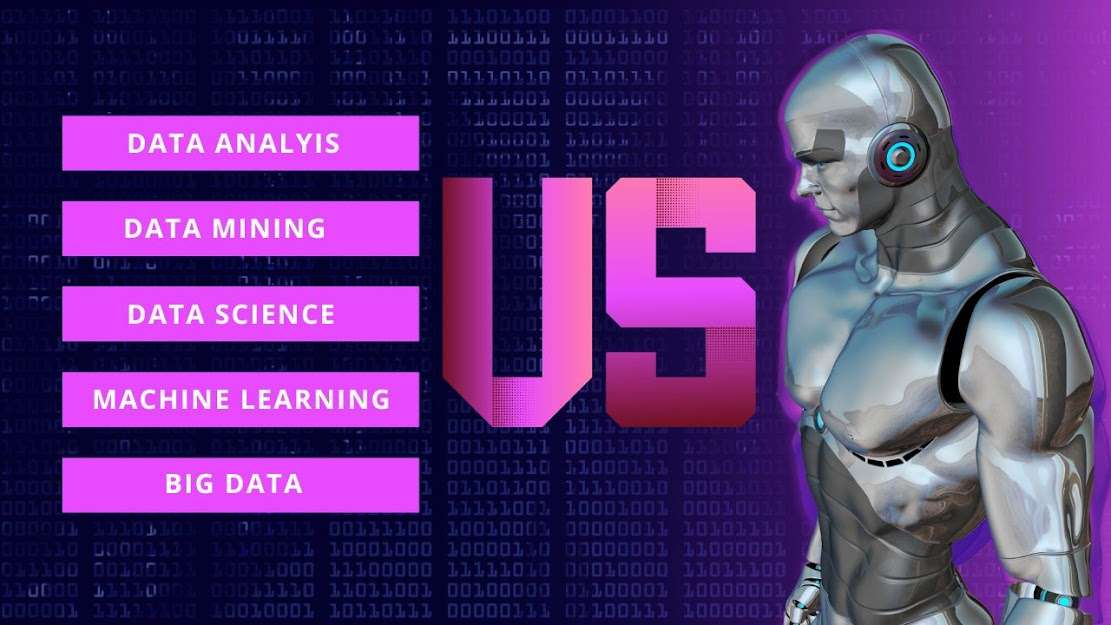
Data Analysis Vs. Data Mining Vs. Data Science Vs. Machine Learning Vs. Big Data

Data Analysis, Data Mining, Data Science, Machine Learning, Big Data

Introduction Data science is an interdisciplinary field that involves using statistical, mathematical, and computational techniques to extract insights and knowledge from data. It is a broad field that encompasses many subfields, including data analytics, data analysis, data mining, machine learning, and big data. What is Data Analytics? Data analytics involves examining datasets to extract insights and knowledge from them. It is often used to inform business decisions or identify patterns in data. Data analytics involves both descriptive and diagnostic analysis, which means that it can be used to describe what has happened in the past and diagnose the reasons why it happened. What is Data Analysis? Data analysis is a more general term that refers to the process of examining data to extract insights and knowledge from it. It can involve various techniques, including statistical analysis, machine learning, and data visualization. Data analysis is often used in scientific research to test hypotheses and draw conclusions from data. What is Data Mining? Data mining is a specific technique used to extract insights and knowledge from large datasets. It involves using statistical and machine learning algorithms to identify patterns in data that can be used to make predictions or inform business decisions. Data mining is often used in fields like finance, healthcare, and marketing to identify trends and patterns in data. What is Data Science? Data science is a field that encompasses many different techniques and approaches to working with data. It involves using statistical, mathematical, and computational techniques to extract insights and knowledge from data. Data science can involve various subfields, including data analytics, data analysis, data mining, and machine learning. What is Machine Learning? Machine learning is a specific subfield of data science that involves building models that can learn from data and make predictions or decisions based on that data. It involves training algorithms on large datasets and using them to make predictions or classifications on new data. Machine learning is often used in fields like image and speech recognition, natural language processing, and recommendation systems. What is Big Data? Big data refers to datasets that are too large and complex to be processed using traditional data processing techniques. Big data involves the use of advanced computing technologies, such as distributed computing and cloud computing, to process and analyze data. Big data is often used in fields like finance, healthcare, and marketing to identify trends and patterns in data. Difference Between Data Analytics, Data Analysis, Data Mining, Data Science, Machine Learning, & Big Data Although these terms are often used interchangeably, they have distinct differences. Here are some of the key differences between them: Data analytics is the process of examining datasets to extract insights and knowledge from them, while data analysis is a more general term that refers to the process of examining data to extract insights and knowledge from it. Data mining is a specific technique used to extract insights and knowledge from large datasets using statistical and machine learning algorithms. Machine learning is a specific subfield of data science that involves building models that can learn from data and make predictions or decisions based on that data. Big data refers to datasets that are too large and complex to be processed using traditional data processing techniques and often involves the use of advanced computing technologies like distributed computing and cloud computing. Conclusion While data analytics, data analysis, data mining, data science, machine learning, and big data are all related to the management and processing of data, they are different concepts with distinct goals and objectives. Understanding the differences between these terms is critical to effectively leveraging data and deriving valuable insights. To summarize, data analytics focuses on extracting insights from data sets, while data analysis involves examining and interpreting data to draw conclusions. Data mining is the process of extracting patterns and insights from data sets, while data science involves the use of scientific methods to extract insights from data. Machine learning is a subset of data science that focuses on building algorithms that can learn from data and make predictions, while big data refers to large, complex data sets that require specialized tools and techniques for processing. By understanding the differences between these concepts, individuals and organizations can make better decisions about how to leverage data and gain insights into their business and customers. As the importance of data continues to grow, a solid understanding of these concepts will be increasingly critical to success in the digital age.

Is Data Science A Good Career

Is Data Science a Good Career

The world is advancing every second and the world of science is taking thousands of turns every year. Data science is the most demanded part of technology in this 21st century. Teenagers, young adults, adults everyone is now attracted to the world of computers rather attracted to the world of the internet.  As time advances the craze and curiosity to get into the world of the internet also increases. Now the internet plays a big role in our lives and this internet has various parts which integrate all sorts of data.  WHAT IS DATA SCIENCE  Data science is a perfect amalgamation of maths, programming, statistics, and artificial intelligence. It is one of the most required aspects of science which is helpful in everyday life.  Data Science helps in transforming raw data into insights. Data science provides a meaningful meaning to everyday numbers. Data science is placed in one of the growing communities.  Most of the data science tasks are related to the data that are collected from the footprint of the people left on the internet. In today’s time, we all are leaving our footprints on the internet.  Every time people interact through phones, the internet, or computer they generate data. And most of the time the data gets collected and stored and then handed over to the data scientist to generate the insights and help the companies to make a profit out of the data.  Data science involves the collection of data, analysis of data, and building models from that data. Machine learning also comes under data science. The only difference between a machine learning engineer and a data scientist is that the machine learning engineer focuses on the machine learning algorithm and a data scientist focuses on the overall pipeline of the data.  CAREER PATHS IN DATA SCIENCE As the world of the internet is evolving and getting better with each passing day The opportunity for data science as a career is getting wider for people. Data science is going to provide plenty of opportunities in space.  According to a survey the average data scientist in the US makes around $120000 per year. But this number can have tremendous variation. Within the US the data scientist could be making more than $120000 per year at specific tech companies.  SKILLS REQUIRED TO BUILD A CAREER IN DATA SCIENCE Data Science has a fairly unique spot. It’s an exciting career with tons of job opportunities. One needs to possess a few basic skills before getting into the field of data science so that he/she can sustain in the field of data science for a longer duration. Below are a few skills mentioned.  Marketable skills like Data visualisation and programming –  One can’t become a data scientist without strong programming skills. Studies have found that people who are proficient in python and SQL are likely to remain in the field for a longer duration.  Knowledge of mathematics and statistics– Mathematics and statistics can be called a building block of a data scientist career. Even the understanding of data needs good command over statistical knowledge.  Machine learning –  Machine learning is an essential skill to have for building a career in data science. There are various types of machine learning and applying the appropriate learning type can give quality predictions and estimations.  Communication skills for sharing the work with stakeholders –  If a person wants to build a career in data science then needs to have good communication skills to be able to interact with other teammates and stakeholders. Communication skill is something which is much needed now in every type of field. Attitude to learn more and accept the change –  The world of data science gets updated every single day so the person trying to create a career out of data science should have the attitude to learn more and should be able to be a part of the change and accept the change positively. WHO CAN MAKE A CAREER OUT OF DATA SCIENCE Now the majority of teenagers and young adults are getting into the world of data science. They find data science to be a really fun subject to read and make a career out of it. Everyone is now learning programming, and coding and most of them take their interest in data science further and make it their profession.  So everyone interested in data science and has the curiosity to learn more and implement those learnings in generating new data should get into the field of data science. This is a kind of career option which gets updated every single day so people who live in have to cope with the new changes happening.  ADVANCEMENTS FOUND IN DATA SCIENCE IN RECENT YEARS 20 to 30 years before there was no such term called data science. The existence of the internet was just beginning and the collection of data had just started. At that time Excel sheet was the most chosen option to store various types of data.  Data in the previous years was not much wider space as it is now. Previously the amount of data was so low that one could easily calculate and extract the insights by just looking at it. And not much effort was needed to transfer the huge data to insights.  Because at that time huge data consisted of 300 to 400 rows of data. But today the scenario is quite different. Now we have millions and billions of rows of data. Now If a person spends his entire life taking out insights from the raw data then he would be unsuccessful because now the data is vast. During the 90s only a few rich people who had seen technology from a wider view knew about the existence of the internet and only a smaller amount of data could be generated.  And after that various types of applications started getting built and creating the present we are right now. These applications influenced people to go online and sometimes people got addicted … Read more

What is Data Science

What is Data Science

Data science is the process of examining and unlocking the patterns, trends, and experiences that are hidden inside the data. The study of data, which is produced from various sources, and how this data may be transformed into a valuable resource that can support the dynamic cycle in business is known as data science. There are various statistical techniques used in data science. Data transformations, data modeling, statistical operations, and machine learning modeling are some of these processes. The primary skill of every data scientist, according to a data science course in Pune faculty, is statistics. Additionally, optimization strategies might be used to satisfy the user’s business needs. You can also refer to a data science course in pune with placement.  What do Data Scientists do? With the use of their data visualization skills, a data scientist improves business decision making by bringing more speed and better direction to the entire process. Data scientists are far more technical than data analysts. Aspiring data scientists are strongly advised to have great communication skills because they will need to initiate and interact with many teams inside the firm.  Let’s move on to some more crucial discussions of data science-related problems now that we have a better knowledge of data science and data scientists.  What Does Data Science Hold For the Future? Organizations should be able to use all types of data in real-time within the next five years. More data will be used by businesses to make critical business choices, which will stimulate the development of new data science models. Accurate forecasting and decision-making will be emphasized by innovations like “Deep Learning.” As more businesses manage data science and analytics teams, the size of the current teams will increase. Although data science positions are beginning to specialize, predictive analytics and data science will soon be combined. The secret to utilizing big data’s limitless potential will be to hire qualified data scientists, business analysts, and statisticians.  Big Data, Big Paycheck Businesses all across the world are rapidly embracing digital technology and have tremendous development potential. This increase is being driven by data. The worldwide big data analytics market, which was valued at USD 37.34 billion in 2018 and is predicted to reach USD 105.08 billion at a CAGR of 12.3% by the year 2027, indicates that businesses are serious about their big data analytics. Big data analytics will soon have a very broad use.  In recent years, one of the most sought-after career positions worldwide has been for data scientists and data engineers. Every business, including healthcare, banking and insurance, retail, telecommunications, and information technology, has established teams devoted to data analytics and opened its doors to data analytics professionals. According to a survey, by 2021, 70% of corporate leaders will favor employees with data abilities. To improve their skills and take advantage of the career prospects in the market, more and more candidates are now enrolling in data science courses in Pune with placement.  Check Out Full Blog – What to Expect from a Data Science Course in Pune: Curriculum Breakdown Data-related employment pays well because of the expanding popularity and demand. Due to the complexity and ongoing evolution of the data analytics industry, there are extremely few trained individuals, which accounts for the high wage. Companies are paying top dollar even for entry-level employees due to the talent shortage in data analytics and the resulting imbalance between demand and supply.  These are the typical yearly salaries for positions in India that involve data:  According to PayScale, the average data scientist income in India is 698,412. A beginning data scientist with under a year of experience may expect to make around 500,000 per year, whereas early-stage data scientists with between one and four years of experience make about 610,811 per year.  Data engineers make an average of $830,864 per year.  Data Science training is offered in Pune by Ethans Tech Pune, and it is created and given by industry professionals who are employed by leading MNCs and have practical job experience. By working on actual case studies, the data science training in Pune helps people get ready by preparing them to work independently on pertinent projects.

Grab the Best Data Science Course in Pune

Grab the Best Data Science Course in Pune

Data science mixes inventive technology with imaginative ideas. This has helped, among other things, in the development of business strategies and sustainable business plans. It is employed by several technological disciplines, such as algorithm creation, data interference, and technology, to come up with answers for challenging issues.  Data science course in Pune, Given the importance of introductory data science courses for beginners, there are many job opportunities in this industry. Your training would require a quality data science course in Pune with placement. Ethans Tech is one of the best locations to learn technology. It is the ideal environment for young graduates to begin their careers in data science. Why Data Science? Every business would need business data to function, and success without it is impossible. To become the best data scientist, one may fill a variety of positions related to the field. Companies today are prepared to make any type of data investment since they do not want to lose any data at any cost. It aids in the analysis of their market standing, business position, prospects, and outcomes. You can learn the essentials of the course, which include mathematics, business sense, and technology abilities, from knowledgeable data science specialists. This course covers studying Python programming and machine learning with Python in addition to understanding any programming language. Introductions to the language and its fundamental objects are covered in Python classes in Pune. There are many reasons to select a high-flying profession in data science, thus you should pick the top data science degree in Pune for them. The primary factor is the complete placement assistance, which aids in your preparation for challenging interviews. The institute offers useful course material, incredible facilities, and exposure to actual industrial tasks.  There are several accessible batches to ensure that students with different schedules don’t miss the instruction. Ethans Tech also offers training in artificial intelligence, AWS, Google Cloud, DevOps, and Azure in Pune in addition to Python. Career Opportunities After Completing a Data Science Course Completing a data science course opens up a wide array of career opportunities in various industries. You can pursue roles such as Data Scientist, Data Analyst, Machine Learning Engineer, or Business Intelligence Analyst. These positions are in high demand across sectors like finance, healthcare, e-commerce, and technology. Must Read – Career Opportunities After Completing a Data Science Course in Pune Data science professionals are valued for their ability to interpret complex data and provide actionable insights, leading to informed decision-making. With competitive salaries and the potential for rapid career growth, data science offers a rewarding and dynamic career path for those equipped with the right skills and knowledge.

Developing Skills for Data Science Success

Developing-Skills-for-Data-Science-Success

Technology is constantly evolving, so I decided it was time to upgrade my skills. Because I work for an MNC and many MNCs are moving towards data science, I was also highly interested in upskilling a data science course in Pune with placement.  Career, home, and remote learning juggling  Choosing the ideal programme required taking into account the quality of the overall curriculum as well as the effects finishing the coursework will have on my personal and professional life. Ethan’s was at the top of my list because the Economic Times ranked the graduate programme in data science as the best.  I decided to sign up for Data Science after reading the course page and browsing the LinkedIn profiles of other Ethan alumni. My ability to upskill while managing responsibilities at home and a full-time job was made possible by the flexibility of when to finish the courses.  Make a statement and stand out  I gained the new abilities and self-assurance I needed to advance my career after completing the Data Science programme in Pune. I was able to incorporate newer technology and get a competitive edge at work thanks to masterclasses taught by industry professionals.  Because I feel like I am having more sophisticated talks now, I can notice a change in the way I approach my work. I have expanded my vocabulary at work thanks to upskilling, which results in deeper talks with my bosses.  Additionally, I attribute my improved capacity to contribute significantly to the innovative culture at my workplace to upskilling. Students, like me, are challenged by the capstone projects and projects to apply their knowledge of R, Python programming, machine learning, and data visualization with Tableau to address real-world business problems.  The projects were a great tool for putting my newfound knowledge to the test. The live training was unquestionably a bonus, and I believe the testing standards were also fairly strict. It provided me with a chance to think creatively and delve deeper than what was being taught.  A Note From Ethans  Data science is one of the trendiest industries right now. With a predicted 28 per cent growth rate through 2026, the discipline of data science is set to open up job opportunities for computer professionals as well as those in sectors like manufacturing, healthcare, and finance. See if Ethan’s Professional Certificate Program in Data Science and Data Science Bootcamp are a good fit for your upskilling path by reviewing the course descriptions, advisers and trainers, and student evaluations.

Professional Certificate Program in Data Analytics

Professional-Certificate-Program-in-Data-Analytics

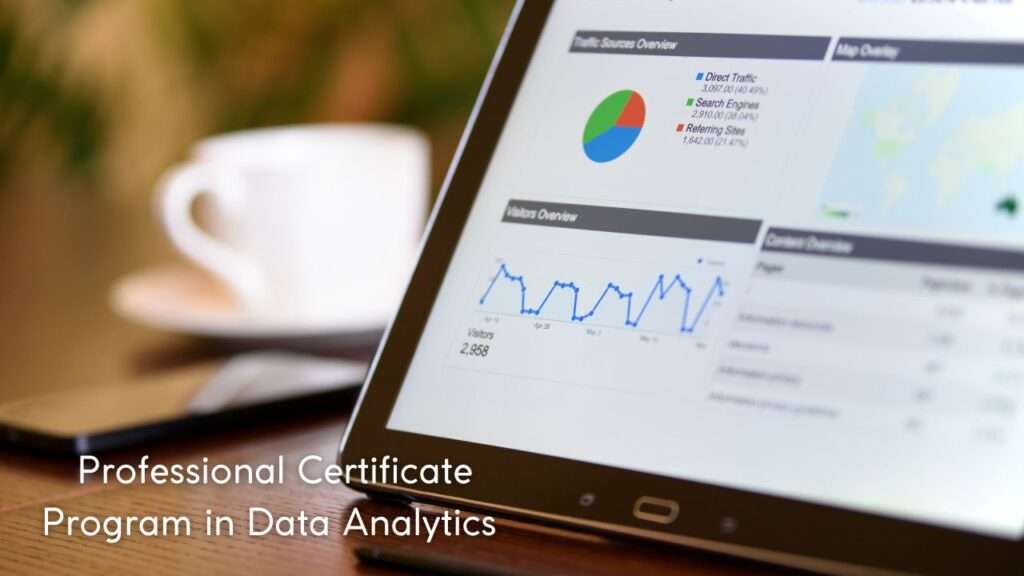
By giving professionals visibility and assisting them in making informed decisions based on knowledge about customer behavior, logistics, production schedules, and other factors, data analytics is transforming almost every business. In an effort to keep up, businesses of all sizes are searching for experienced data analytics specialists. There are other various specialized courses students can refer to like data science course in Pune with placement. Big Data Mining for Business Intelligence A digital gold rush has been sparked by the exponential development of data, such as online consumer behavior and precise demographic information, with the aim of turning this data into useful intelligence. Having the ability to interpret huge data sets can also lead to efficiency. For instance, by enabling wind turbines to perform minor self-adjustments based on location-specific wind data, GE is assisting wind power suppliers in producing an additional 10% of energy on average. Companies also segment their target markets through data analysis, which helps them become more adaptable to change. For instance, businesses can divide up client and demographic information into groups according to age, location, and purchasing preferences, and then use this segmentation to make marketing decisions that are wiser, more effective, and ultimately more successful. Additionally, they can utilize this information to identify new trends and act swiftly to meet customer demands. Organizations can learn how to understand the demands of their consumers and their businesses by appropriately analyzing the vast and expanding amounts of both structured and unstructured data, which will enable them to provide data-driven solutions. The Benefits of Working in Data Analysis A data analyst often gathers, processes and analyses data to make it available to an organization. A career in data analysis is a good fit for people who like working with numbers and statistics and can clearly communicate the consequences of the data to others. The comparatively high compensation for data analysts shouldn’t come as a surprise given the enormous demand in the world. The average annual salary for a data analyst in India is ₹413,089 but can range as high as ₹922,000, according to Payscale (as of March 27, 2020). Data analysts often go on to careers in data science, a similar but more-advanced career path that involves formulating questions and solving problems at a higher level.

What Does a Data Analyst Do?

What-Does-a-Data-Analyst-Do

The decision to change job routes can be even more difficult than choosing a career path in the first place. Occasionally, it entails taking a leap of faith since, after all, you want to choose wisely. The ideal professional decision will be satisfying, enable you to flourish, and you will like it. You can refer to a special DevOps course with placement in Pune. The technology sector offers a wide range of interesting jobs and positions, making it a large industry with many career opportunities. Particularly, having a rewarding career as a data analyst can be gratifying.  Why Work as a Data Analyst?  Most individuals consider job security to be extremely important, and a position in data is likely to be secure because of the great demand for these professions. According to MorningFuture, the job of a data analyst will be the one that is most in demand in the future. A major benefit is knowing that your work is likely to be secure (or, at the absolute least, that it won’t be difficult to find a successor).  It may be a thrilling experience to work as a data analyst because you get the ability to work on various projects across a variety of sectors.  Another important consideration for many people when selecting a job route is salary. And there is no doubt that a career as a data analyst is financially rewarding. According to SalaryExpert, the typical base salary for a data analyst in the US is $92,038 per year.  What does a Data Analyst do?  These days, almost everything is based on data, from expenses and logistics to market research and sales metrics. The majority of people may find this material intimidating and overwhelming. It can be difficult and time-consuming to sort through it all to decide what is important and what is not, as well as what it all signifies.  This is where data analysts step in; they take this data and transform it into information that organizations can use. They are now able to make future judgments with more knowledge.  Who Ought to Work as a Data Analyst?  A data analyst position can be perfect for you if you prefer challenge over routine. According to DevOps training in baner pune “Good data analysts are problem solvers, interested in and curious about data, skilled with statistics, and analytical, of course”. A career as a data analyst might be ideal for you if you have these traits. For details, you can refer to DevOps training in Pune kharadi.  As a data analyst, you must also be open to learning new things. People in these roles must be open to adapting to changes and learning about new procedures, systems, and techniques because technology is constantly changing. It’s essential to have specialised technical capabilities as a data analyst. Knowing certain programming languages, like Python and R, is preferable. Therefore, taking an authorised online Data Analyst course can help you get the skills you require. Always keep in mind that eagerness to learn is the most crucial quality.  Being familiar with the types might be advantageous for you as a data analyst.