How do Machine Learning and Data Analytics Collaborate in Modern Industries?
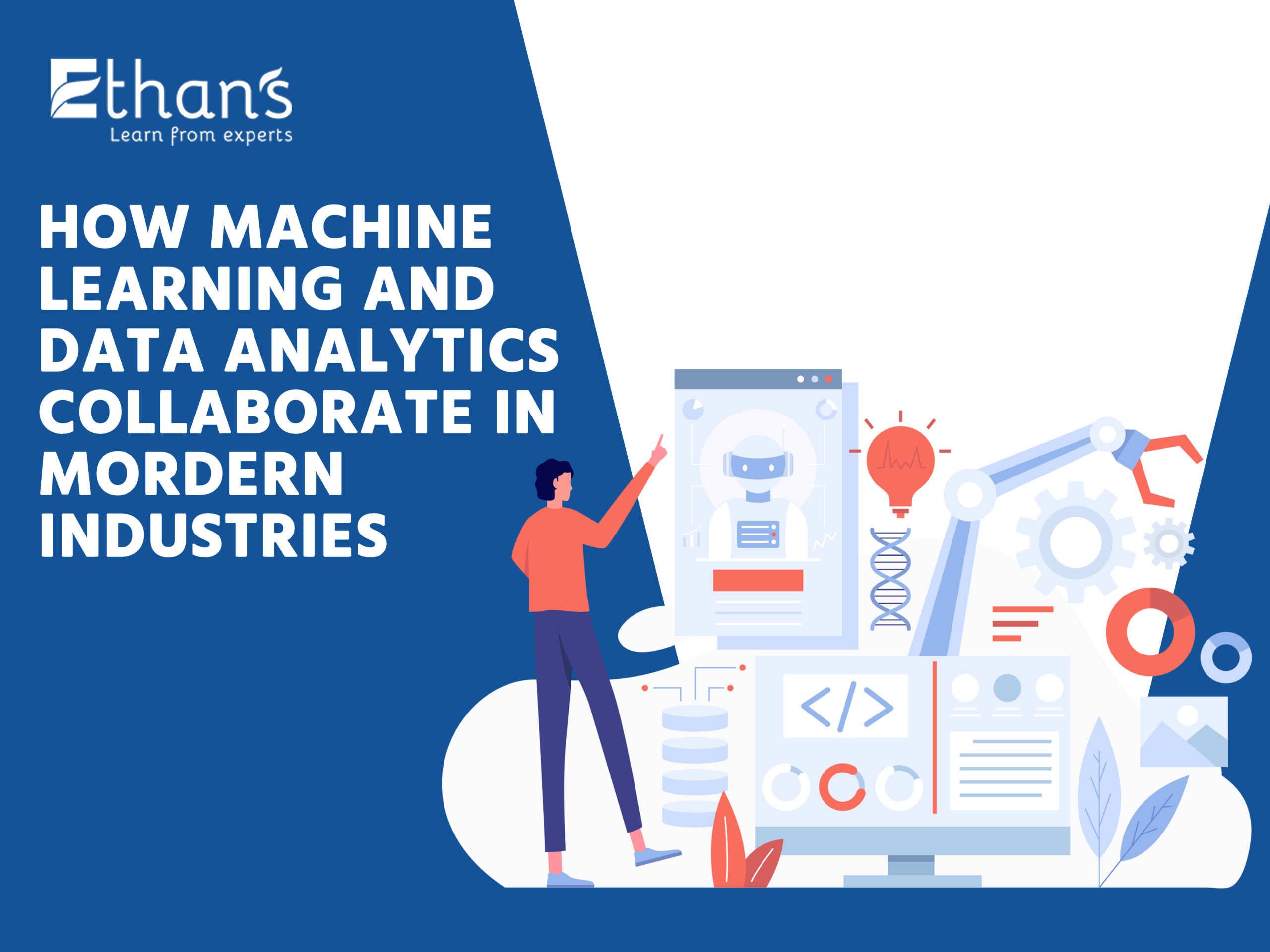
Machine Learning and Data Analytics Collaborate in Modern Industries

Technologies are transforming businesses like never before! They are helping business owners change the way they work, strategize and fundamentally, the way they think. Yes! Machine learning and data analytics are two such transformative technologies. They are helping businesses use data better and drive more favorable outcomes. For example, machine learning involves analyzing and interpreting to drive more meaningful insights from a dataset. On the other hand, data analytics help process substantial datasets efficiently. Of course, both these technologies excel as individual contributors. However, blending them can drive more value for businesses. How? While businesses should know this, it can also benefit you as someone looking to join machine learning classes in Pune or pursue data analysis courses in Pune. It will help enhance your knowledge and understanding of the role these technologies play when combined. What is Machine Learning? Data is critical to every business. It is a priceless asset businesses rely upon to make decisions, understand the macro and micro environment, comprehend their customers better, and more. Now what does machine learning do here? It is a subset of AI that helps businesses analyze massive datasets, calculate risk factors, and predict outcomes. It uses historical data to make forecasts and derive output values. No wonder, millions of companies worldwide use ML for diverse applications and benefit from it significantly.  What Do You Mean by Data Analytics? On the other hand, data analytics involves examining large datasets to unearth various patterns, trends, and insights. It involves applying statistical and data mining techniques, along with ML algorithms to extract valuable information from the data. Consequently, data analytics helps companies identify opportunities, mitigate risks, make informed decisions, and optimize their business processes.  The Role of Machine Learning in Data Analytics Data analytics and data science involve analyzing raw data and drawing meaningful insights. However, ML’s role extends to enabling companies to use advanced algorithms to automate data analysis and make real-time forecasts without human intervention. However, discover more about data analytics and ML collaboration and precisely, the role of ML in data analytics. 5 Stages Explaining ML’s Role in Data Analytics ML and data analytics collaborate in a very organized manner that helps businesses reach a particular outcome. The steps include the following. Step 1: Data Collection Machine learning helps collect and analyze structured, unstructured, and semi-structured data from various databases in various forms. Step 2: Cleanse and Prepare Data Data preparation involves ML helping businesses analyze the data and prepare features associated with the business problem. Once it does that, the next step involves cleansing it to free it from inconsistencies and elements that may ruin the data’s quality and erode the decision-maker’s understanding of it. Step 3: Model Training Model training relies on the quality of the training data and the ML algorithm you choose, which you do per user needs. In addition, you should consider model algorithm performance, complexity, interpretability, etc., for higher model accuracy. Once you choose the correct ML algorithm, you divide your training sets into training and testing to determine the ML model’s variance and bias. The outcome of model training is a working model you can validate, test, and deploy. Step 4: Model Evaluation and Retrain Once you finish training your model, you can evaluate it via different metrics. To do so, choose a metric that relies on the model type and implementation plan. Although you can train and assess your model, you shouldn’t expect it to solve your problems. You can improve it further by fine-tuning the parameters to achieve better accuracy. Step 5: Prediction This is the final stage and the purpose of all of the above. However, when you talk about model prediction, you should also look at prediction errors. Understanding these errors will help you develop more accurate models. Besides, you can minimize prediction errors by balancing bias and variance. The above can help businesses use data better and make more informed and favorable decisions. Applications of ML and Data Analytics in Different Industries Let’s look at a few industries where ML and data analytics collaborate to foster the industry’s growth. Retail Retail is one of the largest data-driven businesses in the world. That’s because every retailer generates zillions of bytes of data every day, concerning customer preferences, sales, purchases, orders, etc., in a structured, semi-structured and unstructured form. Of course, it is practically impossible to glean insights from such massive volumes of data. Together ML and data analytics play a role here. While data analytics collects, cleanses and processes the data, ML helps retailers derive useful insights related to trends, buying patterns, seasonal sales variations, demand spikes, and more. All these insights can form the basis of planning, prediction and decision-making and serving customers better. Healthcare Even when it comes to healthcare, service providers who deal with thousands of patients every day and generate extensive volumes of data. These include patient information, prescriptions, appointment information, follow up information, diagnostic reports, surgical requirements, patient history, administrative data, billing and invoicing, insurance claims and so much more.  Data analytics and ML can prove useful in each of these areas. For instance, when it comes to diagnostic data, while data analytics can work on the data part and make it usable with its abilities, ML can further analyze the diagnostic reports, and identify anomalies or malign cells. These ML reports can support doctor reviews and enable more informed decision-making. Oil and Gas The oil and gas industry isn’t an exception to the collaborative use of ML and data analytics. For example, data analytics can help oil and gas companies collect and process global cost-related data and structure to enable further use. ML can help analyze the vast data and help the analysts draw inferences concerning price trends, patterns, global oil and gas usage, demand and supply equations and much more. It can help them support the company’s decision-making and strategy concerning competitive pricing in the global market. Conclusion Of course, the above is fundamental. There’s much more that you can explore … Read more

Machine Learning Boosts Digital Marketing Growth

Machine Learning in Digital Marketing

Introduction to Machine Learning in Digital Marketing:- In today’s rapidly evolving digital environment, businesses are continually exploring new avenues to connect with and captivate their intended audience. Amidst this quest for innovation, one approach gaining significant traction is the integration of machine learning techniques within marketing strategies. Specifically, machine learning is being leveraged to develop personalized advertising campaigns tailored to individual customers. This blog aims to delve into the significance, benefits, and  The burgeoning importance of personalized advertising lies in its potential to enhance customer engagement and drive conversions. In an era characterized by information overload and short attention spans, generic, one-size-fits-all advertisements often fail to resonate with consumers. By utilizing machine learning algorithms, businesses can sift through vast amounts of data to gain insights into customer preferences, behaviors, and purchasing patterns. This wealth of information enables marketers to deliver advertisements that are not only relevant but also compelling and timely, thus increasing the likelihood of customer interaction and conversion. The integration of machine learning in marketing represents a paradigm shift in how businesses engage with their target audience. By leveraging advanced algorithms and predictive analytics, marketers can deliver personalized advertisements that cut through the noise of the digital landscape and resonate with consumers on a profound level. However, this transformation is not without its challenges, including privacy concerns, algorithmic bias, and implementation complexities. Nevertheless, by embracing ethical practices, fostering transparency, and prioritizing the customer experience, businesses can harness the power of machine learning to create impactful and enduring connections with their audience. Elevate your expertise and stay ahead of the curve with Ethan’s Tech’s Machine Learning training programs in Pune designed to enhance your skills in this rapidly evolving field. The Significance of Machine Learning in Marketing Growth The significance of personalized advertising cannot be overstated, particularly in today’s digital landscape where businesses are constantly vying for consumer attention amidst a deluge of marketing messages. Here’s why personalized advertising, facilitated by machine learning algorithms, is increasingly vital: Enhanced Customer Engagement:  Personalized advertisements have the unique ability to capture the attention of consumers by delivering content that speaks directly to their interests, needs, and preferences. Unlike generic ads that often feel intrusive or irrelevant, personalized ads are more likely to resonate with audiences, sparking genuine interest and fostering deeper engagement with the brand. Increased Conversion Rates:  The ultimate goal of any marketing effort is to drive conversions, whether it’s making a purchase, signing up for a service, or taking a desired action. Personalized advertising has been shown to significantly boost conversion rates by presenting consumers with relevant products or offers at the right time and place. By leveraging machine learning algorithms to analyze customer data, businesses can identify patterns and trends that inform the creation of highly targeted ad campaigns, resulting in a higher likelihood of conversion. Addressing Information Overload:  In today’s digital age, consumers are bombarded with an overwhelming amount of information and advertising messages on a daily basis. As a result, attention spans have dwindled, and consumers have become increasingly selective about the content they engage with. Generic, one-size-fits-all advertisements often get lost in the noise or simply ignored. Personalized advertising cuts through this clutter by delivering tailored messages that are more likely to capture and retain the consumer’s attention. Insights-Driven Marketing:  Machine learning algorithms enable businesses to sift through vast amounts of customer data to gain valuable insights into consumer preferences, behaviors, and purchasing patterns. By leveraging this wealth of information, marketers can develop a deeper understanding of their target audience and tailor their advertising strategies accordingly. From segmenting audiences to predicting future trends, personalized advertising powered by machine learning allows businesses to make more informed decisions and stay ahead of the competition. Timeliness and Relevance: One of the key advantages of personalized advertising is its ability to deliver content that is not only relevant but also timely. By analyzing real-time data on consumer behavior and preferences, machine learning algorithms can ensure that ads are served to the right audience, at the right time, and on the right channel. This timely and relevant approach increases the likelihood of customer interaction and conversion, as consumers are more likely to respond positively to messages that align with their current needs and interests. Personalized advertising fueled by machine learning algorithms is essential for businesses looking to cut through the noise of today’s digital landscape and connect with x`their target audience in meaningful ways. By delivering relevant, timely, and engaging content, personalized ads have the potential to drive higher levels of customer engagement, increase conversion rates, and ultimately, drive business growth. Key Features of Machine Learning in Digital Marketing Machine learning is a subset of artificial intelligence (AI) that focuses on the development of algorithms and models that enable the market to grow more and learn to make predictions or decisions based on demand and market standard. The Key Features of Machine Learning in Marketing: Personalization: Machine learning enables marketers to personalize customer experiences by analyzing vast amounts of data to understand individual preferences and behavior patterns. Predictive Analytics: Machine learning algorithms can predict future trends, customer behavior, and outcomes based on historical data, helping marketers make informed decisions and optimize campaigns. Automation: Machine learning automates repetitive tasks such as email marketing, ad targeting, and content optimization, freeing up marketers’ time to focus on strategy and creativity. Real-time Insights: Machine learning algorithms process data in real-time, providing marketers with immediate insights into campaign performance, customer interactions, and market trends. Segmentation: Machine learning algorithms segment customers into distinct groups based on similarities in demographics, behavior, or preferences, allowing marketers to target specific audience segments with tailored messaging. Optimization: Machine learning continuously optimizes marketing campaigns by testing different variables, such as ad creatives, messaging, and targeting parameters, to maximize performance and ROI. Fraud Detection: Machine learning algorithms detect fraudulent activities such as click fraud, fake accounts, and payment fraud, helping marketers maintain the integrity of their campaigns and budgets. Customer Lifetime Value (CLV) Prediction: Machine learning predicts the lifetime value of customers … Read more

Role of Feature Engineering in Machine Learning Success

Machine Learning Course

Introduction In the realm of machine learning, where algorithms reign supreme, there’s a less heralded hero working behind the scenes – feature engineering. While algorithms get all the limelight, feature engineering quietly holds the keys to unlocking the true potential of your models. In this article, we’ll delve into what feature engineering is, why it’s crucial for machine learning success, and how it can significantly impact the outcomes of your models. What is Feature Engineering? Feature engineering is the process of transforming raw data into a format that is suitable for machine learning algorithms to extract patterns effectively. It involves selecting, extracting, and sometimes creating new features from the available data to improve the performance of machine learning models. Why is Feature Engineering Important? Enhanced Model Performance: The quality of features directly impacts the performance of machine learning models. Well-engineered features can lead to more accurate predictions and better generalization. Data Representation: Features serve as the foundation upon which machine learning algorithms operate. By representing data effectively, feature engineering enables algorithms to discern meaningful patterns. Dimensionality Reduction: Feature engineering can help reduce the dimensionality of data by eliminating irrelevant or redundant features. This simplifies the model, making it more efficient and less prone to overfitting. Handling Missing Data: Feature engineering techniques such as imputation can address missing data issues, ensuring that models are trained on complete datasets. Domain Knowledge Incorporation: Feature engineering allows domain knowledge to be injected into the model, leading to more interpretable and contextually relevant outcomes. Check Out Ethan’s Tech Machine Learning Course Common Feature Engineering Techniques 1. Feature Scaling: Scaling features to a similar range (e.g., using normalization or standardization) prevents certain features from dominating others and ensures that the model converges faster. 2. One-Hot Encoding: Converting categorical variables into binary vectors enables machine learning algorithms to process categorical data effectively. 3. Feature Imputation: Handling missing values by imputing them with a suitable value (e.g., mean, median, or mode) to maintain the integrity of the dataset. 4. Feature Selection: Identifying and selecting the most relevant features using techniques like correlation analysis, forward/backward selection, or regularization. 5. Feature Transformation: Transforming features using mathematical functions (e.g., logarithm, square root) to make the data more suitable for modeling. 6. Text Preprocessing: For natural language processing tasks, techniques such as tokenization, stemming, and lemmatization are employed to extract meaningful features from text data. Example: Predicting Housing Prices Consider a machine learning task where the goal is to predict housing prices based on various features such as size, location, number of bedrooms, etc. Through feature engineering, we can: Convert categorical variables like ‘location’ into numerical representations using one-hot encoding. Handle missing data in features such as ‘size’ or ‘number of bedrooms’ by imputing them with median values. Create new features like ‘price per square foot’ by combining existing features to provide additional insights. By applying these feature engineering techniques, we can build a more robust and accurate predictive model for housing prices. What are the Tools for Feature Engineering Several tools facilitate feature engineering, including: Pandas: Popular Python library for data manipulation and analysis, offering extensive functionality for feature engineering. Scikit-learn: Provides various feature engineering techniques and tools for building machine learning models. TensorFlow / Keras: Deep learning frameworks offering functionalities for feature engineering in neural network architectures. Feature-engine: Python library specifically designed for feature engineering tasks, providing a wide range of preprocessing techniques. What are the Advantages and Drawbacks of Feature Engineering Advantages: Improved Model Performance: Well-engineered features lead to more accurate predictions and better generalization. Enhanced Data Representation: Effective feature engineering enables algorithms to discern meaningful patterns in data. Dimensionality Reduction: Reducing data dimensionality simplifies models, making them more efficient and less prone to overfitting. Domain Knowledge Incorporation: Feature engineering allows domain expertise to be integrated into models, resulting in more interpretable outcomes. Drawbacks: Manual Effort: Feature engineering often requires significant manual effort and domain expertise to identify and engineer relevant features. Potential Information Loss: Incorrect feature engineering may lead to the loss of valuable information or introduce biases into the model. Model Sensitivity: Models may become sensitive to changes in feature engineering techniques, requiring careful experimentation and validation. Conclusion Feature engineering is not just a pre-processing step in machine learning; it’s a fundamental aspect that can make or break the success of your models. Aspiring data scientists and machine learning enthusiasts must recognize the pivotal role feature engineering plays in extracting meaningful insights from data. By mastering the art of feature engineering and applying it judiciously, one can unlock the true potential of machine learning algorithms and drive impactful solutions across various domains. At Ethans, we understand the importance of feature engineering in machine learning success. Through our comprehensive courses on data analytics, data science, machine learning, AI, and Python, we equip learners with the knowledge and skills needed to excel in the rapidly evolving field of data science. Join us on the journey to harness the power of feature engineering and unleash the full potential of machine learning. Frequently Asked Questions Q.1 What are some advanced feature engineering techniques beyond the basics? Beyond the fundamental techniques mentioned, advanced feature engineering methods include feature embedding for categorical variables, time-series feature engineering (e.g., lag features, rolling statistics), and feature interaction engineering (e.g., polynomial features, feature crosses). These techniques can capture complex relationships within the data and improve model performance. Q.2 How can feature engineering contribute to model interpretability? Feature engineering not only enhances model performance but also contributes to model interpretability. By creating meaningful and interpretable features, data scientists can gain insights into the underlying relationships between the features and the target variable. This understanding is crucial for explaining model predictions to stakeholders and building trust in the model’s decisions. Q.3 What are the potential pitfalls to watch out for in feature engineering? While feature engineering can greatly improve model performance, it’s essential to be aware of potential pitfalls such as overfitting due to feature engineering, introducing biases through feature selection, and the computational cost of engineering complex … Read more

Machine Learning Interview Questions and Answers – Ultimate Guide 2024

Machine Learning Interview Questions and Answers

Greetings, aspiring machine learning enthusiasts! In the dynamic realm of artificial intelligence, machine learning plays a pivotal role, and excelling in interviews is key to unlocking rewarding career opportunities. At Ethan’s Tech, we’ve compiled a comprehensive guide to help you navigate through the intricacies of ML interviews. Whether you’re a seasoned professional or a fresh graduate, these questions and answers will serve as a valuable resource in your journey towards mastery. So, let’s dive into the world of Machine Learning Interview Questions and Answers. What is the difference between supervised and unsupervised learning? Answer: Supervised learning involves training a model on labeled data, while unsupervised learning deals with unlabeled data to discover patterns. Explain the Bias-Variance Tradeoff in machine learning. Answer: The Bias-Variance Tradeoff is a balance between underfitting (high bias) and overfitting (high variance) to create a model with optimal predictive power. How does regularization prevent overfitting in a model? Answer: Regularization introduces a penalty term in the model’s loss function to discourage complexity, preventing overfitting. What is feature engineering, and why is it important in machine learning? Answer: Feature engineering involves modifying or creating features to enhance a model’s performance by helping it capture meaningful patterns in the data. Describe the process of cross-validation. Answer: Cross-validation involves splitting the dataset into subsets, training on some and validating on others to assess a model’s generalization performance. What is the ROC curve, and how does it relate to precision and recall? Answer: The ROC curve visualizes the tradeoff between true positive rate (recall) and false positive rate, offering insights into a model’s performance across different discrimination thresholds. Explain precision and recall. Answer: Precision is the ratio of correctly predicted positives to all predicted positives, while recall is the ratio of correctly predicted positives to all actual positives. What are ensemble methods in machine learning, and how do they work? Answer: Ensemble methods combine multiple models to improve overall performance by reducing overfitting and increasing model robustness. Discuss the differences between bagging and boosting. Answer: Bagging trains multiple models independently and averages their predictions, while boosting sequentially trains models, giving more weight to misclassified instances. What is the purpose of dropout in neural networks? Answer: Dropout is a regularization technique in neural networks that randomly ignores neurons during training, preventing overfitting and enhancing generalization. Explain the curse of dimensionality. Answer: The curse of dimensionality refers to challenges in dealing with high-dimensional data, leading to increased sparsity and computational complexity. What is the K-Nearest Neighbors (KNN) algorithm? Answer: KNN is a supervised learning algorithm that classifies data points based on the majority class of their K nearest neighbors in the feature space. What is the difference between precision and accuracy? Answer: Precision is the ratio of true positives to all predicted positives, while accuracy is the ratio of correct predictions to the total number of predictions. How does the gradient descent algorithm work in machine learning? Answer: Gradient descent minimizes the cost function by iteratively adjusting model parameters in the direction of the steepest descent of the gradient. What is a confusion matrix? Answer: A confusion matrix is a table that summarizes the performance of a classification model, showing the counts of true positives, true negatives, false positives, and false negatives. What is the AUC-ROC curve? Answer: The AUC-ROC curve measures the area under the Receiver Operating Characteristic (ROC) curve, providing a single value to assess a model’s overall performance. How does Principal Component Analysis (PCA) work? Answer: PCA is a dimensionality reduction technique that transforms high-dimensional data into a lower-dimensional space while retaining the most important information. What is the difference between bag-of-words and TF-IDF in natural language processing? Answer: Bag-of-words represents text as a set of words, ignoring grammar and word order, while TF-IDF considers the importance of words based on their frequency in the document and the entire corpus. How do you handle imbalanced datasets in machine learning? Answer: Techniques for handling imbalanced datasets include oversampling the minority class, undersampling the majority class, or using synthetic data generation methods. Explain the concept of hyperparameter tuning. Answer: Hyperparameter tuning involves optimizing the settings (hyperparameters) of a machine learning model to achieve the best performance, typically done through methods like grid search or random search. Explain the concept of transfer learning in deep learning. Answer: Transfer learning involves leveraging a pre-trained neural network’s knowledge on a specific task to enhance the performance of a model on a related task, saving computation time and resources. What is the vanishing gradient problem, and how does it affect deep learning models? Answer: The vanishing gradient problem occurs when gradients become extremely small during backpropagation, hindering the training of deep neural networks. This can lead to slow convergence or stagnation in learning. Discuss the differences between L1 and L2 regularization in machine learning. Answer: L1 regularization adds the absolute values of the coefficients to the loss function, encouraging sparsity, while L2 regularization adds the squared values, preventing large weight values and promoting a more balanced model. What are autoencoders, and how are they used in unsupervised learning? Answer: Autoencoders are neural networks designed to reconstruct input data, learning efficient representations. In unsupervised learning, they can be used for dimensionality reduction and anomaly detection. Explain the concept of batch normalization and its role in deep learning. Answer: Batch normalization normalizes input values in a mini-batch, reducing internal covariate shift and accelerating training. It helps stabilize and expedite the convergence of deep neural networks. How does the Long Short-Term Memory (LSTM) network address the vanishing gradient problem in recurrent neural networks? Answer: LSTMs use a gating mechanism to selectively remember and forget information over long sequences, mitigating the vanishing gradient problem in recurrent neural networks and improving their ability to capture long-term dependencies. What is the difference between precision and F1 score? Answer: Precision is the ratio of true positives to all predicted positives, while the F1 score is the harmonic mean of precision and recall, providing a balanced metric that considers both false positives and … Read more

How to Start Career in Machine Learning in 2024

machine learning classes in pune

Are you intrigued by the world of machine learning and artificial intelligence, but find yourself unsure of where to start your journey to become a machine learning engineer? Fear not! At Ethan’s Tech, we’ve crafted a guide to help you navigate the exciting and rewarding path to this in-demand tech career. Unlocking the Power of Machine Learning Machine learning, a captivating branch of artificial intelligence, revolves around predicting and adapting outcomes as more data is received. The demand for machine learning professionals has surged, making machine learning engineering the fifth most in-demand job of 2023 and now in 2024 But what exactly is machine learning? It’s the art of using algorithms to interpret data in a way that mimics human learning. From video surveillance to facial recognition on your smartphone, machine learning is everywhere. Businesses leverage it to understand consumer patterns, tailor marketing campaigns, and enhance user experiences on platforms like Meta and Amazon. What is the Role of a Machine Learning Engineer? At the heart of the data science team, machine learning engineers play a crucial role. They research, build, and design artificial intelligence, ensuring the continuous improvement of machine learning systems. As communicators between data scientists and system operators, machine learning engineers are essential collaborators in the development and maintenance of AI systems. Their responsibilities include implementing machine learning algorithms, conducting AI system experiments and tests, designing and developing machine learning systems, and performing statistical analyses. Thriving Job Outlook of Machine Learning in 2024 As we enter 2024, the computer science field is experiencing robust growth, with a projected 23 percent increase in information and computer science research jobs through 2032. Industry Recognition: In 2023, machine learning engineers secured a spot among the top 10 jobs, reflecting the ongoing expansion in machine learning and artificial intelligence. Continued Demand: The trend of high demand for machine learning professionals persists into 2024, showcasing sustained interest in this dynamic field. Digital Landscape Opportunities: The ever-expanding digital landscape creates exciting prospects for professionals with expertise in cutting-edge technologies. Pivotal Role: Machine learning engineers play a crucial role in the ongoing technological revolution, contributing to innovation, enhancing decision-making, and optimizing operations. Architects of the Future: Professionals in machine learning are not merely job seekers; they are architects of the future, driving transformative developments in the fusion of artificial intelligence and machine learning. Opportune Time: With demand remaining high, 2024 presents an opportune time to embark on a career in machine learning, offering a gateway to a future where innovation and expertise are pivotal for success in the ever-evolving tech landscape. Lucrative Salaries in Machine Learning As of 2024, the field of machine learning engineering not only offers a fulfilling career path but also comes with attractive financial rewards. Salaries for machine learning engineers have continued to soar, reflecting the high demand for their specialized skills and expertise. Industry Standard: On average, machine learning engineers command impressive salaries well above the national average. As of the latest data in 2024, the average annual salary for a machine learning engineer is estimated to be around ₹1.3 crore, showcasing the financial allure of this profession. Top Companies: Leading tech giants remain at the forefront of offering competitive salaries to attract top-tier machine learning talent. In 2024, companies such as Google, Facebook, Amazon, and Microsoft are known to offer salaries significantly exceeding industry averages. Google: Machine learning engineers at Google are reported to earn an average salary of ₹1.5 crore per year, with additional bonuses and benefits. Facebook: Facebook, now Meta, is also a major player in offering lucrative compensation packages, with machine learning engineers earning an average of ₹1.45 crore per year. Amazon: Amazon continues to invest heavily in machine learning, with salaries for machine learning engineers averaging around ₹1.4 crore annually. Microsoft: At Microsoft, machine learning engineers can expect competitive salaries, with an average annual compensation of ₹1.45 crore. These figures underscore not only the financial rewards of a career in machine learning but also the premium placed on talent by industry leaders. As you embark on your journey in 2024, these salary standards and opportunities in top companies make the field of machine learning engineering even more enticing. Your Path to Becoming a Machine Learning Engineer Embarking on the journey to become a machine learning engineer involves a strategic approach. Follow these three essential steps: Earn a bachelor’s degree in computer science or a related field: A strong foundation in computer programming, data science, and mathematics is crucial. Many machine learning engineering jobs require at least a bachelor’s degree, so consider starting your academic journey in computer science or a closely related field. Gain entry-level work experience: Jumpstart your career by working in the data science field. Entry-level positions such as computer engineer, data scientist, software developer, or software engineer can pave the way for a successful machine learning career. Build your machine learning expertise: While gaining experience, focus on building specialized skills. Engage in machine learning projects, earn relevant certifications, and consider courses like the machine learning specialization from Stanford University on Coursera. This program provides a comprehensive introduction to supervised and unsupervised learning, offering the knowledge you need to excel in the field. Start Your Machine Learning Journey Today by opting Machine Learning Course The realms of artificial intelligence and machine learning are expanding, and the demand for skilled professionals is higher than ever. Begin your journey today by building your knowledge of software development, learning various programming languages, and working towards your initial bachelor’s degree. At Ethan’s Tech, we offer a Machine Learning Course to help you prepare for an exciting career in the machine learning field. If you’re ready to dive into the world of machine learning, explore the machine learning specialization from Ethan’s Tech. It’s an excellent starting point to equip yourself with the skills and knowledge needed for a successful career in this dynamic and evolving field. Your future as a machine learning engineer awaits—let Ethan’s Tech guide you on your transformative journey. Tags Machine learning course … Read more

Machine Learning with R: Everything You Need to Know in 2024

machine learning training in pune

In the ever-evolving landscape of technology, machine learning continues to be a driving force behind innovation. As we step into 2024, the use of machine learning is not just a trend but a necessity for businesses and researchers alike. Among the plethora of programming languages available, R stands out as a powerful and versatile tool for machine learning. In this article, we’ll explore everything you need to know about machine learning with R in 2024. R in Machine Learning: A Brief Overview R, a programming language and environment for statistical computing and graphics, has gained popularity in the data science and machine learning communities. Its extensive libraries and packages make it an ideal choice for handling and analyzing data. In the context of machine learning, R offers a range of tools and frameworks that simplify complex tasks, from data preprocessing to model deployment. Check out: Project Ideas For Beginners Key Machine Learning Libraries and Packages In 2024, R’s machine learning ecosystem has witnessed significant advancements. Popular libraries such as caret, randomForest, and xgboost have been refined to provide more efficient and accurate models. New libraries have emerged, addressing specific needs and enhancing the overall machine-learning experience in R. Deep Learning with R While deep learning has traditionally been associated with languages like machine learning, R has been catching up. In 2024, the integration of deep learning frameworks such as Keras and TensorFlow into the R environment has made it easier for data scientists to leverage the power of neural networks. This opens up new possibilities for solving complex problems that require advanced deep-learning techniques. Interactivity and Visualization in R One of R’s strengths lies in its ability to generate high-quality visualizations. In 2024, the integration of interactive visualization tools with machine learning models in R has become more seamless. This not only aids in model interpretation but also enhances the communication of insights to stakeholders. R in Industry Applications Machine learning with R is not limited to academia; it has found its way into various industries. In 2024, we see R being extensively used in finance for risk modeling, healthcare for predictive analytics, and manufacturing for quality control. The versatility of R allows it to adapt to the specific needs of different domains. Challenges and Solutions Despite its strengths, R faces challenges, especially in handling big data and competing with languages like Python in certain domains. However, the R community continues to address these challenges by developing efficient packages and collaborating on projects that enhance R’s capabilities. Learning Resources and Community Support In 2024, the availability of learning resources for machine learning with R has expanded. Online courses, tutorials, and documentation make it accessible for both beginners and experienced data scientists to harness the power of R. The active R community contributes to forums, discussions, and open-source projects, fostering a collaborative environment for knowledge sharing. The Future of Machine Learning with R As we look ahead, the future of machine learning with R seems promising. The continuous development of libraries, integration of cutting-edge technologies, and the growing community support position R as a competitive player in the machine learning landscape. Read blog – Learn About the Types of Machine Learning Algorithms Conclusion Machine learning with R in 2024 is marked by innovation, adaptability, and a growing community. Whether you are a seasoned data scientist or a newcomer to the field, exploring the capabilities of R in machine learning is essential. With advancements in libraries, increased industry applications, and a supportive community, R continues to be a valuable asset for anyone navigating the intricacies of machine learning in the evolving technological landscape. Explore cutting-edge solutions with Ethan’s Tech, your best option for all types of courses. From software development to AI solutions, we’ve got you covered. Contact us today to elevate your business with innovative technology. Your success starts here.

Machine Learning Interview Questions & Answers 2024

Machine Learning Interview Questions & Answers 2024

As we step into the new year, the landscape of technology continues to evolve, and the demand for skilled machine learning professionals is stronger than ever. Whether you’re a seasoned data scientist or a fresh graduate aspiring to enter the field, mastering machine learning interview questions is a crucial step toward securing your dream position.  At Ethans Tech, we understand the significance of well-rounded preparation, and in this blog post, we’ll delve into some essential machine-learning interview questions to help you shine in your next interview. Essential Machine Learning Interview Questions & Answers 1. What Are the Different Types of Machine Learning? Answer: Supervised Learning: In supervised learning, the algorithm is trained on a labeled dataset, where the input data and corresponding output are provided. The model learns to map the input data to the correct output by generalizing from the labeled examples applications include classification and regression problems, such as image recognition and predicting house prices. Unsupervised Learning: Unsupervised learning involves working with unlabeled data, where the algorithm explores the inherent structure and patterns without explicit guidance. Clustering and association are common tasks in unsupervised learning. Clustering groups similar data points, while association identifies relationships and patterns within the data. Reinforcement Learning: Reinforcement learning involves training a model to make sequences of decisions by interacting with an environment. The algorithm receives feedback in the form of rewards or penalties based on its actions, allowing it to learn the optimal strategy over time. 2. What is cross-validation, and why is it important in machine learning? Answer: Ethans Tech recognizes the importance of model validation. Our curriculum includes extensive coverage of cross-validation techniques, ensuring our students are well-equipped to explain its significance in assessing model performance. 3. Can you differentiate between Bagging and Boosting in ensemble learning? Answer: In ensemble learning, Bagging (Bootstrap Aggregating) involves training multiple models independently on different subsets of the dataset and combining their predictions. Boosting, on the other hand, focuses on sequentially training models, giving more weight to misclassified instances. Both techniques aim to improve the overall performance and robustness of machine learning models. 4. Explain the concept of Explainable AI (XAI) and its significance in Machine Learning models. Answer: Explainable AI focuses on making machine learning models more interpretable and transparent. It’s crucial for understanding the decisions made by complex models, enhancing trust and accountability. In 2024, as AI systems become more pervasive, the ability to explain model outputs will be vital for regulatory compliance and user acceptance. 5. What Are the Differences Between Machine Learning and Deep Learning? Answer: Feature Machine Learning Deep Learning Definition In broad concept, algorithms learn from data and make decisions. Specialized form of ML using deep neural networks for complex problems. Architecture Traditional algorithms (decision trees, SVM, linear regression). Neural networks with multiple layers (deep neural networks). Feature Representation Requires manual feature extraction and engineering. Automatically learns hierarchical representations from raw data. Data Requirements Typically requires structured and labeled data. Can handle both structured and unstructured data, and excels with large datasets. Interpretability Offers more interpretability, easier to understand and explain. Often less interpretable, described as “black box” models. Computational Requirements Generally requires less computational power. Demands substantial computational resources, and often requires GPUs. Application Scope Used in various applications  Excels in image and speech recognition, NLP, and complex pattern recognition. Understanding these distinctions is crucial for choosing the right approach based on the specific characteristics of the problem at hand and the available resources. Also Read – Machine Learning Vs Deep Learning 6. Discuss the impact of AutoML on the future of Machine Learning. Answer: AutoML (Automated Machine Learning) is revolutionizing the field by automating the end-to-end process of applying machine learning to real-world problems. In 2024, its impact is profound, democratizing access to machine learning tools and enabling professionals with diverse backgrounds to harness the power of ML without deep technical expertise. 7. What Are the Three Stages of Building a Model in Machine Learning? Answer: The process of constructing a machine learning model encompasses three key stages: 1. Model Development: Select an appropriate algorithm tailored to the specific requirements of the model. Train the chosen algorithm using relevant data to enable learning and pattern recognition. 2. Model Evaluation: Assess the model’s accuracy by testing it against a separate dataset. Verify the model’s performance metrics, ensuring its effectiveness in generalizing to new, unseen data. 3. Model Deployment: Implement any necessary adjustments based on the evaluation phase. Deploy the finalized model for real-time application in projects. It is essential to periodically assess and update the model to ensure ongoing accuracy and relevance in its operational environment. Regular checks and modifications guarantee that the model stays effective and aligned with current data patterns. Mastering the intricacies of machine learning interview questions is not just a pathway to career success, but a testament to one’s adaptability in this dynamic field. The questions and answers in 2024 reflect the industry’s demand for a holistic understanding of advanced concepts like deep Learning, Explainable AI, and the profound impact of AutoML and Reinforcement Learning. For those eager to navigate this ever-changing landscape with confidence, Ethans Tech emerges as a beacon of expertise. Their comprehensive approach to machine learning education, blending theoretical understanding with practical application, equips individuals to not only answer interview questions but to excel in real-world scenarios. By enrolling in Ethans Tech, you invest in a learning experience that transcends traditional boundaries, ensuring you are well-prepared for the challenges and opportunities that lie ahead in the dynamic field of machine learning. Stay ahead, stay relevant, and thrive in the future of technology with Ethans Tech.

Why is Python Essential For Mastering Machine Learning?

Python Advantage in Machine Learning

In the fast-evolving landscape of technology, Python has emerged as a cornerstone for mastering machine learning, making it an indispensable skill for students and professionals alike. At Ethan’s, we recognize the significance of Python in the realm of machine learning and offer comprehensive courses to help you harness its potential. Join us on a journey to understand why Python is the key to unlocking the world of machine learning. The Python Advantage in Machine Learning 1. Simplicity and Readability: Python’s syntax is clear and readable, making it an ideal language for beginners diving into the complex world of machine learning. Its simplicity allows learners to focus on the logic of machine learning algorithms rather than getting bogged down by intricate coding structures. 2. Extensive Libraries: Python boasts a rich ecosystem of libraries, with TensorFlow and PyTorch leading the pack. These libraries simplify the implementation of complex machine learning models, reducing the learning curve and enabling practitioners to bring their ideas to life with ease. 3. Community Support: Being an open-source language, Python has a vast and active community. This means a plethora of resources, forums, and support channels are readily available, ensuring that learners can seek help and collaborate with like-minded individuals as they embark on their machine-learning journey. Python Libraries for Machine Learning: Expanding Possibilities In the realm of machine learning, Python’s strength is further amplified by its rich ecosystem of libraries. These libraries streamline the implementation of complex algorithms, enabling our students to navigate the intricacies of machine learning with efficiency: a. TensorFlow: TensorFlow, an open-source machine learning framework, empowers our students to design and deploy deep learning models effortlessly. Its flexibility and scalability make it an invaluable tool for tackling a wide range of machine-learning challenges. b. Scikit-Learn: Scikit-Learn provides a user-friendly interface for various machine learning algorithms. Our courses leverage Scikit-Learn to introduce students to fundamental concepts and techniques, laying a strong foundation for advanced exploration. c. PyTorch: PyTorch, with its dynamic computational graph, is a go-to library for those diving into neural network implementations. Ethans’ courses harness PyTorch to explore advanced concepts in deep learning, ensuring our students are well-versed in the latest industry trends. Read Our Blog – Which Python Libraries Are Used in Data Science? Why Choose Machine Learning Course from Ethan’s Tech Industry-Relevant Curriculum: Ethans’ machine learning courses in Pune are designed to align with industry needs. We cover the latest advancements in machine learning, ensuring that our students are well-prepared to tackle real-world challenges. Expert Faculty: Our courses are led by experienced faculty members who bring a wealth of knowledge and practical insights to the classroom. With their guidance, students gain a deeper understanding of machine learning concepts and their application in various domains. 6. Hands-On Projects: Practical application is key to mastering machine learning. Ethans’ Tech courses in Pune include hands-on projects that allow students to apply Python programming skills to solve real-world problems, reinforcing their understanding of machine learning principles.

Intersection of Big Data and Machine Learning

machine learning classes in pune

In the digital age, the amount of data being generated and collected is growing at an unprecedented rate. This surge in data, often referred to as “big data,” presents both challenges and opportunities for various industries. At the same time, the field of machine learning has gained significant traction, enabling computers to learn from data and make informed decisions. The intersection of big data and machine learning is proving to be a groundbreaking synergy, driving innovations and transforming the way we perceive and analyze information. Big Data Paradigm: A Sea of Information The term “big data” encompasses vast volumes of structured and unstructured information that cannot be easily managed or processed by traditional data management tools. This data is generated from various sources, including social media interactions, sensors, transaction records, and more. Big data is characterized by the three V’s: volume, velocity, and variety. Volume refers to the sheer quantity of data generated daily. Velocity highlights the speed at which new data is generated and needs to be processed. Variety signifies the diverse types of data, including text, images, videos, and sensor readings.  Machine Learning: The Engine of Insight Machine learning algorithms can be broadly categorized into supervised, unsupervised, and reinforcement learning. Supervised learning involves training a model with labeled data, enabling it to predict outcomes for new, unseen data. Reinforcement learning involves training models to make sequences of decisions through trial and error. How Big Data Fuels Machine Learning The synergy between big data and machine learning is a mutually beneficial relationship.  Enhanced Accuracy and Predictive Power Traditional models often falter dealing with vast and varied datasets. Machine learning algorithms thrive on big data as they can identify intricate patterns that might go unnoticed. In healthcare, machine learning models trained on extensive patient data can make more correct diagnoses and predict disease progression with higher confidence. Personalized Experiences The marriage of big data and machine learning has given rise to personalized user experiences. E-commerce platforms analyze customer preferences and browsing history to recommend products tailored to individual tastes. Streaming services curate content suggestions based on viewing habits. This level of personalization wouldn’t be possible without the deep insights drawn from vast amounts of data. Fraud Detection and Security Financial institutions employ machine learning to detect fraudulent activities by analyzing transaction histories and patterns. The integration of big data allows for real-time monitoring and swift identification of unusual behavior, preventing potential fraud escalates. Healthcare Advancements The healthcare industry benefits immensely from the fusion of big data and machine learning. Patient records, medical imagery, and genomic data can be analyzed collectively to identify trends and correlations, aiding in disease diagnosis, drug discovery, and treatment planning. Optimized Supply Chains Businesses are using big data and machine learning to streamline their supply chain operations. By analyzing historical sales data, production rates, and external factors like weather and holidays, companies can predict demand more accurately, leading to optimized inventory levels and reduced wastage. Smart Cities and Urban Planning In the context of smart cities, big data collected from sensors and devices can be processed using machine learning algorithms to optimize traffic flow, energy consumption, and resource allocation. This leads to more efficient urban planning and improved quality of life for citizens. Challenges Data Quality and Privacy Handling massive datasets necessitates ensuring data quality and privacy. Integrating noisy or inaccurate data can lead to flawed insights. The ethical use of data and privacy concerns must be maintain public trust. Scalability As the volume of data continues to grow, scalability becomes a crucial concern. Machine learning algorithms must be design to handle data streams of varying sizes without compromising performance. Complexity and Interpretability Advanced machine learning models, such deep neural networks, can be complex and hard to interpret. As these models make critical decisions, understanding their inner workings becomes essential for accountability and regulatory compliance. Resource Intensiveness Training sophisticated machine learning models on big data requires significant computational resources. Cloud computing and distributed processing frameworks have helped alleviate this challenge to some extent. Future Prospects and Innovations The convergence of big data and machine learning is far from reaching its full potential. As technology continues to evolve, several trends are poise to shape their future: Edge Computing With the rise of the Internet of Things (IoT), data is increasingly being generating at the edge of networks, closer to the data source. This trend necessitates the integration of machine learning into edge devices, enabling real-time decision-making without relying solely on centralized processing. Explainable AI As machine learning models become more intricate, efforts to enhance their interpretability are gaining momentum. Explainable AI aims to make the decision-making process of models transparent and understandable, boosting accountability and user trust. Automated Machine Learning (AutoML) Simplifying the machine learning process for non-experts, AutoML tools automate tasks like feature engineering, model selection, and hyperparameter tuning, making machine learning more accessible to a broader audience. Federated Learning This approach enables machine learning model to be train across multiple devices to servers keeping data localized. It enhances privacy and security by minimizing the need to share raw data. Predictive Analytics Evolution The integration of big data and machine learning will likely lead to more accurate predictive analytics. Industries like finance, healthcare, and marketing will continue to harness these insights for better decision-making. Conclusion The intersection of big data and machine learning marks a pivotal point in technological advancement. The ability to extract meaningful insights from massive datasets is revolutionizing industries, leading to more informed decision-making, improved processes, and new avenues of innovation. As we navigate the challenges and opportunities of this dynamic landscape, it is clear that the synergy between big data and machine learning will continue to reshape our world in ways we are only beginning to imagine.

Artificial Intelligence (AI) vs. Machine Learning

Artificial Intelligence (AI) vs. Machine Learning

Artificial Intelligence (AI) and Machine Learning have become buzzwords in the technology and business world. These cutting-edge technologies have reshaped various industries and have the potential to revolutionize the way we live and work. In this article, we will delve into the world of AI and Machine Learning, understand their fundamental differences, explore their applications, and examine their advantages and limitations. What is Artificial Intelligence (AI)? Artificial Intelligence, often abbreviated as AI, refers to the simulation of human intelligence in machines that are programmed to think, learn, and perform tasks without explicit human intervention. The goal of AI is to create systems that can reason, problem-solve, and mimic human cognitive abilities. Concept of Machine Learning Machine Learning is a subset of AI that focuses on the development of algorithms and statistical models, allowing computers to learn from data and improve their performance over time. Unlike traditional programming, where explicit instructions are provided, Machine Learning enables machines to learn and make predictions or decisions based on patterns in the data. AI vs. Machine Learning: A Comparative Analysis Definitions The primary distinction between AI and Machine Learning lies in their definitions. AI refers to the broader concept of machines exhibiting human-like intelligence, while Machine Learning is a specific approach that empowers machines to learn from experience. Scope and Applications AI has a wider scope, encompassing various techniques such as natural language processing, computer vision, and robotics. It finds applications in virtual assistants, autonomous vehicles, healthcare, finance, and more. On the other hand, Machine Learning is applied in data analysis, pattern recognition, recommendation systems, and fraud detection, among others. Learning Process In AI, the emphasis is on developing intelligent systems capable of performing tasks independently. In contrast, Machine Learning focuses on training algorithms on data, enabling them to improve their performance through experience. Human Intervention AI systems can be rule-based or self-learning. Some AI systems require human intervention to make decisions in uncertain situations, while others can adapt on their own. In Machine Learning, humans play a crucial role in the training phase, providing data and fine-tuning the algorithms. Examples of AI and Machine Learning Applications AI is evident in popular applications like Apple’s Siri and Google’s Assistant, self-driving cars, and advanced chatbots. Machine Learning finds use in personalized recommendations on streaming platforms, image and speech recognition, and credit card fraud detection. Artificial Intelligence vs. Machine Learning Key Advantages of AI Efficiency: AI-powered systems can perform tasks faster and with greater accuracy, reducing human errors. Automation: AI enables the automation of repetitive tasks, freeing up human resources for more strategic endeavors. Decision Making: AI systems can analyze vast amounts of data to make informed decisions quickly. Key Advantages of Machine Learning Predictive Capabilities: Machine Learning models can predict outcomes based on historical data, aiding businesses in making data-driven decisions. Continuous Improvement: Machine Learning algorithms can refine their predictions and performance with new data, leading to continuous improvement. Limitations of AI Lack of Empathy: AI lacks human emotions, making it challenging to comprehend emotional nuances in certain contexts. Cost and Complexity: Developing sophisticated AI systems can be expensive and complex, limiting accessibility. Limitations of Machine Learning Data Dependency: Machine Learning models heavily rely on data quality and quantity, leading to biased results if the data is skewed. Overfitting: Machine Learning models may perform well on training data but struggle with unseen data due to overfitting. Future Prospects and Developments The future of Artificial Intelligence and Machine Learning holds tremendous potential. Advancements in deep learning, natural language processing, and robotics are expected to drive innovation in various industries, transforming how we interact with technology. Ethical Considerations in AI and Machine Learning As AI and Machine Learning become more pervasive, ethical considerations surrounding data privacy, algorithmic bias, and job displacement need careful attention. Striking a balance between innovation and ethical practices is crucial for a sustainable future. Conclusion In conclusion, AI and Machine Learning are both transformative technologies, but they have distinct roles and applications. While AI seeks to build intelligent systems that can mimic human intelligence, Machine Learning focuses on creating algorithms that learn from data. Both technologies have their advantages and limitations, and their growth will continue to shape our future.