Master Python, ML & AI: What a Modern Data Science Course Offers Today?

Modern Data Science Course

Are you a beginner aspiring to a data science career? Or, a professional looking to upgrade your skills with data science? Then, the answer to it is a data scientist course in Pune! Modern data science courses cover a comprehensive curriculum and professional training to help you become a learned data scientist and accomplish your career goals. However, you must be wondering what modern data science courses offer today. Then, let’s answer your question and clear your way ahead. What is Data Science and What Does a Data Scientist Do? Amidst a highly data-driven world, data has become more crucial and useful than ever.  Companies spend millions of dollars every year to use the data they generate for business growth and to outperform their competitors. So, given the critical nature of data and the role you will play as a data scientist, let’s look at the basic concept of data science. Data science is a versatile field that leverages various algorithms, scientific methods, processes, and systems to derive insights from structured and unstructured data.  The science blends elements from computer science, statistics, and domain-specific knowledge to analyze and interpret complex data so that companies can use it for making decisions, formulating strategies, and setting their business trajectory. Now, what do data scientists do? Think of data scientists as chefs who sort ingredients, select the right ones, and cook them into perfect recipes.  Data scientists do the same thing with data. They collect, clean, and analyze data to provide meaningful insights that talk to businesses. Besides, they are adept at using various techniques and technologies, including statistical analysis, modeling, ML, and AI.  They can also interpret data and communicate it to drive actionable insights. Their expertise also involves deployment and monitoring to enable practical use and value. So, now that you’ve overviewed what data science and who data scientists are, let’s see what a comprehensive data science course in Pune would cover. Data Science Course in Pune – Course Curriculum Data science is an extensive field of study, involving various aspects. So, right from maths and statistics that form the basics, you will also learn relational databases, ML, AI, NLP and so many other things. So, if you are enthusiastic about a career in data science, here’s what you should know about the course curriculum you will be exposed to. Applied Statistics Maths Essentials: Foundational Maths for DS, Advanced Maths for DS Descriptive Statistics: Probability Theory, Data Summarization, Discrete Probability Distributions, Continuous Probability Distributions and Joint Distribution Concept Mastering Inferential Statistics:  Sampling and Statistical Inference, Concept of Confidence, Hypothesis Testing, and Experimental Design Relational Databases Introduction to SQL: SQL Basics for Data Analysis, Fundamentals of SQL Theory, Dealing with Multiple Tables, Advanced SQL Joins SQL Built-in Functions: Type Casting and Math Functions, DataTime and String Functions, Window Functions Machine Learning and AI Unlocking Machine Learning: Learning Objective, Mechanisms Behind Machine Learning, Supervised Learning – Regression, Supervised Learning – Classification, Decision Trees, Unsupervised Learning Deep Learning, NLP and GenAI Deep Learning: Neural Networks, Introduction to NLP, RNN, LSTM, Gated Recurrent Unit Generative AI: The GenAI Revolution, Personalized AI Applications, Technical Foundations Career Pathways: Skills, Knowledge, Freelancing Opportunities, Interview Preparation, etc. Additionally, the course includes mastering Python and R, the languages of data science. So, while learning data science, you also attend Python classes in Pune. However, this is merely an overview of what you will learn. Such an extensive course isn’t merely enriched with content but also value. Some features of such a course include; Practical exposure to various latest and real-world tools and technologies Learning with experienced faculty members AI and ML skill development – almost as good as machine learning training in Pune or an artificial intelligence course in Pune Interaction with industry experts Personalized attention to ensure effective learning Networking opportunities Placement assistance Why Pursue a Data Science Course in Pune – For Beginners and Existing Professionals The course benefits both in various ways. So, for instance, if you are a beginner switching from a non-technical role, a well-structured and delivered data science course can help you; Achieve a clear learning path Avoid analysis paralysis! Open up new career opportunities Build a broad and diverse portfolio Professionals looking to level up their skills can benefit in the following ways; Move to more impactful roles like ML engineer, data scientist, or data analyst Collaborate with other teams more productively Qualify for promotions into bigger leadership roles Potentially augment your salary Final Words! So, with everything you’ve read just now, you must be excited to begin or switch to a career in data science! At Ethan’s Tech, we too are just as eager to shape your career. So, join our data science course in Pune and benefit from our comprehensive course and its offerings as mentioned above. Call us at +91 95133 92223 to connect with our experts and seek answers to the questions you may have about this course and its value.
Why Generative AI Will Dominate Tech Jobs in 2025

Why Generative AI Will Dominate Tech Jobs in 2025

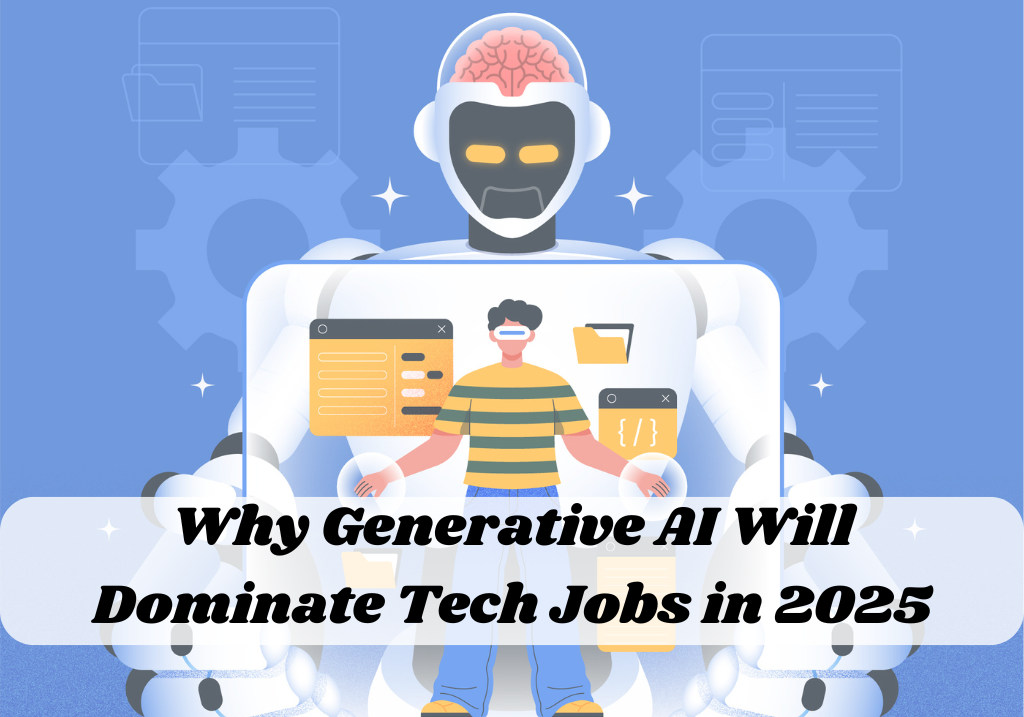
Generative AI, the technology behind groundbreaking tools like ChatGPT, DALL·E, and MidJourney, has captured the attention of industries worldwide. By enabling machines to create content, designs, and solutions that mimic human creativity, it has become a driving force in reshaping how businesses operate. But why will Generative AI dominate tech jobs in 2025? This blog explores its rapid adoption, applications, and the unparalleled opportunities it offers to tech professionals. What is Generative AI? Generative AI refers to artificial intelligence systems designed to generate new content, whether it’s text, images, videos, music, or even software code. Unlike traditional AI, which focuses on analyzing existing data to provide insights, generative AI goes a step further by creating entirely new outputs based on learned patterns. The Growing Importance of Generative AI in Tech 1. Revolutionizing Content Creation Generative AI tools are reshaping industries like marketing, media, and entertainment by automating content production. From crafting engaging ad copy to generating realistic images, these tools save time and resources while boosting creativity. 2. Accelerating Software Development With AI-powered coding assistants, software developers can write, debug, and optimize code faster than ever. Generative AI is also facilitating the development of customized software solutions, reducing the time-to-market for new products. 3. Enhancing User Experience From virtual assistants to chatbots, Generative AI creates interactive and personalized experiences for users. By understanding and mimicking human language, these systems enhance customer satisfaction across industries. 4. Driving Innovation Across Industries Generative AI is not confined to tech—it’s transforming healthcare, finance, education, and more. For instance: In healthcare, AI generates personalized treatment plans. In education, it creates adaptive learning modules tailored to individual students.   Why Generative AI Will Dominate Tech Jobs in 2025 1. Explosion of Data-Driven Applications The exponential growth of data requires professionals who can design and manage AI systems to harness it effectively. Generative AI’s ability to analyze and synthesize data makes it indispensable for solving complex problems. 2. Skill Gaps in the Workforce With Generative AI evolving rapidly, there’s a pressing need for trained professionals. Companies are competing to hire AI engineers, data scientists, and machine learning experts, making Generative AI expertise a highly lucrative skill. 3. Widespread Adoption Across Startups and Enterprises From Silicon Valley startups to Fortune 500 companies, businesses are integrating Generative AI into their operations. This widespread adoption is fueling demand for specialists to develop, deploy, and manage these systems. 4. Automation and Augmentation of Roles Generative AI doesn’t just replace tasks—it enhances them. For instance, it augments creative roles by providing suggestions or automating repetitive tasks, allowing professionals to focus on innovation and strategy. Top Careers in Generative AI by 2025 AI Research Scientist: Design and train advanced generative models. Machine Learning Engineer: Build scalable AI systems for real-world applications. AI Product Manager: Bridge the gap between AI technology and business needs. Data Scientist: Analyze data and improve AI model performance. AI Ethics Specialist: Ensure responsible and ethical use of Generative AI. Creative Technologist: Combine technical and creative skills to produce innovative content with AI. Skills You Need to Thrive in Generative AI Programming Knowledge: Proficiency in Python, R, or Java is essential for implementing AI models. Deep Learning Expertise: Understand neural networks, GANs, and transformers. Cloud Computing Skills: Learn how to deploy AI solutions on platforms like AWS, Azure, or Google Cloud. Data Management: Strong skills in data preprocessing and visualization are crucial. Ethics in AI: Awareness of ethical considerations and bias mitigation ensures responsible AI development. How to Get Started in Generative AI 1. Enroll in Specialized AI Courses Begin with certifications in machine learning and AI. Advanced programs like those offered by Ethans Tech provide hands-on experience and industry-relevant skills. 2. Work on Real-World Projects Participate in AI competitions, contribute to open-source projects, or collaborate on research papers to build your portfolio. 3. Stay Updated Follow industry blogs, attend AI conferences, and join communities to stay ahead of the curve. 4. Gain Practical Experience Opt for internships or freelance projects in Generative AI to get hands-on exposure to real-world applications. The Role of Ethans Tech in Generative AI Training At Ethans Tech, we offer comprehensive Generative AI training programs that empower professionals and students to thrive in this cutting-edge field. Our curriculum includes hands-on projects, industry-relevant tools, and guidance from expert trainers. With a strong focus on practical learning and placement support, Ethans Tech equips you with the skills needed to excel in the booming AI job market. Conclusion By 2025, Generative AI will dominate tech jobs, creating unparalleled opportunities for those with the right skills. As industries increasingly rely on AI for innovation and efficiency, professionals trained in Generative AI will find themselves at the forefront of this technological revolution. Whether you’re just starting your career or looking to upskill, investing in AI training today can position you as a leader in the tech-driven future.  

Future scope of Artificial Intelligence in 2024

Future scope of Artificial Intelligence

Artificial Intelligence (AI) stands at the forefront of technological innovation, reshaping industries, revolutionizing processes, and redefining what’s possible. As we peer into the future, the scope of AI appears boundless, with transformative implications for businesses, society, and the human experience. In this comprehensive guide, we’ll delve into the future scope of AI, uncovering trends, opportunities, challenges, and considerations that lie ahead. Understanding the Evolution AI has come a long way since its inception, evolving from theoretical concepts to practical applications that permeate every aspect of our lives. From virtual assistants and recommendation systems to autonomous vehicles and medical diagnostics, AI-powered technologies have become ubiquitous, driving efficiency, productivity, and innovation across industries. Trends Shaping the Future Several key trends are shaping the future of AI, each presenting unique opportunities for businesses, researchers, and policymakers: Exponential Growth of Data: The proliferation of digital data generated by individuals, devices, and sensors is fueling the growth of AI, providing the raw material for training sophisticated machine learning models. As data volumes continue to explode, AI systems will become more powerful, accurate, and capable of addressing complex challenges. Advancements in Machine Learning: Breakthroughs in machine learning algorithms, architectures, and techniques are pushing the boundaries of AI capabilities. From deep learning and reinforcement learning to transfer learning and federated learning, researchers are continually refining and innovating machine learning methods to solve increasingly complex problems. AI Ethics and Governance: As AI becomes more pervasive in society, concerns about ethics, bias, transparency, and accountability are gaining prominence. Policymakers, industry leaders, and academics are grappling with thorny questions surrounding AI governance, seeking to establish guidelines, regulations, and standards to ensure responsible AI development and deployment. AI-powered Automation: AI-powered automation is transforming industries by streamlining workflows, optimizing processes, and augmenting human capabilities. From robotic process automation (RPA) and intelligent assistants to autonomous vehicles and industrial robots, AI-driven automation is reshaping the future of work, driving efficiency gains, and unlocking new opportunities for innovation. Opportunities on the Horizon The future scope of AI presents a myriad of opportunities for businesses, entrepreneurs, and society as a whole: Personalized Experiences: AI enables businesses to deliver personalized experiences tailored to individual preferences, behaviors, and needs. From personalized recommendations and targeted advertisements to customized products and services, AI-powered personalization drives customer engagement, satisfaction, and loyalty. Healthcare Transformation: In healthcare, AI holds the promise of revolutionizing diagnosis, treatment, and patient care. From medical imaging and drug discovery to remote monitoring and predictive analytics, AI-powered technologies have the potential to improve outcomes, reduce costs, and enhance access to quality healthcare services. Smart Cities and Sustainability: AI-driven solutions are powering the development of smart cities, enabling efficient resource allocation, traffic management, energy optimization, and environmental monitoring. By harnessing AI to tackle urban challenges, cities can become more sustainable, resilient, and livable for residents and future generations. Innovative Business Models: AI enables businesses to unlock new revenue streams, business models, and value propositions by leveraging data-driven insights and automation capabilities. Whether it’s predictive maintenance, subscription services, or outcome-based pricing, AI-powered innovations are driving business transformation and disruption across sectors. Challenges and Considerations Despite its immense potential, AI also presents several challenges and considerations that must be addressed: Ethical and Bias Concerns: AI systems can perpetuate biases and discrimination if not designed, trained, and deployed responsibly. Addressing ethical considerations such as fairness, accountability, transparency, and privacy is essential to building trust and mitigating harm in AI applications. Regulatory and Legal Frameworks: Policymakers face the challenge of crafting regulatory and legal frameworks that balance innovation and risk in the AI landscape. Establishing clear guidelines, standards, and oversight mechanisms can help ensure that AI development and deployment align with societal values and objectives. Workforce Displacement: AI-driven automation has the potential to disrupt labor markets and displace workers in certain industries and occupations. Retraining, reskilling, and lifelong learning initiatives are needed to equip individuals with the skills and competencies required to thrive in the AI-powered economy. Check the Blog of Can AI replace Data Analysts? Cybersecurity and Privacy Risks: AI systems are susceptible to cybersecurity threats, including data breaches, adversarial attacks, and manipulation. Strengthening cybersecurity measures, implementing robust encryption protocols, and fostering a culture of data privacy and security are critical to safeguarding AI-powered systems and infrastructure. Conclusion In conclusion, the future scope of artificial intelligence is vast and transformative, offering unprecedented opportunities to enhance human potential, solve complex problems, and shape the future of society. By embracing key trends such as exponential data growth, advancements in machine learning, AI ethics and governance, and AI-powered automation, businesses, researchers, and policymakers can unlock new frontiers of innovation, prosperity, and well-being. With careful consideration of ethical, legal, and societal implications, we can harness the full potential of AI to create a future that is equitable, inclusive, and sustainable for all. Expand the limitless possibilities in the future scope of Artificial Intelligence. Ethans Tech offers comprehensive AI training programs, equipping you with cutting-edge skills for success. Contact us now to embark on a transformative journey and unlock rewarding career opportunities in this dynamic field.

Exploring the Symbiosis of Generative AI and Large Language Models: Real-world Insights

Generative AI and LLM

Introduction Let’s dive into the cool world where smart machines get creative and understand lots of words. This magical partnership between Generative Artificial Intelligence (AI) and Large Language Models (LLMs) has changed how we use technology. They team up to do amazing things like talking like us, writing stuff, and solving problems. In this article, we’ll take a closer look at how Generative AI and LLMs work together, with real examples showing their super teamwork. Understanding Generative AI and Large Language Models Imagine a smart robot that can create things on its own – that’s Generative AI. Now, think of another robot that’s really good at reading and understanding tons of words – that’s the Large Language Model. When these two robots join forces, they can make human-like text. This team-up helps with language tasks like translating, making content, and even writing computer code. Real-world Case Studies and Examples OpenAI’s GPT-3 in Content Creation OpenAI’s GPT-3 is like a super-smart writer on the internet. It can write all sorts of things, like articles, blogs, and stories, almost like a computerized storyteller. People use it to save time because it’s like having a clever assistant that never gets tired. Imagine GPT-3 as a digital artist that knows a lot about words and how to put them together. It can create different types of writing on many topics, making it a helpful tool for various needs. What makes GPT-3 special is that it learned a lot from reading many things. This learning helps it understand how language works, what words mean, and even how to use grammar correctly. So, when people ask it to write something, it can do it in a way that makes sense and sounds good. People use GPT-3 when they need help with writing, like making blog posts regularly, writing essays for school, or coming up with ideas for stories. GPT-3 becomes a helpful sidekick that makes writing easier and quicker. The cool part is that GPT-3 can adjust its writing style based on what people want. It’s like having a writing assistant that listens to instructions and creates content just the way you want it. As we explore more about smart machines and how they work with humans, GPT-3 shows us what’s possible. It’s not just a tool for writing; it’s a partner that helps us be more creative and efficient. The teamwork between people and GPT-3 paints a bright picture of how machines and humans can work together to make exciting things happen in the world of writing and creativity. Chatbots and Customer Support Consider a scenario where you can have a friendly conversation with a computer, just like you would with a pal. This remarkable experience is crafted by the collaboration of Generative AI and Large Language Models (LLMs) within customer support chatbots. Major companies employ these conversational robots to promptly assist customers and ensure their concerns are acknowledged. Here’s how it works: Generative AI and LLMs team up to make these chatbots intelligent. They comprehend what people are saying and respond in a way that makes sense, resembling the way a good friend would communicate. This capability allows companies to efficiently handle a large volume of customer questions and issues without causing delays. Imagine encountering an issue with a recently purchased product, like a new phone. You type a message, and the chatbot on the company’s website engages with you. It might say, “Hello! I’m here to assist you. What seems to be the problem with your phone?” This interaction is akin to having a knowledgeable friend who can guide you towards a resolution. These conversational robots continuously learn from numerous interactions, enhancing their abilities over time. They adapt to what works well and what doesn’t, ensuring a smoother customer experience. Consequently, companies can provide assistance to more individuals simultaneously, guaranteeing that everyone receives the support they require. In essence, chatbots fueled by Generative AI and LLMs serve as friendly aides for prominent companies. They transform the interaction with a computer into a friendly conversation, delivering prompt and valuable support whenever it is needed. This synergy benefits both customers and companies – customers receive the assistance they seek, while companies efficiently address the needs of everyone. Code Generation with OpenAI Codex Codex, a close companion to GPT-3, possesses an impressive ability to grasp the intentions of a programmer. When you convey what you desire your computer program to accomplish, Codex steps in and crafts the necessary code on your behalf. This proves to be immensely beneficial for numerous individuals, streamlining the coding process significantly. It’s akin to having an intelligent assistant well-versed in the language of computers, translating your concepts into functional code. This not only simplifies the coding experience but also serves as a time-saving and efficient solution for those engaged in programming tasks. Language Translation with Google’s Transformer Imagine Google’s Transformer as a linguistic superhero, possessing an exceptional skill for seamless translation. This robotic marvel not only understands but also adeptly converts words from one language to another, with the primary aim of enriching communication and fostering mutual understanding, especially among speakers of different languages. In practical terms, if you have a piece of text in English that you wish to translate into Spanish, Google’s Transformer takes center stage, performing its transformative feat. It skillfully translates the words, making them accessible and intelligible for individuals conversant in Spanish. This simplifies the exchange of ideas, information, and stories, facilitating a deeper connection for those engaging in cross-linguistic conversations. Fundamentally, Google’s Transformer assumes the role of a linguistic advocate, dismantling language barriers and facilitating effective communication across diverse linguistic backgrounds. It operates as a linguistic virtuoso, ensuring that everyone can freely articulate their thoughts and ideas, transcending the challenges presented by language variations. Content Summarization and Information Extraction In the world of smart technology, these intelligent robots take on the task of reading lengthy articles for us. Their special skill? They sift through the content and pinpoint the most crucial information. What’s even … Read more

How is Artificial Intelligence Changing the World?

future of Artificial Intelligence

Artificial Intelligence (AI) has emerged as a transformative force in various industries, revolutionizing the way we live, work, and interact. With its ability to process vast amounts of data, learn from patterns, and make decisions, AI has become an integral part of our daily lives. From self-driving cars to personalized recommendations, AI is reshaping the world around us. In this article, we will explore the profound impact of artificial intelligence on different aspects of society. Artificial Intelligence refers to the development of computer systems capable of performing tasks that typically require human intelligence. These systems are designed to simulate human cognitive abilities such as learning, reasoning, problem-solving, and decision-making. AI utilizes advanced algorithms, machine learning, and deep neural networks to process and analyze vast amounts of data, enabling it to generate valuable insights and predictions. Applications of Artificial Intelligence AI in Healthcare Artificial Intelligence is revolutionizing the healthcare industry by assisting in disease diagnosis, drug discovery, and personalized treatment plans. AI-powered algorithms can analyze medical images, such as X-rays and MRIs, to detect anomalies and assist radiologists in making accurate diagnoses. Additionally, AI-enabled chatbots and virtual assistants provide round-the-clock medical support and advice. AI in Education In the field of education, AI is transforming the way students learn and teachers educate. Intelligent tutoring systems can adapt to individual learning styles, providing personalized recommendations and feedback. AI-powered chatbots assist students in answering questions and clarifying doubts, enhancing the learning experience. Moreover, AI analytics help educational institutions in identifying areas of improvement and developing tailored curricula. AI in Finance The financial sector benefits from AI through fraud detection, risk assessment, and algorithmic trading. AI algorithms can analyze vast amounts of financial data in real-time, identifying patterns and anomalies that could indicate fraudulent activities. AI-powered robo-advisors provide personalized investment advice based on individual financial goals and risk tolerance. Furthermore, machine learning algorithms help financial institutions make informed decisions regarding lending and creditworthiness. AI in Transportation Artificial Intelligence is reshaping the transportation industry with the advent of self-driving cars and intelligent traffic management systems. Self-driving vehicles utilize AI algorithms and sensor technologies to navigate roads, improving road safety and reducing traffic congestion. AI-powered traffic management systems analyze real-time data from various sources to optimize traffic flow and suggest alternate routes, enhancing transportation efficiency. AI in Manufacturing AI-driven automation is transforming the manufacturing sector, streamlining processes, and improving productivity. Robots equipped with AI capabilities can perform repetitive and labor-intensive tasks with precision and speed. AI-powered predictive maintenance systems help identify potential equipment failures, minimizing downtime and optimizing production. Furthermore, AI-enabled quality control systems detect defects and ensure high product standards. Benefits of Artificial Intelligence Improved Efficiency and Productivity Artificial Intelligence eliminates manual and time-consuming tasks, leading to increased efficiency and productivity. Automated processes, such as data analysis, documentation, and customer support, free up human resources to focus on more complex and creative endeavors. AI also enables faster decision-making by providing real-time insights and predictions based on data analysis. Enhanced Decision Making AI algorithms can analyze vast amounts of structured and unstructured data, providing valuable insights for decision-making. These insights help businesses and organizations make informed choices, optimize processes, and improve outcomes. By leveraging AI’s ability to identify patterns and trends, decision-makers can develop strategies that drive growth and competitiveness. Automation of Repetitive Tasks AI-powered automation eliminates the need for manual intervention in repetitive tasks. This leads to reduced errors, improved accuracy, and cost savings. By automating routine processes, businesses can allocate their resources more efficiently and allocate human talent to more strategic and innovative initiatives. Personalized User Experiences Artificial Intelligence enables personalized user experiences by understanding individual preferences and behaviors. Recommendation systems, powered by AI algorithms, analyze user data to suggest relevant products, services, or content. This enhances customer satisfaction, drives engagement, and fosters long-term loyalty. Ethical Considerations and Challenges While Artificial Intelligence offers numerous benefits, it also presents ethical considerations and challenges that need to be addressed. Data Privacy and Security The collection and analysis of vast amounts of personal data raise concerns about privacy and security. It is crucial to establish robust data protection measures and ensure transparency in how data is used. Implementing ethical frameworks and regulations can help maintain trust and safeguard individuals’ privacy. Job Displacement The automation of tasks through AI may lead to job displacement in certain industries. It is essential to proactively address the impact of AI on the workforce and invest in retraining and upskilling programs. By focusing on developing skills that complement AI technology, individuals can adapt to the changing job landscape. Bias and Fairness AI systems are trained using historical data, which may contain biases and prejudices. This can result in biased decisions and perpetuate existing societal inequalities. Efforts should be made to address bias in AI algorithms and ensure fairness and equal treatment for all individuals. Accountability and Transparency As AI systems become more sophisticated, ensuring accountability and transparency becomes crucial. It is essential to understand the decision-making processes of AI algorithms and make them explainable. This helps in building trust and allows individuals to understand and challenge decisions made by AI systems. Conclusion The future of Artificial Intelligence holds immense potential. As technology continues to advance, AI will play a vital role in shaping various sectors, including healthcare, education, finance, transportation, and more. Further developments in natural language processing, computer vision, and robotics will unlock new possibilities for AI applications. However, it is important to navigate the ethical and social implications of AI to harness its full potential responsibly. Artificial Intelligence is revolutionizing the world, transforming industries, and impacting our daily lives. From healthcare to finance, transportation to education, AI is driving innovation, efficiency, and personalization. However, we must address the ethical considerations and challenges associated with AI to ensure a fair and inclusive future. With responsible development and adoption, Artificial Intelligence has the potential to bring about positive change and shape a better world.

Advantages and Disadvantages Of Artificial Intelligence

Pros and Cons of Artificial Intelligence

Introduction Artificial Intelligence (AI) has rapidly become one of the most significant technological advancements of our time, revolutionizing the way we live and work. With AI technology being used in industries ranging from healthcare to finance, it’s easy to see why its popularity continues to grow. However, like any significant advancement, there are both advantages and disadvantages of artificial intelligence that need to be considered. In this article, we will explore the pros and cons of artificial intelligence to give you a comprehensive understanding of this innovative technology. Advantages of Artificial Intelligence AI technology has numerous benefits, and we’ll be covering some of the most notable advantages of artificial intelligence in this section.  Enhanced Productivity One of the most significant advantages of AI is the increased productivity it provides. By automating repetitive and time-consuming tasks, AI can help businesses and individuals free up their time to focus on more critical aspects of their work. For instance, chatbots powered by AI technology can handle customer queries, leaving customer service representatives free to address more complex issues.  Improved Efficiency Another advantage of artificial intelligence is the improved efficiency it brings to different industries. With AI algorithms that can analyze vast amounts of data in real time, businesses can make quicker, more informed decisions. For example, financial institutions can use AI to analyze market trends and make investment decisions in real time.  Cost Savings AI technology can also help businesses save money by reducing labor costs. By automating tasks that were previously performed by humans, businesses can reduce their workforce and improve their bottom line. For example, self-driving trucks could replace human drivers in the transportation industry, leading to significant cost savings.  Enhanced Accuracy AI technology is designed to be precise, and it can perform tasks with a higher level of accuracy than humans. For instance, AI algorithms can detect fraud with a higher degree of accuracy than humans, reducing the risk of financial loss for businesses.  Improved Personalization AI technology can help businesses personalize their offerings to customers by analyzing data and creating personalized recommendations. For example, Amazon’s recommendation engine uses AI algorithms to suggest products that customers are likely to be interested in based on their purchase history and browsing behavior. Disadvantages of Artificial Intelligence  Job Losses One of the biggest concerns with AI is its potential impact on employment. As AI systems become more advanced, they may be able to perform tasks that were previously done by humans. This could lead to significant job losses, particularly in industries such as manufacturing, transportation, and customer service. While AI can create new jobs, it is unclear whether they will be able to replace the jobs lost. Artificial intelligence (AI) and data science are deeply interconnected, as AI leverages data science techniques to analyze and interpret complex data sets, but it also introduces challenges such as ethical concerns and potential job displacement. Dependence on Technology As we become more reliant on AI, there is a risk that we will lose our ability to perform tasks without it. This could lead to a loss of skills and knowledge, which could have negative consequences for society as a whole. Moreover, if AI systems fail or malfunction, we may not be able to perform critical tasks or make important decisions.  Bias and Discrimination AI systems are only as good as the data they are trained on. If the data is biased, the AI system will also be biased. This can lead to discrimination and unfair treatment of certain groups of people. For example, facial recognition systems have been shown to be less accurate for people with darker skin tones. This could have serious consequences in law enforcement and other contexts. Privacy and Security AI systems collect vast amounts of data, which can include personal information. There is a risk that this data could be used for nefarious purposes, such as identity theft or surveillance. Additionally, AI systems may be vulnerable to cyberattacks, which could compromise sensitive information and cause significant harm.  Lack of Creativity While AI systems can perform tasks that require a high level of precision and accuracy, they lack creativity and the ability to think outside the box. This means that they may not be able to solve problems that require creative thinking. Moreover, AI may exacerbate the “echo chamber” effect, where individuals are only exposed to information that confirms their existing beliefs and biases. Conclusion Artificial Intelligence has revolutionized the way we live and work, and it has the potential to continue transforming our world in many positive ways. However, it is important to acknowledge the potential drawbacks of AI technology, including ethical concerns and potential job displacement. The future of AI is uncertain, but it is clear that this technology will play an increasingly important role in our lives.