Is Cloud Computing a Good Career in 2025? Insights from Pune’s Experts

Cloud Computing a Good Career

Yes. It is! Instead, in 2025, cloud computing professionals will be in more demand than ever! One can attribute many reasons to this demand. However, reports say that in 2025, 93-95 percent of companies worldwide will use cloud in some form, including public, private, and hybrid. So, in a way, this is almost all the companies in the world! Now, is that the only reason cloud computing is a good career in 2025? No! As an institute offering cloud computing classes in Pune, we consider it only the tip of the iceberg. We can give you various other reasons highlighting why cloud computing isn’t just good, but an excellent career in 2025 and beyond.  Prepared to explore? Let’s get going then! Cloud is Everywhere! Cloud is everywhere and growing with each passing day. From your favorite streaming services to advanced data analytics, the cloud is powering everything! Businesses, irrespective of their size, are increasingly switching their data, operations, and applications to the cloud faster than ever. The growth is such that global end-user spending on public cloud services will reach approximately USD 725 billion this year! Staggering, isn’t it? But this represents a 21-22 percent increase from 2024. Thanks to the rising influence and adoption of GenAI and application modernization. The cloud market is snowballing like never before! But this isn’t just a mind-boggling number. It signifies an extensive need for cloud computing professionals who will help companies accomplish their cloud goals. A Lot Depends on the Cloud Cloud computing has emerged to become the backbone of modern digital infrastructure. Hence, many factors depend on the cloud. Thus, companies, whether big or small, racing to migrate to the cloud, doesn’t come as a surprise. It is also because the cloud is scalable, affordable, secure, and enables remote working. The rise of AI, ML, edge computing, IoT, server less architectures and containers, multi-cloud and hybrid cloud strategies is contributing to the growth of the cloud. Since companies use all these technologies, migrating to the cloud becomes evident. Hence, cloud isn’t just nice to have but imperative for companies. And what does that mean for your career? Thousands of jobs! Diverse Roles Cloud computing has evolved greatly over the years. Companies require it across various areas. Hence, cloud computing offers various career opportunities. Some cloud roles and jobs you can look forward to include the following. Cloud Engineer: It involves designing, building, and maintaining cloud infrastructures. These earn an average annual salary of Rs. 6-11 lacs*. Cloud Architect: This is a senior position that involves devising high-level cloud strategies and solutions. The average annual salary range is Rs. 7-45 lakhs*.  Cloud Security Specialist: Cloud security specialists safeguard sensitive data and systems. The average yearly salary is around Rs. 8-40 lakhs*. Cloud Data Engineer: Cloud data engineers build and manage the pipelines that manage extensive datasets in cloud environments. These professionals earn an average yearly salary of Rs. 7-30 lakhs* Cloud Automation Engineer: Cloud automation engineers build, implement, and maintain automation as companies migrate to the cloud. The base pay of a cloud automation engineer ranges from Rs. 6-24 lakhs* annually. Note: Salaries are not accurate and are only for reference. Skills to Develop Cloud computing is a specialized and challenging job that requires aspirants to develop multiple skills. Alongside a cloud computing certification in Pune, here are some skills you must develop to become a successful cloud computing professional. Technical Skills: Programming languages like Java, Python, and Go, understanding of databases like SQL and NoSQL, knowledge of networking concepts, familiarity with Linux, experience in Docker and Kubernetes, proficiency in DevOps, and more. Soft Skills: Working as a cloud computing professional involves performing in a highly demanding environment. Hence, soft skills matter as much as hard ones. Accordingly, cloud computing professionals require developing skills, including problem-solving, communication, time management, collaboration, and adaptability. Why is Ethan’s Tech Your Cloud Computing Launchpad? Learning cloud computing involves a hard learning curve. It is particularly given the challenges cloud computing experts tackle and the solutions they provide. Ethan’s Tech offers comprehensive cloud computing training in Pune that covers various technical topics and prepares you for the big race in the world of cloud. Our faculty members are successful cloud professionals themselves who enrich the learning experience by sharing real-world experiences. Additionally, our cloud computing classes in Pune involve abundant practical exposure to the latest tools and technologies. Our students are exposed to real-world challenges and are taught to devise solutions so that they step out more prepared. So now that you know why cloud computing is a remarkable career option and where to pursue a cloud computing course in Pune, all you have to do is gear up to enhance your skills and kickstart your career in the cloud. Ethan’s Tech is prepared to be your guide in this journey. Call us at +91 95133 92223 to learn more about our cloud computing certification in Pune, placement record, alumni, and other factors like course fees and batch schedule.
AWS vs Azure vs Cloud Computing: Which Certification is Right for You?

AWS vs Azure vs Cloud Computing

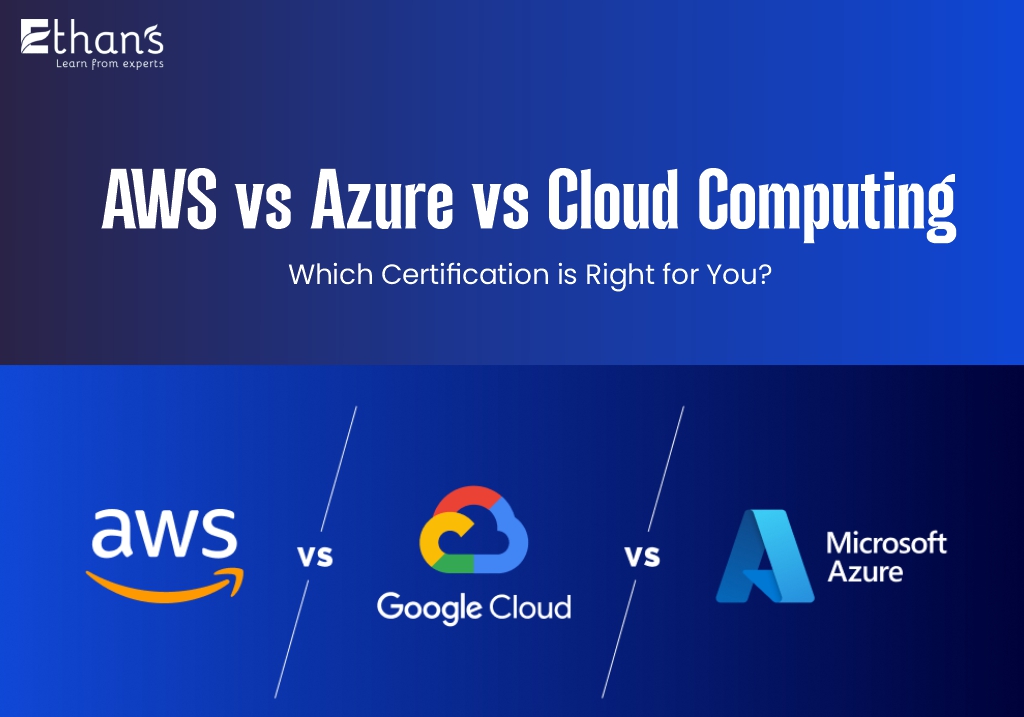
Bingo! You’ve asked the right question. Cloud computing is booming and one of the hottest technologies around. But yes, following your question, we agree that choosing the right certification matters. So, to everyone looking to pursue a career in cloud computing but confused about whether to do AWS training in Pune, join Microsoft Azure classes in Pune, or take up general cloud computing, you’ve come to the right place. We’ll provide a detailed comparison of all these options and provide unbiased insight to help you choose the right certification in your context. AWS Certifications Amazon Web Services (AWS) is a global market leader. Hence, it has a comprehensive and well-evolved certification program. AWS offers certifications across various tiers, including foundational certifications, and associate, professional, and specialty training programs. AWS certifications are profoundly technical and focus on their platforms and services. They usually require learners to have hands-on experience with the AWS console and a practical understanding of AWS’s architectural best practices. After an AWS training in Pune, you can work across various roles, including DevOps engineer, cloud architect, security specialist, and systems administrator, particularly with companies that work on AWS platforms and adopt the AWS cloud. Some key AWS certification programs include; Certified Cloud Practitioner: Entry-level certification for cloud newbies that validates a basic understanding of AWS concepts, terminologies, and services. Certified Developer – Associate: Particularly for developers, this one validates your ability to develop, deploy, and debug cloud-based apps that use AWS services. Certified SysOps Administrator – Associate: Focuses on the operational aspects of deploying and managing systems across AWS. Certified Solutions Architect – Associate: This focuses on designing and deploying scalable, highly available, and fault-tolerant systems on AWS. Professional Level Certifications: Advanced certifications that demand extensive experience and proven technical expertise in domains within the AWS cloud. Azure Certifications Second to AWS, Microsoft Azure is rapidly growing, gaining traction worldwide. Just like AWS, Azure’s certification programs have also evolved over the years. Accordingly, it offers various role-based certifications that serve different career needs and aspirations. Microsoft Azure certifications insist on gaining a broader understanding of cloud concepts and their integration with Microsoft’s ecosystem, including .NET, Windows Server, etc. The courses are technical, while also focusing on how-to aspects within Azure. Azure certifications are useful for people working in companies that use Azure and a broad array of Microsoft products. Some roles include solutions architect, Azure administrator, security engineer, and data engineer. Let’s look at some of the key Azure certifications. Azure Fundamentals: Basic certification covering basic cloud and Azure concepts Azure Administrator Associate: Focuses on implementing, managing, and monitoring a company’s Microsoft Azure ecosystem. Azure Solutions Architect Expert: Emphasizes designing and implementing robust and scalable Azure solutions. Azure Developer Associate: Validates skills in designing, developing, testing, and maintaining cloud solutions on Azure. Azure Security Engineer Associate, Azure Data Engineer Associate: Specialty certifications that focus on specific Azure areas. Generic Cloud Computing Certifications Of course, the cloud exists beyond these platforms or providers. So, you can also choose to pursue generic cloud computing certifications that focus on broader cloud concepts, best practices, and principles that you can apply across various cloud platforms. These certifications don’t focus on a single platform. This is unlike AWS and Azure which are specific to their own ecosystems. Instead, they provide a more comprehensive understanding of cloud computing, while covering topics like security, governance, cloud architecture, and cost management from a platform-agnostic viewpoint. Accordingly, these certifications benefit roles that require a broader understanding of cloud technologies and that involve working with different cloud platforms or providing consulting solutions to companies for their overall cloud strategy. AWS vs Azure vs Cloud Computing – Key Differences So, let’s make the comparison even easier for you to follow. Aspect AWS Certifications Azure Certifications Vendor-Neutral Cloud Computing Certifications Platform Focused on AWS platform and services Azure platform and services Broad concepts applicable across multiple platforms Technical Depth Technically comprehensive, insisting on hands-on skills within AWS Technically profound, with potential integration with the Microsoft environment Technical depth can vary based on the course’s objectives. Some are basic, while others are specialized Suitability For people already working with or planning to use AWS environments For individuals already associated with Microsoft-based ecosystems People who want a broader understanding of cloud and become generic experts Entry Level Certification AWS Certified Cloud Practitioner Microsoft Certified: Azure Fundamentals Google Cloud Digital Leader Industry Recognition Very high High Moderate to high Career Roles DevOps, Solutions Architect and Cloud Engineer Cloud Consultant, Data Engineer and Azure Admin Tech Generalist, Entry-Level Cloud Support So, Which Certification is Right for You? Let’s answer the core question. Which certification amongst AWS, Azure and generic cloud computing is right for you. The choice depends on various factors, including; Existing Role and Experience: If you are beginner, you can pursue a foundational certification from AWS or Azure (Cloud Practitioner or Azure Fundamentals) or a vendor-neutral alternative. But if you are experienced, you can take up speciality certifications in your area of focus or interest. Career Objectives: If AWS interests you and you want to work with companies using AWS, you can pursue AWS training in Pune. And so, it is with Azure. But if a generic role that involves working with multiple cloud platforms intrigues you or you want to enter a strategic cloud role, you can go for generic cloud certifications. Employer’s Requirements: If your company uses Azure, you can pursue Microsoft Azure classes in Pune. But if your employer uses Azure, you should enroll in AWS classes in Pune and work towards the certification you want to obtain. Final Thoughts! Cloud computing is on the rise. Hence, any choice is great, whether AWS, Azure or generic cloud computing course. However, individual situations and choices may vary. We hope the above helps you make an informed choice. Nevertheless, for a detailed and specific discussion, we recommend calling us at +91 95133 92223. Our course experts will help you navigate our course offerings and also answer various other questions concerning … Read more

Future scope of Cloud Computing 2024

scope of Cloud Computing

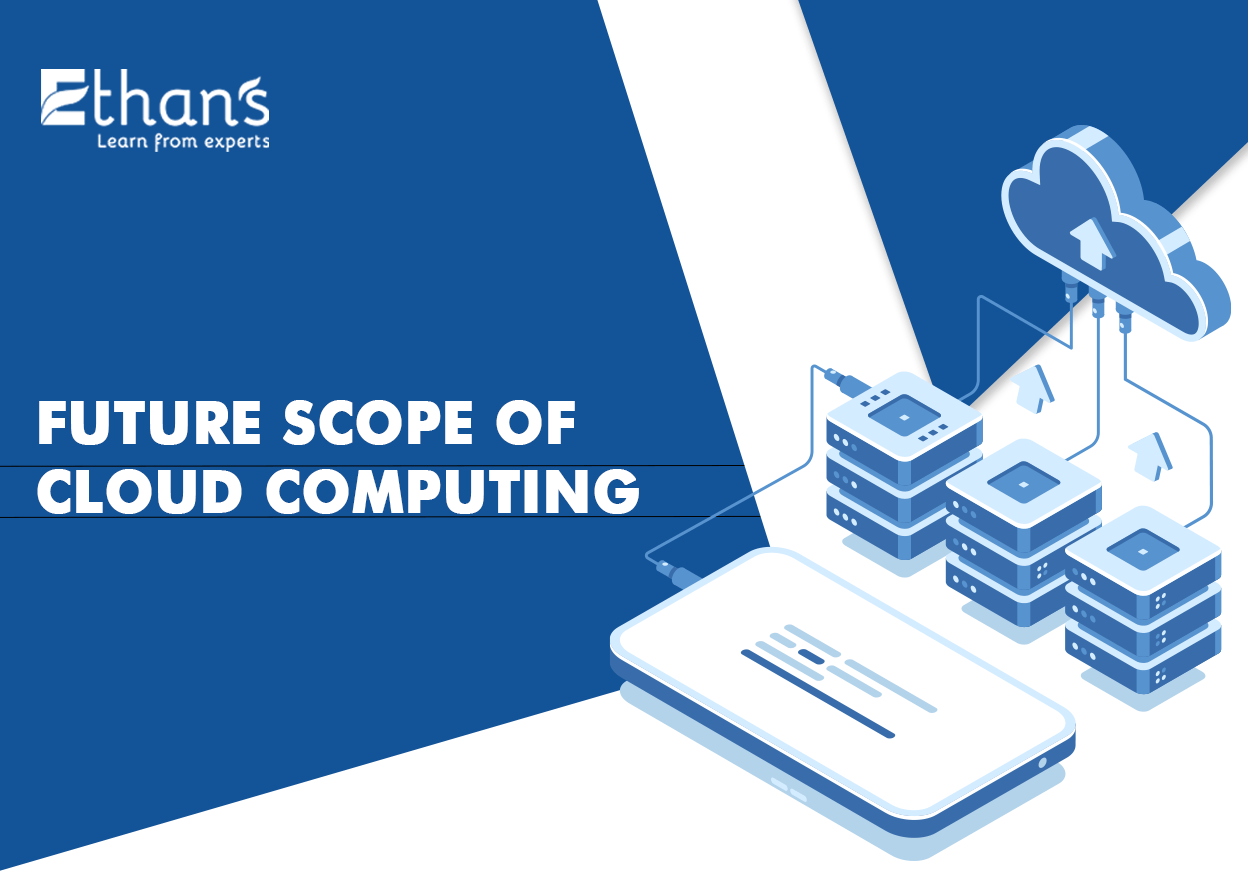
In the ever-evolving landscape of technology, few innovations have had as profound an impact as cloud computing. As businesses worldwide embrace digital transformation and seek to optimize their operations, the demand for cloud services continues to skyrocket. In this SEO-friendly guide, we’ll explore the future scope of cloud computing, uncovering the trends, opportunities, and challenges that lie ahead. Understanding the Evolution Cloud computing has come a long way since its inception, evolving from a novel concept to a cornerstone of modern IT infrastructure. Today, cloud services encompass a wide range of offerings, including infrastructure as a service (IaaS), platform as a service (PaaS), and software as a service (SaaS). This evolution has democratized access to computing resources, enabling organizations of all sizes to leverage scalable, cost-effective solutions. Trends Shaping the Future Several key trends are shaping the future of cloud computing, each presenting unique opportunities for businesses and IT professionals alike: Hybrid and Multi-Cloud Adoption: As organizations seek to balance performance, security, and cost-effectiveness, hybrid and multi-cloud architectures are becoming increasingly prevalent. This trend reflects the growing realization that a one-size-fits-all approach to cloud adoption may not be optimal, prompting businesses to leverage multiple cloud providers and deployment models. Edge Computing: With the proliferation of Internet of Things (IoT) devices and the need for real-time data processing, edge computing is gaining traction as a complement to centralized cloud infrastructure. By bringing computation closer to the data source, edge computing reduces latency, enhances privacy, and enables new use cases across industries such as manufacturing, healthcare, and transportation. AI and Machine Learning Integration: Cloud providers are increasingly integrating artificial intelligence (AI) and machine learning (ML) capabilities into their offerings, empowering businesses to extract insights from vast datasets and automate decision-making processes. Whether it’s predictive analytics, natural language processing, or image recognition, AI-powered cloud services are poised to drive innovation across sectors. Serverless Computing: Serverless computing, also known as Function as a Service (FaaS), is revolutionizing the way applications are developed, deployed, and scaled in the cloud. By abstracting away infrastructure management and billing based on actual usage, serverless platforms enable developers to focus on writing code and delivering value without worrying about underlying infrastructure concerns. Opportunities on the Horizon The future scope of cloud computing presents a myriad of opportunities for businesses and IT professionals to thrive: Scalability and Flexibility: Cloud computing enables businesses to scale their infrastructure up or down on-demand, allowing them to adapt to changing market conditions and customer demands with ease. Cost Optimization: By leveraging pay-as-you-go pricing models and avoiding upfront infrastructure investments, organizations can reduce capital expenditures and optimize operational costs in the cloud. Innovation and Agility: Cloud computing fosters a culture of innovation by providing access to cutting-edge technologies and services, enabling businesses to experiment, iterate, and bring new products and services to market faster. Global Reach: With cloud providers operating data centers in multiple regions around the world, businesses can reach customers and users globally while ensuring compliance with local regulations and data sovereignty requirements. Navigating the Challenges Despite its immense potential, cloud computing also presents certain challenges that must be addressed: Security Concerns: As data moves to the cloud, ensuring robust security measures to protect sensitive information from cyber threats becomes paramount. Cloud providers and businesses must collaborate to implement best practices for encryption, access control, and threat detection. Data Privacy and Compliance: With the rise of data protection regulations such as GDPR and CCPA, businesses must navigate complex compliance requirements when storing and processing data in the cloud. Implementing privacy-enhancing technologies and adopting a proactive approach to compliance are essential. Vendor Lock-In: While cloud computing offers unparalleled flexibility, businesses risk vendor lock-in if they become too dependent on a single provider’s proprietary services and APIs. Adopting open standards and architectures can mitigate this risk and preserve flexibility. Conclusion In conclusion, the future scope of cloud computing is vast and promising, driven by technological advancements, evolving business needs, and a growing demand for scalable, cost-effective solutions. By embracing key trends such as hybrid and multi-cloud adoption, edge computing, AI integration, and serverless computing, businesses can unlock new opportunities for innovation, growth, and competitive advantage in the digital age. With careful planning, strategic partnerships, and a commitment to continuous learning, organizations and IT professionals can harness the full potential of cloud computing to shape a brighter future for themselves and their customers.

Cloud Computing Can Benefit Your Small Business

Cloud Computing services

In today’s digital age, small businesses are constantly seeking ways to optimize their operations and enhance their productivity. One such solution that has revolutionized the business landscape is cloud computing. Cloud computing offers a wide range of benefits that can significantly impact the growth and success of small businesses. This article will explore the various advantages that cloud computing brings to small businesses, enabling them to thrive in a highly competitive market. Understanding Cloud Computing Cloud computing refers to the practice of storing, managing, and accessing data and applications over the internet instead of using local servers or personal computers. It involves the use of remote servers that are hosted on the internet to store and process data, allowing businesses to access their resources from anywhere with an internet connection. Cost Savings and Scalability One of the primary benefits of cloud computing for small businesses is the potential for cost savings. Cloud services typically operate on a pay-as-you-go model, allowing businesses to only pay for the resources they need. This eliminates the need for upfront hardware and software investments, reducing capital expenditure. Additionally, cloud computing offers scalability, enabling businesses to easily scale up or down their resources based on their fluctuating demands. Enhanced Collaboration and Accessibility Cloud computing facilitates seamless collaboration among team members, regardless of their geographical location. Cloud-based tools and applications enable real-time document sharing, co-authoring, and version control, promoting efficient teamwork and improving productivity. Moreover, cloud services provide remote access to data and applications, allowing employees to work from anywhere, anytime, using any device with an internet connection. Data Security and Disaster Recovery Small businesses often face challenges in ensuring robust data security and implementing effective disaster recovery measures. Cloud computing addresses these concerns by offering enhanced data security features, such as encryption, regular backups, and access controls. Cloud service providers also have redundant data centers, ensuring data availability even in the event of hardware failures or natural disasters. Increased Flexibility and Mobility Cloud computing provides small businesses with unparalleled flexibility and mobility. With cloud-based solutions, employees can access their work-related files and applications using any internet-enabled device, eliminating the need for a specific physical location or device. This flexibility allows businesses to embrace remote work arrangements, attract top talent from anywhere in the world, and respond quickly to changing market demands. Improved Efficiency and Productivity By leveraging cloud computing, small businesses can streamline their operations and improve overall efficiency. Cloud-based applications automate manual tasks, such as data backups, software updates, and system maintenance, freeing up valuable time for employees to focus on core business activities. The scalability of cloud services also ensures that businesses can quickly scale their resources to meet increased demand, avoiding bottlenecks and delays. Streamlined IT Management Traditional IT infrastructure requires significant investments in hardware, software licenses, and maintenance costs. Cloud computing reduces the burden of managing complex IT infrastructure by shifting the responsibility to cloud service providers. This allows small businesses to focus on their core competencies while relying on experienced professionals to handle their IT needs. Competitive Edge and Innovation Cloud computing empowers small businesses to compete on a level playing field with larger enterprises. By leveraging advanced cloud-based technologies, such as artificial intelligence, machine learning, and big data analytics, small businesses can gain valuable insights, make data-driven decisions, and enhance their offerings. Cloud services provide the necessary infrastructure and computing power to support innovative initiatives, enabling small businesses to differentiate themselves in the market. Integration with Existing Systems Small businesses often have legacy systems and applications that are critical to their operations. Cloud computing offers seamless integration capabilities, allowing businesses to connect their existing systems with cloud-based solutions. This integration enables smooth data exchange, eliminates data silos, and enhances overall operational efficiency. Regulatory Compliance and Data Governance Complying with industry regulations and ensuring data governance are crucial for small businesses. Cloud service providers adhere to stringent security and compliance standards, such as GDPR and HIPAA, ensuring that data is handled in a secure and compliant manner. By leveraging cloud computing, small businesses can mitigate the risks associated with data breaches and regulatory non-compliance. Sustainability and Environmental Impact Cloud computing promotes sustainability by reducing the carbon footprint of small businesses. With cloud-based infrastructure, businesses can eliminate the need for physical servers and data centers, which consume significant energy and resources. Cloud service providers optimize their data centers for energy efficiency, enabling small businesses to contribute to environmental conservation while reducing operational costs. Training and Support Transitioning to cloud computing requires proper training and support for employees. Cloud service providers offer comprehensive training programs and ongoing technical support to assist small businesses in adopting and maximizing the benefits of cloud computing. This ensures a smooth transition and minimizes disruptions to daily operations. Potential Challenges and Considerations While cloud computing offers numerous benefits, small businesses should also be aware of potential challenges. These include data security concerns, reliance on internet connectivity, vendor lock-in, and potential downtime. It is crucial for businesses to evaluate their specific needs, conduct thorough research, and choose reliable cloud service providers to mitigate these challenges. Best Practices for Adopting Cloud Computing To maximize the benefits of cloud computing, small businesses should follow best practices, such as conducting a thorough cost-benefit analysis. Selecting the appropriate cloud deployment model (public, private, or hybrid), implementing strong security measures, regularly monitoring. And optimizing cloud resources, and establishing backup and disaster recovery plans. Conclusion Cloud computing has emerged as a game-changer for small businesses, offering a wide range of benefits that enhance productivity, reduce costs, and promote growth. By embracing cloud-based solutions, small businesses can leverage advanced technologies, improve collaboration, enhance data security, and gain a competitive edge. In today’s digital landscape. With careful planning, adoption, and ongoing optimization, small businesses can harness the power of cloud computing to propel their success in the long term.

Pros & Cons of Cloud Computing?

Pros & Cons of Cloud Computing?

Introduction: Cloud computing has become one of the most demanding fields which is booming in the IT sector nowadays. As cloud computing allows organizations to decrease or minimize various costs like infrastructure cost for IT solutions. It provides improved security, economical scalability and manageability. Now most of the companies are deploying themselves into cloud computing or else they are getting into cloud computing. Cloud developers who are working in the cloud are more in demand. But there are various pros & cons of opting for cloud computing.  So let’s get started and get to know the merits and demerits of cloud computing. What Do You Mean By Cloud Computing?  Cloud computing is basically storing and having access to the data of programs and files over the internet instead of your computer device or hardware. Cloud computing stores huge amounts of data and manages it with numerous servers.  There are various types of services involved in cloud computing which are lAAS, PAAS, SAAS which helps a developer to build up their complete cloud deployment for the organization.  What are the Merits of opting Cloud Computing?  There are various merits of opting cloud computing, lets see what are they-  It is Economical Shifting into cloud computing is kind of economical, as you don’t need to buy hardware or software with that it also saves your working space like office rent, electricity, operational expenses etc. you have to pay for the service you use. Working in the cloud eliminates all aspects of the organization. Higher security Cloud computing is known for higher security as the organization chooses for their data. As the organization can use their own password, audition, encryptions for their data accordingly.  Back-up and restoring of data Cloud has made it more easier for the organizations to store their data and take bake-up and restore it again as it was very difficult and time-consuming earlier into on-premises technology.  No Hardware required for cloud computing As the organization is deploying their data into the cloud, they don’t need any physical storage centers. Everything is easy to back-up the data from the cloud as compared to any other physical storage. What are the Demerits of Opting Cloud Computing?  Dependency of network connectivity One of the major demerits of opting cloud computing is that there is a network connectivity as it is entirely dependent upon the internet. The organization needs to have reliable and constant connectivity of internet services.  Control is limited There is limited control over the cloud computing as the infrastructure of the cloud is managed and owned by the service providers because of that the organization doesn’t have enough control over the services which are provided.  Lock-in of the vendor Cloud computing is a vast area with many vendor platforms and services, as the organizations will migrate from one cloud platform to another platform they will face some serious issues and challenges as there is a difference between vendor platforms.  Slower back-up and storage As the organizations are moving their data into the cloud, it takes a longer period of time to backup the data as compared to the in-house system. If the organization needs to store the whole server, then it usually takes a longer period of time.  Conclusion As you go for opting any of the courses, there will be numerous merits and demerits but taking the right decision would let you go far ahead. So what are you waiting for? Give a kick start to your career and get into your dream career with Ethans Tech.  Unlock the potential of cloud computing classes in Pune! Join our expert-led training to master cloud technologies and advance your career. Enroll now to get started on your cloud journey!