
6 Phases of Data Analytics Lifecycle Every Data Analyst Should Know About
6 Phases of Data Analytics Lifecycle

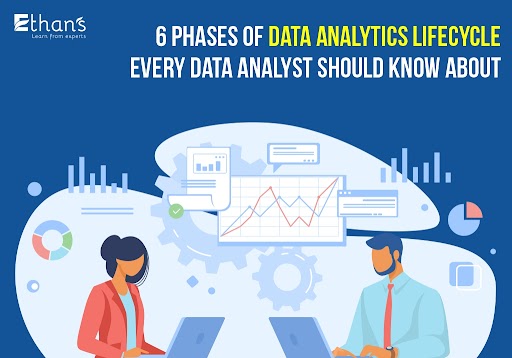
Are you an aspiring data analyst looking to take up a data analytics course in Pune? Then, learning about the data analytics lifecycle is fundamental to your knowledge and expertise. So, let’s look at the data analytics lifecycle and the six phases, including discovery, data preparation, model planning, model building, communication results, and operationalization that make up for it. Data Analytics Lifecycle and its Significance The data analytics lifecycle defines the roadmap of the way data is generated, collected, processed, used, and analyzed to accomplish business goals. These processes refer to an organized way of converting data into useful information to help businesses achieve project or organizational goals. The lifecycle guides and provides strategies for extracting information and moving in the right direction to achieve business objectives. Analysts use the circular representation of the lifecycle to analyze data in a forward or backward direction. The insights they receive help them decide whether to proceed with the existing research and stop or rework the analysis. Why should you learn about the data analytics lifecycle? The lifecycle aims to address big data problems and data science projects. The systematic and step-by-step methodology helps analysts plan tasks concerning data acquisition, processing, analysis, and recycling. These phases or stages help data analysts address specific big data analysis needs. 6 Stages of Data Analytics Process Before we see the phases of data analytics, let’s look at the various steps involved in data analysis with an example. Let’s say, an eCommerce portal is struggling with a massive number of cart abandonments. The decision-makers have taken cognizance of this concern and want to know what’s driving people away from the brand after creating a cart. As a data analyst, this is what you would do. 1. Define the Problem The process begins with understanding the task and the stakeholder’s expectations for the solution. It would involve asking the managers and other stakeholders questions about cart abandonments to find a solution to their problem. It would also involve finding the problem’s root cause to understand the concern. A couple of key questions that you must ask yourself include; Which problems have the stakeholders mentioned What are their expectations from the solution 2. Data Collection The next step is collecting data from multiple sources, including external and internal. Internal data is available in the company, whereas external information will have to be collected from outside the organization. Data generated from own resources is first-party data, while that collected and sold is called second-party data. On the other hand, data collected from external sources is termed third-party data. Common sources of data are feedback, questionnaires, surveys, etc. Accordingly, as a data analyst, you will have to collect cart abandonment data from the system and conduct online surveys to ask users why did they abandon the cart. 3. Data Cleanup The next process is cleaning the data collected. It might comprise redundancies, duplication, and irrelevant information. You must remove such data to ensure you have relevant and only the data you need to analyze. While helping you analyze the data effectively, it would also enable you to identify trends and patterns. Another significant part of this process is determining if the data is biased toward something. Such data wouldn’t let you drive the right inferences. 4. Data Analysis This is where the actual analysis begins. It involves analyzing the data, identifying trends, making calculations (using tools like Excel or SQL (Structured Query Language), and combining data for better outcomes. Additionally, programming languages like R and Python also help you analyze data. In the context of the eCommerce company, it would involve understanding, analyzing, and grouping the various reasons for cart abandonments. Check Out Full Blog – Data Preprocessing in Machine Learning: 7 Easy Steps to Follow 5. Data Visualization Visualizing helps non-technical people or the consumers of the data understand complex data. The transformed data has to be made into a visual, including a chart or a graph for a simpler comprehension of the data. You can leverage various tools to do that. A couple of them include Tableau and Looker. Tableau includes a simple drag-and-drop tool that helps create effective visualizations. Whereas, Looker is a data viz tool directly connecting to the database and creating visualizations.  6. Data Presentation Presentation is the last step in the data analysis process. It involves transforming raw information into an easily comprehensible and meaningful format. You can present the data in various forms, including graphs, charts, tables, etc., to make it easier for decision-makers to draw conclusions and make informed decisions. For example, after analyzing the data, you’ve categorized various reasons for cart abandonments, including slowly loading web pages, external distractions, network issues, unspecified, etc. If you decide to show it through a pie chart, you will be able to show the reasons and their pie share depending on the cart cancellations they result in. If slowly loading the webpage is the most common reason, the company can make efforts to enhance the website’s speed and gradually reduce the number of canceled carts. Data Analytics Lifecycle Phases Here are the six phases that form the data analytics lifecycle. Phase 1: Discovery The data science team explores the issue and investigates it. It builds context and understanding. Learn about the required and available data sources. The team builds an initial hypothesis that can later be tested with data. Phase 2: Data Preparation Methods or steps to discover, preprocess, and condition data before modeling and analysis. An analytic sandbox is required. The team executes, loads, and transforms to get data into the sandbox. The team may perform data preparation tasks several times and not in a predefined order. Some tools used for this phase are Alpine Miner, Hadoop, and Open Refine. Phase 3: Model Planning The data science team studies the data to identify connections between variables. Next, it selects crucial variables and the most useful models. Datasets used for testing, production, and training goals are created. The team builds and executes models depending on … Read more
Why is Time Series an Analyst’s Best Tool for Analysis?

best analytical methods for analysts

Effective data analysis is one of the cornerstones of every organization’s success in the contemporary business environment. To do so and drive optimal value from the available data, analysts use various analytical methods. One of them is time series data analysis. However, precisely, what makes time series one of the best analytical methods for analysts? As an aspiring analyst looking to pursue data analysis courses in Pune, understanding it can help you use time series more effectively. Here’s more to it. What is Time Series Analysis? Time series analysis is a precise way of analyzing a sequence of data points gathered over a time interval. Instead of merely recording the data points intermittently or randomly, it allows analysts to record data points across consistent intervals over a set period. Nevertheless, time series analysis doesn’t restrict itself to collecting data over time. It also shows how variables change over time. Time proves a critical variable as it shows data adjustments over the course of data points and the outcomes. It offers an additional information source and an order of dependencies between the data being analyzed. Generally, time series requires several data points to ensure reliability and consistency. It allows analysts to have a considerable representative sample size. Additionally, the method enables analysts to ensure that patterns discovered aren’t outliers and understand that patterns can also contribute to seasonal variance. Furthermore, analysts can use time series data to make forecasts, based on historical data. Benefits of Time Series Analysis – Why Developers Use It? Analysts use time series to help businesses comprehend factors contributing to trends or systems patterns over a particular time frame. By using data visualizations, organizations can see seasonal trends and unearth the reasons for the occurrence of various trends.  Besides, while analyzing data across intervals, businesses can use time series to forecast the probability of future events. It can highlight potential changes in the data to understand data variables better and make more informed and near-accurate forecasts. With that said, let’s look at some benefits of time series analysis that make it an excellent analytical method for analysts. Pattern Identification Time series helps analysts identify patterns over a particular period. Let’s understand this with an example. For instance, retail is a trend and pattern-driven business. The high seasonal and demand fluctuations in this industry require retailers to stay abreast of these changes and ensure continuous analysis. Time series analysis can help here. It can help retail data analysts identify seasonal sales patterns, and comprehend demand and supply equations across a particular timeframe to make inventory and market-related decisions.  On the other hand, even when it comes to oil and gas companies, analysts can identify and decipher consumption trends to make informed usage forecasts within a particular region and make decisions to optimize production. Another example is that of the stock market, wherein data analysts can help identify market shifts and help the user or business respond to them optimally.  Data Cleanup Another significant advantage of time series analytics is that it allows an analyst to help remove noisy data and outliers that cloud an analyst’s understanding of trends and consequently affect the decision-making process. The analysis method helps increase the reliability of the data and makes it more interpretable with techniques like smoothing and seasonality adjustments. Analytical Efficiency As stated above, time series analysis requires a huge amount of data. However, in some cases, even less data can lead to more insights. It is because time series analysis enables data analysts to focus on critical metrics and periods to derive valuable insights. The method lets analysts do so without letting excessively intricate models or datasets overwhelm them and affect decision-making. Improved Data Accuracy and Quality In addition to the above, data accuracy helps improve data accuracy by identifying and rectifying missing values and anomalies within a particular dataset. It helps improve data integrity and reliability vital for accurate predictions and analysis. With phenomenal data cleaning capabilities, time series help ensure dataset completeness and cleanliness. Speaking of data quality, techniques like interpolation and extrapolation can help fill gaps and enhance data quality. Thus, cleaner and higher-quality data can enable more accurate and precise data analysis and forecasting. Lowered Noise Impact Time series analysis helps reduce the impact of noise on datasets. With that, it enhances the accuracy of forecasts and analytical outcomes. As mentioned earlier, the spots and removes outliers that often cause the noise to distort the true signal in the data.  Furthermore, analysts can use time series analysis to identify missing values, enabling precise imputation and smoothing to build a more logical dataset. Analyzing percentage differences between observations can enable analysts to minimize the impact of noisy data points and facilitate a cleaner analysis. Role of Python in Time Series Analysis Python is extensively used for time series due to the several libraries that simplify time series analysis and make it more efficient. These libraries offer numerous functionalities, including data manipulation, visualization, modeling and forecasting. These help you explore underlying patterns and trends in a particular dataset. Some key Python libraries used for time series analysis include the following. pandas: This is a preferred library for data manipulation and analysis, It provides user-friendly data structures and functions to work with structured data. numpy: numpy is a basic package for scientific computing with robust N-dimensional array objects and tools for integrating C/C++ and Fortran code. matplotlib: This one is a plotting library that produces quality figures in different formats. It is an apt library for data visualization. statsmodels: It is a library that enables you to estimate statistical models, perform statistical tests, and discover statistical data. yfinance: With this library, you can retrieve the latest financial data from Yahoo Finance. scikit-learn: This is a versatile Python library with simple and efficient tools for ML, data analysis and data mining. Conclusion Understanding time series analysis is one of the essential aspects of a data analyst’s work profile. In a nutshell, time series analysis helps data analysts enhance data … Read more

Importance of Data Analytics Course in Project Management

data analytics courses pune

In today’s fast-moving world of project management, where each choice can either make or break a project, using data effectively is crucial. In this digital era, where information is everywhere and technology keeps advancing, project managers need to have the right tools and skills to handle their jobs. This is why Data Analytics Courses in Pune are so important in project management. Who is a Project Manager? At the helm of every successful project is a skilled and adept project manager. A project manager is responsible for planning, executing, and closing projects, ensuring they meet their objectives within the specified time frame and budget. Project managers act as the glue that holds the project team together, coordinating efforts, managing resources, and navigating challenges to deliver successful outcomes. Responsibilities of a Project Manager Project managers wear multiple hats, balancing various responsibilities to steer projects towards success. Some key responsibilities include: Project Planning: Developing comprehensive project plans, outlining tasks, timelines, and resource requirements. Team Coordination: Leading and coordinating the project team, ensuring everyone is aligned with project goals. Risk Management: Identifying, assessing, and mitigating potential risks to project success. Communication: Facilitating clear and transparent communication among team members and stakeholders. Budget Management: Overseeing project budgets, ensuring resources are utilized efficiently. The Landscape of Project Management Project management involves orchestrating a multitude of tasks, resources, and timelines to ensure successful project delivery. Traditionally, project managers relied on experience, intuition, and gut feelings to make decisions. However, with the advent of data analytics, project management has taken a giant leap forward. Real-Time Decision-Making One of the key advantages of integrating data analysis into project management is the ability to make informed, real-time decisions. By leveraging data, project managers can gain valuable insights into various aspects of their projects, such as progress, resource allocation, and potential risks. This empowers them to make strategic decisions promptly, ensuring that the project stays on track and within budget. Improved Resource Allocation Using shorter and simpler words enhances readability in sentences. Additionally, incorporating transition words aids in smoother flow and coherence. Efficiently allocating resources is key to successful project management. By analyzing data, project managers can spot resource bottlenecks, balance workloads, and assign resources where they’re most needed. This guarantees that the team operates at peak efficiency, resulting in higher productivity and timely project completion. Risk Mitigation and Predictive Analytics In the uncertain world of project management, risks are bound to happen. But, using data analysis helps project managers expect and deal with possible risks before they become big problems. By looking at past project data, we can spot trends and see possible issues coming up. This helps project managers take action early on, preventing problems and making project delays less likely. Stakeholder Communication and Transparency Good communication is key to successful project management. Data analysis gives project managers a strong way to share progress, problems, and successes with stakeholders. By showing insights from data, project managers can be transparent and earn trust from team members, clients, and other stakeholders. Additionally, using simpler words makes it easier for everyone to understand. Enhancing Project Performance Continuous improvement is crucial for successful projects. Data analysis helps project managers objectively evaluate project performance. By looking at key performance indicators (KPIs), managers can find areas to improve, make changes, and improve project processes for future projects. Moreover, using simpler words and phrases can enhance readability. What is the Importance of Data Analytics for Project Management? In the fast-paced world of project management, data pops up constantly. So, it’s crucial to understand and use this data effectively. Data analytics in project management means carefully studying project data to find useful information. With this info, project managers can make smart choices, improve processes, and ensure project success. How Data Analytics is Helpful for Project Managers? 1. Informed Decision-Making: Data analytics gives project managers the info they need to make smart choices. Whether it’s changing project schedules, shifting resources, or spotting risks, data analytics gives a full picture that helps in decision-making. Plus, it helps in making quick adjustments whenever necessary. 2. Resource Optimization: With By using data analysis, project managers can improve how they assign resources. By grasping resource usage patterns, managers can allocate resources better, making sure the correct skills are used when needed. Additionally, they can streamline operations for enhanced efficiency. 3. Risk Management: Data analytics helps project managers spot risks before they get worse. By analyzing past data and making predictions, managers can handle risks early, reducing their effect on project schedules and results. Additionally, this approach allows for smoother project management. 4. Performance Monitoring: Monitoring how well a project is doing is crucial for getting better all the time. Using data analysis helps project managers keep an eye on important signs of how well things are going (KPIs), figure out how well each part of the project is going, and make changes to make things work even better. Role of Data Analytics Course in Project Management For project managers aspiring to stay ahead in their field, investing in data analytics training is a game-changer. Courses such as those offered by Ethans provide a comprehensive understanding of data analysis tools, techniques, and their application in project management scenarios. Key Benefits of Data Analytics Training for Project Managers 1. Skill Enhancement: Data analytics training equips project managers with the skills to collect, analyze, and interpret data effectively. This enables them to make data-driven decisions for improved project outcomes. 2. Strategic Thinking: Understanding data helps project managers think strategically. They can spot opportunities and challenges early, boosting their project leadership skills. 3. Adaptability: In a dynamic business environment, adaptability is crucial. Data analytics training empowers project managers to adapt to changing circumstances by leveraging insights from data analysis. 4. Competitive Edge: With the growing importance of data in project management, those equipped with data analytics skills gain a competitive edge in the job market. Employers seek professionals who can harness data to drive project success. How Project Managers Can Increase Their Salary Package … Read more

Why Learn Data Analytics? Exploring the Career Opportunities in 2024

Data Analytics Opportunities

In today’s rapidly evolving digital landscape, the phrase “data is the new oil” has never been more relevant. As businesses worldwide harness the power of data to drive strategic decisions, the demand for skilled data analytics professionals is skyrocketing. In this blog post, we’ll delve into the compelling reasons why individuals should consider learning data analytics and how it opens up a plethora of career opportunities, especially in the year 2024 and beyond. 1. The Data Revolution: Shaping the Future of Decision-Making In the era of big data, organizations no longer rely solely on intuition and experience for decision-making. The ability to harness and interpret data has become a strategic advantage. Data analytics plays a crucial role in transforming raw data into actionable insights, enabling companies to make informed decisions that drive productivity, efficiency, and growth. This shift towards data-driven decision-making is reshaping the future of industries. 2. Cross-Industry Applicability: A Skillset in High Demand One of the key reasons to learn data analytics lies in its cross-industry applicability. From healthcare to finance, retail to technology, data analytics skills are in high demand. In healthcare, for instance, data analytics aids in personalized patient care and drug discovery. In finance, it facilitates fraud detection and risk management. The versatility of these skills allows professionals to navigate and contribute to various sectors. 3. Job Market Insights: Riding the Wave of IT Career Growth The job market for data analytics professionals is experiencing exponential growth, with organizations actively seeking individuals equipped with the skills to analyze and interpret data. Roles such as data analysts, data scientists, and business intelligence analysts are not only in demand but also offer competitive salaries. As we move into 2024 and beyond, the trajectory of growth in the IT job market for data analytics professionals is expected to continue its upward trajectory. 4. Adapting to Change: Thriving in the Evolving Landscape Data analytics is a field that thrives on innovation and adaptation. As technology evolves, so do the roles and responsibilities within the data analytics landscape. Professionals who embrace continuous learning and stay abreast of emerging trends are better positioned to excel. The ability to adapt to changing tools, techniques, and industry demands is paramount for long-term success in the dynamic field of data analytics. 5. Ethans: Paving the Way for Your Data Analytics Journey website.ethans.co.in/ stands as a premier destination for individuals looking to embark on a journey into the realm of data analytics. The courses offered by Ethans are designed to provide a comprehensive understanding of data analytics, coupled with hands-on training and real-world projects. Ethans equips students, professionals, and career switchers with the practical skills needed to excel in the data-driven landscape, making it a catalyst for career growth. 6. Success Stories: Realizing Career Aspirations with Ethans Numerous success stories bear witness to the transformative impact of Ethans’ data analytics courses. Individuals who have undergone training at Ethan’s have not only acquired the skills demanded by the industry but have also realized significant career advancements. From securing coveted positions to leading impactful projects, the success stories emanating from Ethans underscore its commitment to empowering individuals in their data analytics journey. Check blog – Top Data Analyst Interview Questions and Answers for Freshers in 2024 Conclusion In conclusion, the question “Why learn data analytics?” finds its answer in the multitude of opportunities it presents for career growth and success. As we step into the future of 2024 and beyond, the role of data analytics professionals will continue to be pivotal in shaping the destiny of industries. Ethans, with its unwavering dedication to providing top-tier education in data analytics, serves as the gateway for individuals ready to embrace the potential of the data-driven era. Learn data analytics, unlock possibilities, and position yourself for a thriving career in the exciting landscape of data analytics.