Why is Python a Must-Have Skill for Data Analysis and Data Science?

While enrolling for a data science course in Pune or a data analyst course in Pune, a common question budding data professionals ask us is about the programming language. Yes. Those days when programming language proficiency was restricted to web developers or programmers are long gone. Amidst today’s data-driven age, you need programming languages to be more effective. One such programming language that matters is Python. Python has been around for decades. It has played a significant role in shaping the technology world. For instance, it is the most preferred language for AI applications. However, what role does it play in data analysis and data science? Why should data analysts and data scientists learn Python? Let’s answer these together in this blog. Python’s Role in Data Python is a key element of the data business. It plays an instrumental role throughout the entire data workflow, enabling processes, including; Data Collection and Cleaning: Python scripts can fetch data automatically from APIs, databases, and files. Libraries like Pandas help easily clean, transform, and organize unorganized data. Statistical Analysis: The SciPy library helps you perform statistical functions like hypothesis testing, regression analysis, etc. Exploratory Data Analysis: Libraries like NumPy and Pandas enable fast calculations, filtering, grouping, and exploring your datasets to uncover patterns and anomalies. Further, Seaborn and Matplotlib let you visualize these insights with engaging graphs and charts. Machine Learning: Scikit-learn, another library, offers a toolkit to build and evaluate ML models. Additionally, frameworks like TensorFlow and PyTorch help tackle intricate problems. Automation and Reporting: You can also automate repetitive data-related tasks and produce insightful reports, helping you save effort and time. Now that you’ve overviewed how significant Python is in the data realm, let’s see seven reasons that make learning the language a must. 7 Reasons Data Scientists and Analysts Must Learn Python Here’s why Python is a revered skill in the data world. Soft Learning Curve Python is simple, has an easily readable syntax, and requires writing fewer lines of code. Hence, it is perfect for beginners. Data scientists and analysts spend a significant amount of time coding. Python simplifies life with its intuitiveness and readability, saving hours! Robust Data Libraries Python is popular for its libraries that empower data science and analysis. Some include; Pandas: Data manipulation and analysis NumPy: Numerical computing and support for multi-dimensional arrays and matrices Matplotlib and Seaborn: Data visualization, simple plot, complex graphs creation SciPy: Scientific computing for statistical analysis and optimization Active Community Python has a massive and active community with support for queries, concerns, etc. As a user or developer, you will find innumerable online resources, tutorials, forums, and useful human help prepared to assist you through your learning journey. Versatility that Transcends Data Undoubtedly, Python is a powerhouse for data. However, its usefulness isn’t restricted to data alone. Hence, even web developers use it with frameworks like Django and Flask. It enables tasks like scripting, automation, scientific computing, and more. Thus, learning Python arms you with a transferable skill set! Open Source and Free Python’s beauty also lies in its open-source nature. Hence, you can use it freely. As a budding data scientist or analyst, this works as an advantage. It is because access to software tools in the data world can be costly. Thus, leveraging Python and its libraries without any financial investment is a significant plus. AI and Machine Learning Yes. We cannot ignore these elements. Python is amongst the most preferred languages for ML and AI applications. Keras, PyTorch, and TensorFlow libraries enable you to build complex ML models and deep learning networks. So, whether you are working with images, text, or audio content, Python helps you build advanced AI solutions. As AI and ML become indispensable for any business, Python proficiency can add a new dimension to your skills and make you a valuable asset. Seamless Integration with Other Technologies The Python language is a team player. Thus, it can integrate with databases, including AWS, Google Cloud, and Azure, along with various other tools the data ecosystem uses. The programming language offers a significant advantage in live data environments. Job Market Demand Python is one of the most in-demand skills for data-related fields. Thus, whether you work as a data scientist, analyst, ML engineer, or BI analyst, Python is a skill requirement that most employers highlight and ask for. Prepared to Become a Python-Proficient Professional? Join Ethan’s Tech. Our data analytics classes in Pune and data analysis courses in Pune offer a comprehensive curriculum with Python as one of the major highlights. We nurture a team of seasoned faculty members with years of experience in the data ecosystem. Our courses provide abundant practical exposure to the latest tools and technologies to make you a competent professional with the skills the industry expects. Want to explore our courses and interact with our experts? Call us at +91 95133 92223.

How to Start a Career in Data Science: A Comprehensive Guide with Ethan’s

data science classes in pune

Introduction In the fast-paced world of technology and information, data science has emerged as a key player, driving decisions and innovations across various industries. If you’re intrigued by the idea of extracting valuable insights from data and influencing critical decisions, a career in data science might be the perfect fit for you. In this comprehensive guide, we’ll explore what data science is, the skills required, top companies in the field, salary expectations, education prerequisites, and why choosing a course from Ethan’s Tech could be the catalyst for your success. What is Data Science? At its core, data science involves the extraction of meaningful insights and knowledge from vast sets of data. It encompasses a range of techniques and methods, including statistical analysis, machine learning, and data visualization. The applications of data science are diverse, from predicting market trends to optimizing business operations. What are the Skills Required for Data Science Professionals? Embarking on a career in data science requires technical and soft skills. A. Technical Skills Programming Languages: Proficiency in languages like Python and R Data Manipulation and Analysis Tools: Skills in using tools such as Pandas, NumPy, and others. Machine Learning and Statistical Modeling: Understanding and application of machine learning algorithms and statistical models. B. Soft Skills Critical Thinking and Problem-Solving: Ability to approach complex problems strategically. Effective Communication Skills: Clear communication of findings to both technical and non-technical stakeholders. Collaboration and Teamwork: Working effectively in a team-oriented environment. Technologies Ethan’s Tech Cover in the Data Science Course are mentioned below: Machine learning Artificial intelligence Python Spark & Scala SQL/ No SQL Microsoft Excel Top Companies Hiring for Data Science Professionals The demand for skilled data scientists is soaring, with top-tier companies recognizing the value they bring. Companies like Google, Amazon, and Microsoft are actively seeking data science professionals to gain a competitive edge through data-driven strategies. Exploring opportunities with these industry giants could open doors to exciting and impactful projects. How Much Do Data Science Professionals Earn? The average salary for a Data Scientist is ₹13,90,000 per year in India. The average additional cash compensation for a Data Scientist in India is ₹1,90,000, with a range from ₹1,00,000 – ₹2,47,500.  Source – https://www.glassdoor.co.in/Salaries/data-scientist-salary-SRCH_KO0,14.htm What is the minimum Educational Qualification for a Data Science Course? While a solid educational background in mathematics, statistics, or computer science is often associated with data science, the field is increasingly welcoming individuals from diverse backgrounds. If you’re considering a career transition, upgrading your skills, or moving into the IT sector, data science could be the game-changer you’re seeking. Traditional Paths Many data scientists hold advanced degrees, such as master’s or Ph.D., particularly in fields related to data science. These degrees provide a strong foundation in the theoretical aspects of the discipline. Non-Traditional Paths However, the dynamic nature of data science allows for non-traditional paths as well. Individuals with a bachelor’s degree in fields like engineering, business, or even IT can successfully pivot into data science by acquiring the necessary skills through targeted courses and hands-on experience. Upgrading IT Skills For IT enthusiasts looking to upgrade their knowledge, a data science course is an excellent choice. The skills acquired in data science, including programming languages, machine learning, and data analysis, complement and enhance existing IT expertise, opening doors to exciting opportunities in the data-driven world. Career Switchers If you’re contemplating a career switch and intrigued by the world of data, a data science course can serve as a bridge. Many professionals from diverse sectors find the interdisciplinary nature of data science appealing, allowing them to bring their unique perspectives to the field. Why Data Science Courses for Career Advancement? Whether you hold a traditional degree or are considering a non-traditional path, opting for a data science course, especially from institutions like Ethan’s Tech, provides a structured and effective way to acquire the necessary skills. The curriculum is designed to cater to individuals from various educational backgrounds, ensuring a smooth transition into the world of data science. Check out the Data Science Course Curriculum In summary, the doors to data science are open to individuals with a variety of educational backgrounds and career experiences. Whether you’re a recent graduate, an IT professional, or someone looking to make a career switch, the evolving field of data science has a place for you. Why Opt for a Data Science Course from Ethan’s Tech Learning from Industry Experts: Receive instruction from seasoned professionals in the field, providing valuable insights and practical knowledge. Comprehensive Technology Coverage: Cover a wide array of technologies relevant to data science, ensuring you stay updated with industry trends. Live Project Experience: Gain hands-on experience through live projects, applying theoretical knowledge to real-world scenarios. Placement Assistance: Benefit from dedicated placement support to enhance your career prospects post-completion. Interview Preparation Support: Access resources and guidance to excel in interviews and make a seamless transition into the professional sphere. Community and Supportive Learning Environment: Join a community of like-minded individuals passionate about data science, fostering a supportive learning environment. Proven Success Stories: Explore success stories of previous students who have secured positions in leading companies and made significant contributions to impactful projects. In choosing Ethan’s Tech, you are opting for a comprehensive data science course that goes beyond theoretical concepts, providing practical skills and real-world applications. Join a community where your passion for data science is nurtured, and success is not just a goal but a common achievement. Conclusion In conclusion, a career in data science offers a thrilling journey into data-driven decision-making. Whether you’re just starting or looking to upskill, the demand for data science professionals continues to grow. You can carve out a successful and rewarding career in this dynamic field with the right skills, knowledge, and guidance from an institute like Ethan’s Tech. Ready to embark on your data science journey? Explore the courses offered by Ethan’s Tech and take the first step towards a fulfilling career. Visit website.ethans.co.in/ to learn more about our data science programs.

10 Myths about Data Science – What You Need to Know

10 Myths About Data Science

Data science has become a widely discussed and sought-after field in recent years. With its ability to extract insights and drive decision-making, data science has transformed industries across the globe. However, along with its popularity, several myths and misconceptions have emerged. In this article, we will debunk ten common myths about data science, shedding light on the reality behind this dynamic discipline. Top 10 Myths Of Data Science Myth 1: Data Science is Only for Experts Contrary to popular belief, data science is not exclusively reserved for experts or individuals with advanced technical backgrounds. While proficiency in mathematics, statistics, and programming can be beneficial, anyone with a curious mind and a willingness to learn can embark on a data science journey. Numerous online resources, courses, and tutorials cater to beginners, enabling them to acquire the necessary skills and start applying data science principles in their respective domains. Myth 2: Data Science is All About Coding Although coding plays a significant role in data science, it is not the sole focus of the field. Data science encompasses a broader spectrum of activities, including data collection, cleaning, visualization, and analysis. While coding skills are undoubtedly valuable, a data scientist’s toolkit involves a combination of technical expertise, analytical thinking, and domain knowledge to derive meaningful insights from data. Myth 3: Data Science is a Predictive Crystal Ball While data science can uncover patterns and trends, it is not a crystal ball that predicts the future with absolute certainty. Predictive models and algorithms are designed to estimate outcomes based on historical data, but they are subject to limitations. Factors such as unforeseen events, changing market conditions, or incomplete data can influence the accuracy of predictions. Data science should be seen as a tool that aids decision-making rather than a source of infallible prophecies. Myth 4: Data Science Can Solve Any Problem Data science is a powerful discipline, but it does not possess a universal solution for all problems. Each problem domain requires careful consideration and domain-specific knowledge to formulate appropriate models and algorithms. Data scientists collaborate with subject matter experts to identify relevant variables, define problem statements, and develop tailored approaches. Understanding the context and nuances of a problem is crucial for effective problem-solving using data science techniques. Myth 5: Data Science is Just Statistics While statistics forms the foundation of data science, the field encompasses much more than statistical analysis. Data scientists utilize a wide range of techniques and methodologies, including machine learning, deep learning, natural language processing, and data visualization. These tools enable them to extract insights, make predictions, and discover patterns that extend beyond traditional statistical methods. Myth 6: Data Science Eliminates the Need for Domain Knowledge Data science is not a substitute for domain knowledge; instead, it complements it. Having a deep understanding of the subject matter is vital to ask the right questions, interpret results, and make informed decisions. Data scientists work closely with domain experts to incorporate their insights and expertise into the analysis process, ensuring that the outcomes align with the specific requirements and objectives of the domain. Myth 7: Data Science is a One-Person Job While data scientists often possess a diverse skill set, data science projects typically involve multidisciplinary teams. Collaboration among professionals with varied expertise, such as data engineers, data analysts, and domain specialists, enhances the overall quality of data science initiatives. Each team member contributes their unique perspective, fostering a holistic approach to problem-solving and enabling the extraction of valuable insights from complex datasets. Myth 8: Data Science is Time-Consuming and Expensive While data science projects may require time and resources, advancements in technology and the availability of open-source tools have made the process more accessible and cost-effective. Cloud computing platforms provide scalable infrastructure, reducing the need for extensive hardware investments. Additionally, the open-source community has developed numerous libraries and frameworks that streamline data science workflows, facilitating efficient analysis and reducing project timelines. Read Full Blog – What to Expect from a Data Science Course  Myth 9: Data Science is Only for Big Companies Data science is not limited to large corporations with substantial resources. Organizations of all sizes and industries can leverage the power of data science to gain insights, optimize operations, and improve decision-making. Small businesses can start by focusing on specific use cases or outsourcing data science tasks to specialized service providers. By harnessing the potential of data science, companies can unlock new opportunities and drive growth regardless of their scale. Myth 10: Data Science Results are Always Accurate Data science models are built upon assumptions, and the quality of results depends on various factors such as data quality, model selection, and algorithmic implementation. While data-driven insights provide valuable guidance, they should be considered alongside other factors and expert judgment. Data science is an iterative process that involves continuous monitoring, validation, and refinement of models to ensure their accuracy and relevance. Conclusion As data science continues to shape our world, it is essential to dispel common myths and misconceptions surrounding the field. Data science is a multidimensional discipline that combines technical expertise, domain knowledge, and analytical thinking to unlock valuable insights from data. By understanding the realities behind these myths, individuals and organizations can harness the power of data science more effectively and make informed decisions.

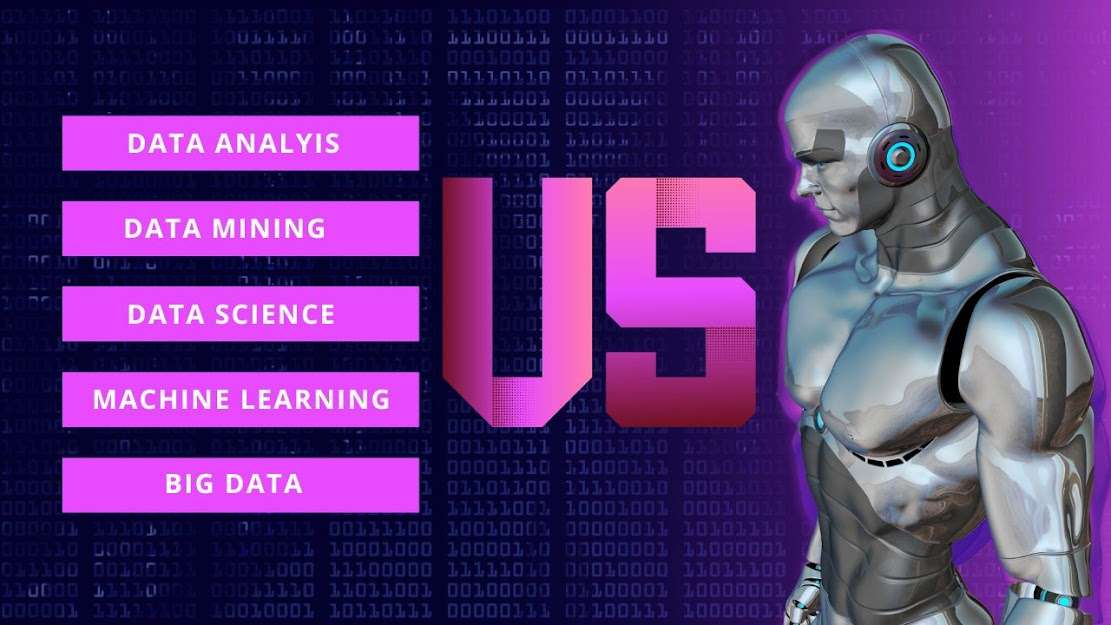
Data Analysis Vs. Data Mining Vs. Data Science Vs. Machine Learning Vs. Big Data

Data Analysis, Data Mining, Data Science, Machine Learning, Big Data

Introduction Data science is an interdisciplinary field that involves using statistical, mathematical, and computational techniques to extract insights and knowledge from data. It is a broad field that encompasses many subfields, including data analytics, data analysis, data mining, machine learning, and big data. What is Data Analytics? Data analytics involves examining datasets to extract insights and knowledge from them. It is often used to inform business decisions or identify patterns in data. Data analytics involves both descriptive and diagnostic analysis, which means that it can be used to describe what has happened in the past and diagnose the reasons why it happened. What is Data Analysis? Data analysis is a more general term that refers to the process of examining data to extract insights and knowledge from it. It can involve various techniques, including statistical analysis, machine learning, and data visualization. Data analysis is often used in scientific research to test hypotheses and draw conclusions from data. What is Data Mining? Data mining is a specific technique used to extract insights and knowledge from large datasets. It involves using statistical and machine learning algorithms to identify patterns in data that can be used to make predictions or inform business decisions. Data mining is often used in fields like finance, healthcare, and marketing to identify trends and patterns in data. What is Data Science? Data science is a field that encompasses many different techniques and approaches to working with data. It involves using statistical, mathematical, and computational techniques to extract insights and knowledge from data. Data science can involve various subfields, including data analytics, data analysis, data mining, and machine learning. What is Machine Learning? Machine learning is a specific subfield of data science that involves building models that can learn from data and make predictions or decisions based on that data. It involves training algorithms on large datasets and using them to make predictions or classifications on new data. Machine learning is often used in fields like image and speech recognition, natural language processing, and recommendation systems. What is Big Data? Big data refers to datasets that are too large and complex to be processed using traditional data processing techniques. Big data involves the use of advanced computing technologies, such as distributed computing and cloud computing, to process and analyze data. Big data is often used in fields like finance, healthcare, and marketing to identify trends and patterns in data. Difference Between Data Analytics, Data Analysis, Data Mining, Data Science, Machine Learning, & Big Data Although these terms are often used interchangeably, they have distinct differences. Here are some of the key differences between them: Data analytics is the process of examining datasets to extract insights and knowledge from them, while data analysis is a more general term that refers to the process of examining data to extract insights and knowledge from it. Data mining is a specific technique used to extract insights and knowledge from large datasets using statistical and machine learning algorithms. Machine learning is a specific subfield of data science that involves building models that can learn from data and make predictions or decisions based on that data. Big data refers to datasets that are too large and complex to be processed using traditional data processing techniques and often involves the use of advanced computing technologies like distributed computing and cloud computing. Conclusion While data analytics, data analysis, data mining, data science, machine learning, and big data are all related to the management and processing of data, they are different concepts with distinct goals and objectives. Understanding the differences between these terms is critical to effectively leveraging data and deriving valuable insights. To summarize, data analytics focuses on extracting insights from data sets, while data analysis involves examining and interpreting data to draw conclusions. Data mining is the process of extracting patterns and insights from data sets, while data science involves the use of scientific methods to extract insights from data. Machine learning is a subset of data science that focuses on building algorithms that can learn from data and make predictions, while big data refers to large, complex data sets that require specialized tools and techniques for processing. By understanding the differences between these concepts, individuals and organizations can make better decisions about how to leverage data and gain insights into their business and customers. As the importance of data continues to grow, a solid understanding of these concepts will be increasingly critical to success in the digital age.

Is Data Science A Good Career

Is Data Science a Good Career

The world is advancing every second and the world of science is taking thousands of turns every year. Data science is the most demanded part of technology in this 21st century. Teenagers, young adults, adults everyone is now attracted to the world of computers rather attracted to the world of the internet.  As time advances the craze and curiosity to get into the world of the internet also increases. Now the internet plays a big role in our lives and this internet has various parts which integrate all sorts of data.  WHAT IS DATA SCIENCE  Data science is a perfect amalgamation of maths, programming, statistics, and artificial intelligence. It is one of the most required aspects of science which is helpful in everyday life.  Data Science helps in transforming raw data into insights. Data science provides a meaningful meaning to everyday numbers. Data science is placed in one of the growing communities.  Most of the data science tasks are related to the data that are collected from the footprint of the people left on the internet. In today’s time, we all are leaving our footprints on the internet.  Every time people interact through phones, the internet, or computer they generate data. And most of the time the data gets collected and stored and then handed over to the data scientist to generate the insights and help the companies to make a profit out of the data.  Data science involves the collection of data, analysis of data, and building models from that data. Machine learning also comes under data science. The only difference between a machine learning engineer and a data scientist is that the machine learning engineer focuses on the machine learning algorithm and a data scientist focuses on the overall pipeline of the data.  CAREER PATHS IN DATA SCIENCE As the world of the internet is evolving and getting better with each passing day The opportunity for data science as a career is getting wider for people. Data science is going to provide plenty of opportunities in space.  According to a survey the average data scientist in the US makes around $120000 per year. But this number can have tremendous variation. Within the US the data scientist could be making more than $120000 per year at specific tech companies.  SKILLS REQUIRED TO BUILD A CAREER IN DATA SCIENCE Data Science has a fairly unique spot. It’s an exciting career with tons of job opportunities. One needs to possess a few basic skills before getting into the field of data science so that he/she can sustain in the field of data science for a longer duration. Below are a few skills mentioned.  Marketable skills like Data visualisation and programming –  One can’t become a data scientist without strong programming skills. Studies have found that people who are proficient in python and SQL are likely to remain in the field for a longer duration.  Knowledge of mathematics and statistics– Mathematics and statistics can be called a building block of a data scientist career. Even the understanding of data needs good command over statistical knowledge.  Machine learning –  Machine learning is an essential skill to have for building a career in data science. There are various types of machine learning and applying the appropriate learning type can give quality predictions and estimations.  Communication skills for sharing the work with stakeholders –  If a person wants to build a career in data science then needs to have good communication skills to be able to interact with other teammates and stakeholders. Communication skill is something which is much needed now in every type of field. Attitude to learn more and accept the change –  The world of data science gets updated every single day so the person trying to create a career out of data science should have the attitude to learn more and should be able to be a part of the change and accept the change positively. WHO CAN MAKE A CAREER OUT OF DATA SCIENCE Now the majority of teenagers and young adults are getting into the world of data science. They find data science to be a really fun subject to read and make a career out of it. Everyone is now learning programming, and coding and most of them take their interest in data science further and make it their profession.  So everyone interested in data science and has the curiosity to learn more and implement those learnings in generating new data should get into the field of data science. This is a kind of career option which gets updated every single day so people who live in have to cope with the new changes happening.  ADVANCEMENTS FOUND IN DATA SCIENCE IN RECENT YEARS 20 to 30 years before there was no such term called data science. The existence of the internet was just beginning and the collection of data had just started. At that time Excel sheet was the most chosen option to store various types of data.  Data in the previous years was not much wider space as it is now. Previously the amount of data was so low that one could easily calculate and extract the insights by just looking at it. And not much effort was needed to transfer the huge data to insights.  Because at that time huge data consisted of 300 to 400 rows of data. But today the scenario is quite different. Now we have millions and billions of rows of data. Now If a person spends his entire life taking out insights from the raw data then he would be unsuccessful because now the data is vast. During the 90s only a few rich people who had seen technology from a wider view knew about the existence of the internet and only a smaller amount of data could be generated.  And after that various types of applications started getting built and creating the present we are right now. These applications influenced people to go online and sometimes people got addicted … Read more

What is Data Science

What is Data Science

Data science is the process of examining and unlocking the patterns, trends, and experiences that are hidden inside the data. The study of data, which is produced from various sources, and how this data may be transformed into a valuable resource that can support the dynamic cycle in business is known as data science. There are various statistical techniques used in data science. Data transformations, data modeling, statistical operations, and machine learning modeling are some of these processes. The primary skill of every data scientist, according to a data science course in Pune faculty, is statistics. Additionally, optimization strategies might be used to satisfy the user’s business needs. You can also refer to a data science course in pune with placement.  What do Data Scientists do? With the use of their data visualization skills, a data scientist improves business decision making by bringing more speed and better direction to the entire process. Data scientists are far more technical than data analysts. Aspiring data scientists are strongly advised to have great communication skills because they will need to initiate and interact with many teams inside the firm.  Let’s move on to some more crucial discussions of data science-related problems now that we have a better knowledge of data science and data scientists.  What Does Data Science Hold For the Future? Organizations should be able to use all types of data in real-time within the next five years. More data will be used by businesses to make critical business choices, which will stimulate the development of new data science models. Accurate forecasting and decision-making will be emphasized by innovations like “Deep Learning.” As more businesses manage data science and analytics teams, the size of the current teams will increase. Although data science positions are beginning to specialize, predictive analytics and data science will soon be combined. The secret to utilizing big data’s limitless potential will be to hire qualified data scientists, business analysts, and statisticians.  Big Data, Big Paycheck Businesses all across the world are rapidly embracing digital technology and have tremendous development potential. This increase is being driven by data. The worldwide big data analytics market, which was valued at USD 37.34 billion in 2018 and is predicted to reach USD 105.08 billion at a CAGR of 12.3% by the year 2027, indicates that businesses are serious about their big data analytics. Big data analytics will soon have a very broad use.  In recent years, one of the most sought-after career positions worldwide has been for data scientists and data engineers. Every business, including healthcare, banking and insurance, retail, telecommunications, and information technology, has established teams devoted to data analytics and opened its doors to data analytics professionals. According to a survey, by 2021, 70% of corporate leaders will favor employees with data abilities. To improve their skills and take advantage of the career prospects in the market, more and more candidates are now enrolling in data science courses in Pune with placement.  Check Out Full Blog – What to Expect from a Data Science Course in Pune: Curriculum Breakdown Data-related employment pays well because of the expanding popularity and demand. Due to the complexity and ongoing evolution of the data analytics industry, there are extremely few trained individuals, which accounts for the high wage. Companies are paying top dollar even for entry-level employees due to the talent shortage in data analytics and the resulting imbalance between demand and supply.  These are the typical yearly salaries for positions in India that involve data:  According to PayScale, the average data scientist income in India is 698,412. A beginning data scientist with under a year of experience may expect to make around 500,000 per year, whereas early-stage data scientists with between one and four years of experience make about 610,811 per year.  Data engineers make an average of $830,864 per year.  Data Science training is offered in Pune by Ethans Tech Pune, and it is created and given by industry professionals who are employed by leading MNCs and have practical job experience. By working on actual case studies, the data science training in Pune helps people get ready by preparing them to work independently on pertinent projects.

Developing Skills for Data Science Success

Developing-Skills-for-Data-Science-Success

Technology is constantly evolving, so I decided it was time to upgrade my skills. Because I work for an MNC and many MNCs are moving towards data science, I was also highly interested in upskilling a data science course in Pune with placement.  Career, home, and remote learning juggling  Choosing the ideal programme required taking into account the quality of the overall curriculum as well as the effects finishing the coursework will have on my personal and professional life. Ethan’s was at the top of my list because the Economic Times ranked the graduate programme in data science as the best.  I decided to sign up for Data Science after reading the course page and browsing the LinkedIn profiles of other Ethan alumni. My ability to upskill while managing responsibilities at home and a full-time job was made possible by the flexibility of when to finish the courses.  Make a statement and stand out  I gained the new abilities and self-assurance I needed to advance my career after completing the Data Science programme in Pune. I was able to incorporate newer technology and get a competitive edge at work thanks to masterclasses taught by industry professionals.  Because I feel like I am having more sophisticated talks now, I can notice a change in the way I approach my work. I have expanded my vocabulary at work thanks to upskilling, which results in deeper talks with my bosses.  Additionally, I attribute my improved capacity to contribute significantly to the innovative culture at my workplace to upskilling. Students, like me, are challenged by the capstone projects and projects to apply their knowledge of R, Python programming, machine learning, and data visualization with Tableau to address real-world business problems.  The projects were a great tool for putting my newfound knowledge to the test. The live training was unquestionably a bonus, and I believe the testing standards were also fairly strict. It provided me with a chance to think creatively and delve deeper than what was being taught.  A Note From Ethans  Data science is one of the trendiest industries right now. With a predicted 28 per cent growth rate through 2026, the discipline of data science is set to open up job opportunities for computer professionals as well as those in sectors like manufacturing, healthcare, and finance. See if Ethan’s Professional Certificate Program in Data Science and Data Science Bootcamp are a good fit for your upskilling path by reviewing the course descriptions, advisers and trainers, and student evaluations.

How to Improve Data Science Skills?

Improve Data Science Skills | Ethan's Tech

Data Science Skills – Overview As the demand for data scientists increases, the area offers an engaging profession direction for students and existing professionals. This consists of people who aren’t data scientists however are passionate about data and data science, which has left them asking about what data science skills and huge data skills are had to pursue careers in data science. Data science requires a numerous set of skills. It is an interdisciplinary area that attracts on components of science, math, computer science, enterprise and communication. Data scientists might also additionally advantage from a numerous skill-set that allows them to both crunch the numbers and successfully impact decisions. Top 6 Skills Required to Master Data Science in 2021 The area of data science comes with a steep learning curve. Data scientists want to master essential programming languages and statistical computations, in addition to strong communication and interpersonal skills. Aside from a strong basis in mathematics and statistics, data scientists want to be literate in sophisticated statistical modeling software program and feature a stable knowledge and understanding of programming. Skills required to master Data Science in 2021 are as follows: 1. Python Coding Python is the most common coding language I generally see required in data science roles, together with Java, Perl, or C/C++. Python is a splendid programming language for data scientists. This is why 40 percentage of respondents surveyed by O’Reilly use Python as their fundamental programming language. Because of its versatility, you could use Python for almost all of the steps concerned in data science processes. It can take numerous formats of data and you could effortlessly import SQL tables into your code. It permits you to create datasets and you may actually locate any sort of dataset you want on Google. 2. SQL Database/Coding SQL (structured query language) is a programming language that permit you to to perform operations like add, delete and extract data from a database. It can also assist you to perform analytical functions and rework database structures. You want to be proficient in SQL as a data scientist. This is due to the fact SQL is particularly designed that will help you access, talk and work on data. It gives you insights while you operate it to question a database. It has concise instructions that permit you to to save time and reduce the quantity of programming you want to carry out tough queries. Learning SQL will assist you to higher recognize relational databases and improve your profile as a data scientist. 3. Machine Learning and AI A massive variety of data scientists aren’t proficient in machine learning regions and techniques. This consists of neural networks, reinforcement learning, adversarial learning, etc. If you need to stand out from other data scientists, you want to realize Machine learning techniques which include supervised machine learning, decision trees, logistic regression etc. These abilities will assist you to solve different data science issues which are based on predictions of essential organizational outcomes. Data science desires the application of abilities in different regions of machine learning. Kaggle, in one of its surveys, discovered that a small percent of data experts are capable in superior machine learning abilities including Supervised machine learning, Unsupervised machine learning, Time series, Natural language processing, Outlier detection, Computer vision, Recommendation engines, Survival analysis, Reinforcement learning, and Adversarial learning. 4. Data Visualization The business world produces a massive quantity of data frequently. This data desires to be translated right into a layout in order to be easy to comprehend. People certainly recognize pictures in sorts of charts and graphs more than raw data. An idiom says “A picture is really well worth a thousand words”. As a data scientist, you ought to be capable of visualize data with the resource of data visualization tools inclusive of ggplot, d3.js and Matplottlib, and Tableau. These tools will assist you to transform complex outcomes out of your projects to a layout in order to be easy to comprehend. The factor is, plenty of people do not understand serial correlation or p values.  You want to reveal them visually what the ones terms represent to your outcomes. 5. Unstructured Data It is crucial that a data scientist be capable of work with unstructured data. Unstructured data are undefined content that doesn’t suit into database tables. Examples consist of videos, blog posts, client reviews, social media posts, video feeds, audio etc.  They are heavy texts lumped together. Sorting these form of data is tough due to the fact they’re now no longer streamlined. Most people mentioned unstructured data as ‘dark analytics” due to its complexity. Working with unstructured data lets you resolve insights that may be beneficial for decision making. As a data scientist, you ought to have the ability to recognize and manage unstructured data from different platforms. 6. Deep Learning It is a sophisticated form of Machine Learning. Nowadays, each company is deploying Deep Learning models because it possesses the ability to solve obstacles of traditional Machine Learning approaches. Other skills for Data Scientist jobs consist of basics of Neural Networks, the library used for developing Deep Learning fashions like Tensorflow or Keras, and the way Convolutional Neural Networks, Recurrent Neural Networks, and RBM and Autoencoders work.  7 Ways to Improve Your Data Science Skill Data Science is one of the most up to date jobs in the tech industry and a totally beneficial profession choice for individuals who need to step into the sector of Big Data. A data scientist is anticipated to be a ‘jack of all trades,’ be continuously learning, and evolving in their craft. Data scientists use numbers and statistics to make real-world selections and translate business requirements.  It’s clear there’s a large demand for experts however the problem is finding them. If you’re looking to enhance your data scientist skills and stick out from the competition, here is your roadmap to getting better fast. 1. Take an Online Data Science Course The current education system in India could be very different, … Read more

Future of Data Science as a Career

Future-of-Data-Science-as-a-Career

For the ones who don’t know about data science, Let’s start with the most basic question What is Data Science? Data science involves actively examining and unlocking patterns, trends, and insights hidden within data. It encompasses studying data sourced from various channels and leveraging it as a valuable resource to support the dynamic business cycle. Data science employs various statistical techniques, including data transformations, modeling, statistical operations, and machine learning modeling. Statistics stands out as the fundamental skill for every data scientist, as emphasized by instructors in a data science course in Pune. Furthermore, optimization strategies may be employed to meet specific business requirements. For placement opportunities, consider enrolling in a data science course in Pune. What do Data Scientists do? With the use of their data visualization skills, a data scientist improves business decision-making by bringing more speed and better direction to the entire process. Data scientists are far more technical than data analysts. Aspiring data scientists are strongly advised to have great communication skills because they will need to initiate and interact with many teams inside the firm.  Let’s move on to some more crucial discussions of data science-related problems now that we have a better knowledge of data science and data scientists. What does data science hold for the future? Organizations should be able to use all types of data in real time within the next five years. More data will be used by businesses to make critical business choices, which will stimulate the development of new data science models. Accurate forecasting and decision-making will be emphasized by innovations like “Deep Learning.” As more businesses manage data science and analytics teams, the size of the current teams will increase. Although data science positions are beginning to specialize, predictive analytics and data science will soon be combined. The secret to utilizing big data’s limitless potential will be to hire qualified data scientists, business analysts, and statisticians.  Big Data, Big Paycheck Businesses all over the world are quickly adopting digital technology, showing big growth potential. Data is driving this boom. The global market for big data analytics was worth $37.34 billion in 2018 and is expected to grow to $105.08 billion by 2027, with a yearly growth rate of 12.3%. This shows that businesses are committed to using big data analytics. We expect big data analytics to be used a lot more in the future. In recent years, jobs as data scientists and data engineers have been really popular worldwide. Every industry, like healthcare, banking, retail, telecom, and IT, sets up teams for data analysis and happily hires pros in this area. A survey says that by 2021, 70% of business leaders will want employees who are good with data. More and more people are joining data science courses in Pune to improve their skills and grab job opportunities. Jobs involving data pay well because they’re popular and in demand. The data analysis field is always changing, so there aren’t enough trained people, which makes wages go up. Even beginners get paid a lot because there aren’t enough skilled workers, which messes up the balance between supply and demand. Typical yearly salaries for data-connected positions in India are as follows: According to PayScale, the average income for a data scientist in India is 698,412. A novice data scientist with less than a year of experience can expect to earn around $500,000 per year. Those with one to four years of experience typically make about $610,811 per year. Data engineers earn an average of $830,864 per year. Ethans Tech Pune provides data science training led by industry professionals from top MNCs, offering practical job experience. The training involve deeply individuals in real case studies, preparing them to work by yourself on related projects.

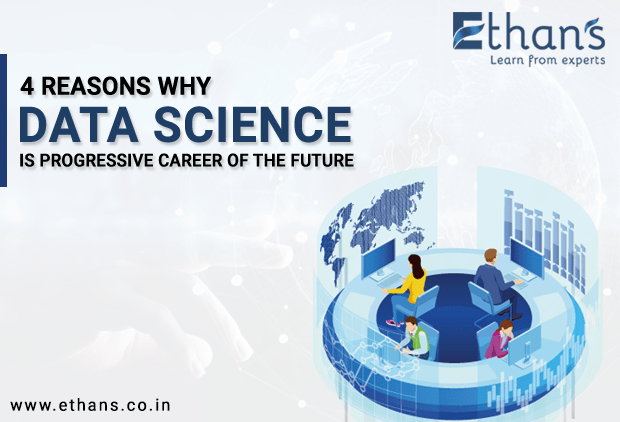
Reasons Data Science is the Most Progressive Career of the Future

Reasons-Data-Science-is-the-Most-Progressive-Career-of-the-Future

The newest buzzword is data science, and the hoopla is not unfounded. There are several arguments in favor of that. Data dominates modern businesses and nearly every aspect of our lives. The demand for data scientists is at an all-time high, and since data is the key component, it is unlikely to decrease any time soon. It will just continue to grow exponentially. Here are a few key arguments for why data science is  the most forward-thinking profession in the next few years. Continue reading: All companies need data scientists for data management  No organization can exist without data management, according to Pune – based institutions that provide data science courses for beginners. Data administration requires the highest level of professional knowledge, proficiency, and accuracy. In recent years, there has been a sharp increase in demand for data scientists. According to Gemalto’s 2018 Data Security Confidence Index, 65% of firms acknowledged that they had not properly classified, managed, and analyzed their data. 89 percent of companies acknowledged that with efficient and competent data management, they could have dominated their market.  Stringent data protection laws  Companies are aware of the effects of data breaches. Laws governing data security are now more strict than ever. Careless data handling is no longer a viable option. Data scientists ensure that data administration and analysis are done in the most secure, responsible, and professional way possible to prevent unauthorized entry. Privacy requirements must be upheld at all costs. In the majority of EU nations, the General Data Protection Regulation (GDPR) came into being.  Data science is constantly evolving  The field of data science is continually developing, and new opportunities are always emerging. According to experts providing data science courses in Pune with placement, it’s a fantastic time to start working in the sector. Data science profiles are becoming increasingly specialized, which is one reason why a data scientist employed by one company could not be performing the same duties as a data scientist employed by another company. That is sufficient evidence of how broad and diversified the data science profession is. Data is growing  As data increases, so does the need for data scientists. You might find it interesting to know that 5 billion individuals use data every day. By 2025, the population is projected to increase by 6 billion. In essence, this represents the population of the entire planet.  I hope this post was helpful. Please contact us if you would like more details about our data science courses in Pune.