Data Preprocessing in Machine Learning: 7 Easy Steps to Follow
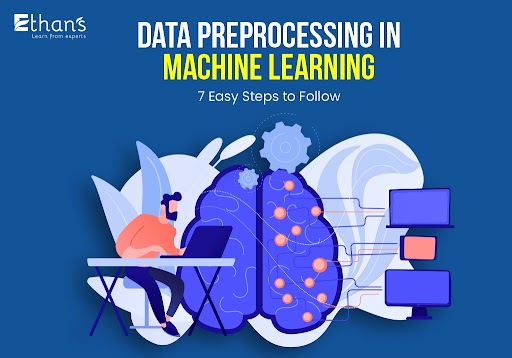
Data Preprocessing in ML

Data analytics is an extensive area of expertise. Thus, whether a fresher or experienced professional looking to become a data analyst, you will have to master different subject matters to secure your first data analytics job. One of the first amongst them is learning data preprocessing. Although overvalued, data preprocessing is a domain you can easily enter as the market doesn’t have as many professionals doing it. However, what is data preprocessing, and what will you have to learn to become an employable data preprocessing expert? Let’s see. What is Data Preprocessing? Data preprocessing involves evaluating, filtering, manipulating, and encoding data to enable an ML algorithm to comprehend the data and use the outcome. Data preprocessing aims to eliminate concerns like missing values, enhance data quality, and increase the data’s usability for ML.  In other words, data preprocessing provides ML algorithms a base to work by providing relevant data that helps them build an ML model. Whether you build ML models for facial recognition, email automation, product recommendations, healthcare development, etc., you need accurate and clean data. Data processing plays a crucial role in providing data with all the steps involved in it. Let’s look at those seven steps. 7 Steps in Data Preprocessing So, here’s what’s involved in data preprocessing. Dataset Acquisition Dataset acquisition determines the prediction and effectiveness of your LLM or ML model. The better your data quality, the more accurate the model outcome. Libraries Importing The next step is importing libraries for the ML project. A library refers to a collection of functions an algorithm can call and use. You can streamline data preprocessing with tools and frameworks that simplify organizing and executing the process. Libraries play a significant role in the entire process, as without some libraries, it may take developers hours to code and optimize one-liner solutions. Dataset Importing Further, you load the data you need for the ML algorithm. It denotes the most crucial step of data preprocessing. You must import the data you’ve collected for further examinations and assessments. Once you load the data, you should check for noisy (data that the machines cannot interpret correctly) and missing content. Read Full Blog – Why Data Analytics Courses in Pune Stand Out Missing Value Checking Next, assess the data and search for missing values. These can break actual data trends and may result in extra data loss when the few missing cells in the data lead to the deletion of entire rows and columns. If you find some, you may deal with this concern differently. So, you either remove the whole row with a missing value, or the other way is to estimate the value with the mean, median, or mode. The first approach is a little risky as removing the entire row may lead to the loss of crucial data. Hence, it works only when you deal with a massive dataset. Data Encoding ML modules cannot understand non-numerical. Hence, to avoid concerns later, you should arrange data numerically. Accordingly, you should convert all text values to numbers or numerical form to make them comprehensible for ML models.  Scaling Scaling helps convert data values into shorter ranges. You can use Rescaling and Standardization for scaling the data. Dataset Distribution This is where you divide your dataset into training, evaluation, and validation sets. The training set is the data you’ll use to train your ML model. The evaluation set will assess the data and model and the validation set will validate it. We hope the above helped you understand the significance of data preprocessing and also the steps involved in it. Since data preprocessing lays the foundation for transforming raw data into useful information, your role as a professional would be crucial. However, you must note that data preprocessing is a niche. Hence, you will need reliable machine learning classes in Pune to develop the expertise and tap into the numerous data analyst opportunities.  This is where Ethans steps in. With a competitive course curriculum, abundant practical exposure, and placement assistance, Ethans helps you pave the way for a successful career as a data analyst. Call us +91 95133 92223 and connect with our experts who will help you explore our machine learning courses.
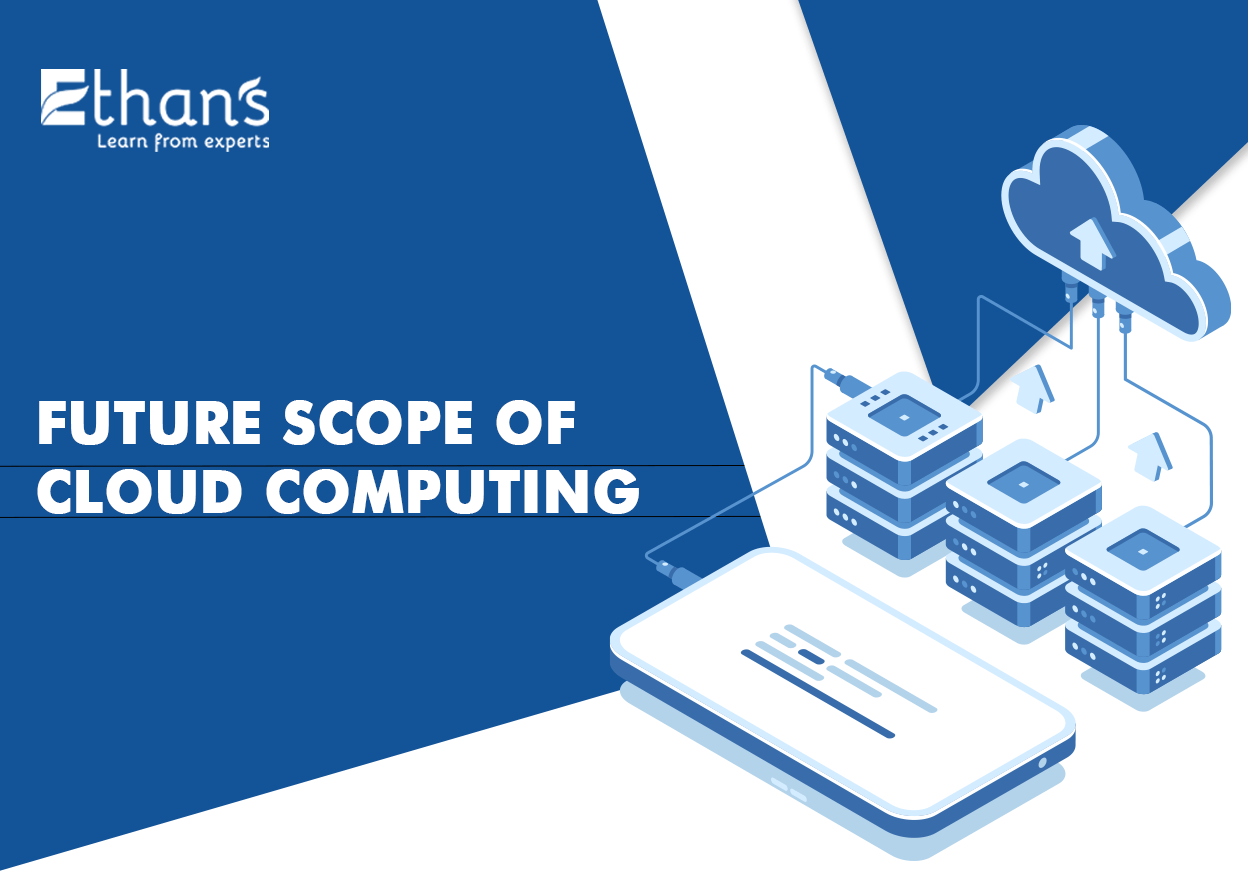
Future scope of Cloud Computing 2024

scope of Cloud Computing

In the ever-evolving landscape of technology, few innovations have had as profound an impact as cloud computing. As businesses worldwide embrace digital transformation and seek to optimize their operations, the demand for cloud services continues to skyrocket. In this SEO-friendly guide, we’ll explore the future scope of cloud computing, uncovering the trends, opportunities, and challenges that lie ahead. Understanding the Evolution Cloud computing has come a long way since its inception, evolving from a novel concept to a cornerstone of modern IT infrastructure. Today, cloud services encompass a wide range of offerings, including infrastructure as a service (IaaS), platform as a service (PaaS), and software as a service (SaaS). This evolution has democratized access to computing resources, enabling organizations of all sizes to leverage scalable, cost-effective solutions. Trends Shaping the Future Several key trends are shaping the future of cloud computing, each presenting unique opportunities for businesses and IT professionals alike: Hybrid and Multi-Cloud Adoption: As organizations seek to balance performance, security, and cost-effectiveness, hybrid and multi-cloud architectures are becoming increasingly prevalent. This trend reflects the growing realization that a one-size-fits-all approach to cloud adoption may not be optimal, prompting businesses to leverage multiple cloud providers and deployment models. Edge Computing: With the proliferation of Internet of Things (IoT) devices and the need for real-time data processing, edge computing is gaining traction as a complement to centralized cloud infrastructure. By bringing computation closer to the data source, edge computing reduces latency, enhances privacy, and enables new use cases across industries such as manufacturing, healthcare, and transportation. AI and Machine Learning Integration: Cloud providers are increasingly integrating artificial intelligence (AI) and machine learning (ML) capabilities into their offerings, empowering businesses to extract insights from vast datasets and automate decision-making processes. Whether it’s predictive analytics, natural language processing, or image recognition, AI-powered cloud services are poised to drive innovation across sectors. Serverless Computing: Serverless computing, also known as Function as a Service (FaaS), is revolutionizing the way applications are developed, deployed, and scaled in the cloud. By abstracting away infrastructure management and billing based on actual usage, serverless platforms enable developers to focus on writing code and delivering value without worrying about underlying infrastructure concerns. Opportunities on the Horizon The future scope of cloud computing presents a myriad of opportunities for businesses and IT professionals to thrive: Scalability and Flexibility: Cloud computing enables businesses to scale their infrastructure up or down on-demand, allowing them to adapt to changing market conditions and customer demands with ease. Cost Optimization: By leveraging pay-as-you-go pricing models and avoiding upfront infrastructure investments, organizations can reduce capital expenditures and optimize operational costs in the cloud. Innovation and Agility: Cloud computing fosters a culture of innovation by providing access to cutting-edge technologies and services, enabling businesses to experiment, iterate, and bring new products and services to market faster. Global Reach: With cloud providers operating data centers in multiple regions around the world, businesses can reach customers and users globally while ensuring compliance with local regulations and data sovereignty requirements. Navigating the Challenges Despite its immense potential, cloud computing also presents certain challenges that must be addressed: Security Concerns: As data moves to the cloud, ensuring robust security measures to protect sensitive information from cyber threats becomes paramount. Cloud providers and businesses must collaborate to implement best practices for encryption, access control, and threat detection. Data Privacy and Compliance: With the rise of data protection regulations such as GDPR and CCPA, businesses must navigate complex compliance requirements when storing and processing data in the cloud. Implementing privacy-enhancing technologies and adopting a proactive approach to compliance are essential. Vendor Lock-In: While cloud computing offers unparalleled flexibility, businesses risk vendor lock-in if they become too dependent on a single provider’s proprietary services and APIs. Adopting open standards and architectures can mitigate this risk and preserve flexibility. Conclusion In conclusion, the future scope of cloud computing is vast and promising, driven by technological advancements, evolving business needs, and a growing demand for scalable, cost-effective solutions. By embracing key trends such as hybrid and multi-cloud adoption, edge computing, AI integration, and serverless computing, businesses can unlock new opportunities for innovation, growth, and competitive advantage in the digital age. With careful planning, strategic partnerships, and a commitment to continuous learning, organizations and IT professionals can harness the full potential of cloud computing to shape a brighter future for themselves and their customers.

Software Testing Scope In Future

Software Testing scope

Software testing, once perceived as a mere quality assurance phase in the software development lifecycle, has evolved into a strategic imperative for organizations seeking to deliver reliable, high-quality software products in an increasingly competitive and complex digital landscape. As we look to the future, the scope of software testing is poised to undergo profound transformations, driven by emerging technologies, evolving methodologies, and shifting market dynamics. Here, we delve into the expanding scope of software testing and explore the opportunities and challenges that lie ahead. Shift-Left and Shift-Right Testing In response to the growing demand for faster time-to-market and continuous delivery, software testing is shifting left, with testing activities initiated earlier in the development process. Shift-left testing emphasizes collaboration, automation, and continuous feedback, enabling teams to detect and address defects earlier, reduce rework, and accelerate release cycles. Conversely, shift-right testing focuses on monitoring and testing in production environments, leveraging real-world data and user feedback to improve software quality and performance continuously. Test Automation and Artificial Intelligence The advent of artificial intelligence (AI) and machine learning (ML) is revolutionizing test automation, enabling intelligent test case generation, autonomous test execution, and predictive analytics. AI-driven testing tools can analyze vast amounts of data, identify patterns, and predict potential issues, enhancing test coverage, efficiency, and accuracy. As organizations embrace AI-driven testing solutions, testers will need to acquire new skills in data analysis, algorithm design, and model training to harness the full potential of these technologies. Shift to DevOps and Continuous Testing The widespread adoption of DevOps practices and continuous integration/continuous delivery (CI/CD) pipelines is driving a paradigm shift in software testing. Continuous testing, an integral part of the CI/CD process, involves automated testing at every stage of the software delivery pipeline, from code commit to production deployment. Testers are required to collaborate closely with developers, operations teams, and other stakeholders to ensure seamless integration, rapid feedback, and continuous improvement throughout the software development lifecycle. Performance Engineering and Scalability Testing With the proliferation of cloud computing, microservices architecture, and distributed systems, ensuring the performance, scalability, and reliability of software applications has become paramount. Performance engineering encompasses proactive performance testing, tuning, and optimization activities aimed at delivering superior user experiences under various load conditions. Testers must possess expertise in performance testing tools, monitoring solutions, and cloud platforms to address the unique challenges posed by modern, distributed architectures. Security Testing and Ethical Hacking In an era of escalating cyber threats and data breaches, security testing has emerged as a critical component of software testing. Security testing involves identifying vulnerabilities, assessing risks, and implementing countermeasures to protect software applications from potential exploits and attacks. Testers with expertise in ethical hacking, penetration testing, and security assessment methodologies play a vital role in safeguarding digital assets, ensuring compliance with regulatory requirements, and maintaining customer trust. Mobile and IoT Testing The proliferation of mobile devices and Internet of Things (IoT) devices has expanded the scope of software testing to include mobile app testing and IoT device testing. Mobile testing involves validating the functionality, usability, and performance of mobile applications across multiple devices, platforms, and network conditions. IoT testing focuses on verifying the interoperability, security, and reliability of IoT devices and ecosystems, spanning smart home devices, wearables, industrial sensors, and connected vehicles. Test Data Management and Privacy Compliance As data privacy regulations become increasingly stringent, test data management and privacy compliance have become key considerations in software testing. Testers must ensure that sensitive data, such as personally identifiable information (PII) and protected health information (PHI), is handled securely and in compliance with regulatory requirements, such as GDPR, CCPA, and HIPAA. Test data masking, anonymization, and synthetic data generation techniques are employed to mitigate privacy risks and protect sensitive information during testing. Agile and Context-Driven Testing Agile methodologies, with their emphasis on flexibility, collaboration, and customer feedback, have transformed the way software is developed and tested. Agile testing practices prioritize iterative development, adaptive planning, and continuous improvement, enabling teams to respond quickly to changing requirements and deliver value to customers incrementally. Context-driven testing emphasizes tailoring testing approaches and techniques to the specific context of each project, taking into account factors such as domain complexity, team dynamics, and stakeholder expectations. Test Environment Management and Containerization Effective test environment management is essential for ensuring reproducibility, consistency, and reliability in software testing. Containerization technologies, such as Docker and Kubernetes, offer lightweight, portable, and scalable solutions for provisioning and managing test environments across development, testing, and production stages. Testers must familiarize themselves with containerization tools and techniques to orchestrate complex test environments efficiently and facilitate seamless collaboration between development and testing teams. Exploratory and Usability Testing Exploratory testing, characterized by simultaneous learning, test design, and test execution, complements scripted testing approaches by encouraging testers to explore software applications freely and creatively. Usability testing focuses on evaluating the user interface, user experience, and accessibility of software products, ensuring that they meet the needs and expectations of end-users. Testers with strong analytical skills, domain knowledge, and empathy for end-users are well-positioned to conduct effective exploratory and usability testing, uncovering hidden defects and usability issues that traditional testing methods may overlook. Conclusion In conclusion, the scope of software testing is expanding rapidly, driven by technological advancements, evolving methodologies, and changing business requirements. Testers must adapt to this dynamic landscape by acquiring new skills, embracing emerging technologies, and adopting innovative testing approaches. By staying abreast of industry trends, collaborating closely with development and operations teams, and prioritizing continuous learning and improvement, testers can thrive in the future of software testing, delivering value and driving quality in an increasingly digital world.

Machine Learning Interview Questions and Answers – Ultimate Guide 2024

Machine Learning Interview Questions and Answers

Greetings, aspiring machine learning enthusiasts! In the dynamic realm of artificial intelligence, machine learning plays a pivotal role, and excelling in interviews is key to unlocking rewarding career opportunities. At Ethan’s Tech, we’ve compiled a comprehensive guide to help you navigate through the intricacies of ML interviews. Whether you’re a seasoned professional or a fresh graduate, these questions and answers will serve as a valuable resource in your journey towards mastery. So, let’s dive into the world of Machine Learning Interview Questions and Answers. What is the difference between supervised and unsupervised learning? Answer: Supervised learning involves training a model on labeled data, while unsupervised learning deals with unlabeled data to discover patterns. Explain the Bias-Variance Tradeoff in machine learning. Answer: The Bias-Variance Tradeoff is a balance between underfitting (high bias) and overfitting (high variance) to create a model with optimal predictive power. How does regularization prevent overfitting in a model? Answer: Regularization introduces a penalty term in the model’s loss function to discourage complexity, preventing overfitting. What is feature engineering, and why is it important in machine learning? Answer: Feature engineering involves modifying or creating features to enhance a model’s performance by helping it capture meaningful patterns in the data. Describe the process of cross-validation. Answer: Cross-validation involves splitting the dataset into subsets, training on some and validating on others to assess a model’s generalization performance. What is the ROC curve, and how does it relate to precision and recall? Answer: The ROC curve visualizes the tradeoff between true positive rate (recall) and false positive rate, offering insights into a model’s performance across different discrimination thresholds. Explain precision and recall. Answer: Precision is the ratio of correctly predicted positives to all predicted positives, while recall is the ratio of correctly predicted positives to all actual positives. What are ensemble methods in machine learning, and how do they work? Answer: Ensemble methods combine multiple models to improve overall performance by reducing overfitting and increasing model robustness. Discuss the differences between bagging and boosting. Answer: Bagging trains multiple models independently and averages their predictions, while boosting sequentially trains models, giving more weight to misclassified instances. What is the purpose of dropout in neural networks? Answer: Dropout is a regularization technique in neural networks that randomly ignores neurons during training, preventing overfitting and enhancing generalization. Explain the curse of dimensionality. Answer: The curse of dimensionality refers to challenges in dealing with high-dimensional data, leading to increased sparsity and computational complexity. What is the K-Nearest Neighbors (KNN) algorithm? Answer: KNN is a supervised learning algorithm that classifies data points based on the majority class of their K nearest neighbors in the feature space. What is the difference between precision and accuracy? Answer: Precision is the ratio of true positives to all predicted positives, while accuracy is the ratio of correct predictions to the total number of predictions. How does the gradient descent algorithm work in machine learning? Answer: Gradient descent minimizes the cost function by iteratively adjusting model parameters in the direction of the steepest descent of the gradient. What is a confusion matrix? Answer: A confusion matrix is a table that summarizes the performance of a classification model, showing the counts of true positives, true negatives, false positives, and false negatives. What is the AUC-ROC curve? Answer: The AUC-ROC curve measures the area under the Receiver Operating Characteristic (ROC) curve, providing a single value to assess a model’s overall performance. How does Principal Component Analysis (PCA) work? Answer: PCA is a dimensionality reduction technique that transforms high-dimensional data into a lower-dimensional space while retaining the most important information. What is the difference between bag-of-words and TF-IDF in natural language processing? Answer: Bag-of-words represents text as a set of words, ignoring grammar and word order, while TF-IDF considers the importance of words based on their frequency in the document and the entire corpus. How do you handle imbalanced datasets in machine learning? Answer: Techniques for handling imbalanced datasets include oversampling the minority class, undersampling the majority class, or using synthetic data generation methods. Explain the concept of hyperparameter tuning. Answer: Hyperparameter tuning involves optimizing the settings (hyperparameters) of a machine learning model to achieve the best performance, typically done through methods like grid search or random search. Explain the concept of transfer learning in deep learning. Answer: Transfer learning involves leveraging a pre-trained neural network’s knowledge on a specific task to enhance the performance of a model on a related task, saving computation time and resources. What is the vanishing gradient problem, and how does it affect deep learning models? Answer: The vanishing gradient problem occurs when gradients become extremely small during backpropagation, hindering the training of deep neural networks. This can lead to slow convergence or stagnation in learning. Discuss the differences between L1 and L2 regularization in machine learning. Answer: L1 regularization adds the absolute values of the coefficients to the loss function, encouraging sparsity, while L2 regularization adds the squared values, preventing large weight values and promoting a more balanced model. What are autoencoders, and how are they used in unsupervised learning? Answer: Autoencoders are neural networks designed to reconstruct input data, learning efficient representations. In unsupervised learning, they can be used for dimensionality reduction and anomaly detection. Explain the concept of batch normalization and its role in deep learning. Answer: Batch normalization normalizes input values in a mini-batch, reducing internal covariate shift and accelerating training. It helps stabilize and expedite the convergence of deep neural networks. How does the Long Short-Term Memory (LSTM) network address the vanishing gradient problem in recurrent neural networks? Answer: LSTMs use a gating mechanism to selectively remember and forget information over long sequences, mitigating the vanishing gradient problem in recurrent neural networks and improving their ability to capture long-term dependencies. What is the difference between precision and F1 score? Answer: Precision is the ratio of true positives to all predicted positives, while the F1 score is the harmonic mean of precision and recall, providing a balanced metric that considers both false positives and … Read more

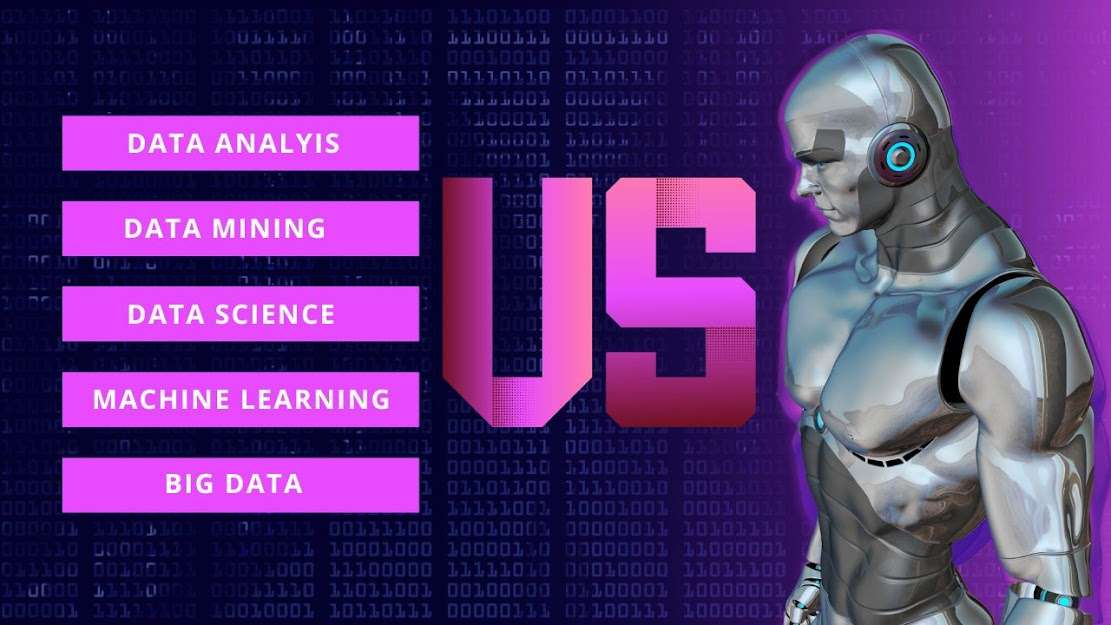
Data Analysis Vs. Data Mining Vs. Data Science Vs. Machine Learning Vs. Big Data

Data Analysis, Data Mining, Data Science, Machine Learning, Big Data

Introduction Data science is an interdisciplinary field that involves using statistical, mathematical, and computational techniques to extract insights and knowledge from data. It is a broad field that encompasses many subfields, including data analytics, data analysis, data mining, machine learning, and big data. What is Data Analytics? Data analytics involves examining datasets to extract insights and knowledge from them. It is often used to inform business decisions or identify patterns in data. Data analytics involves both descriptive and diagnostic analysis, which means that it can be used to describe what has happened in the past and diagnose the reasons why it happened. What is Data Analysis? Data analysis is a more general term that refers to the process of examining data to extract insights and knowledge from it. It can involve various techniques, including statistical analysis, machine learning, and data visualization. Data analysis is often used in scientific research to test hypotheses and draw conclusions from data. What is Data Mining? Data mining is a specific technique used to extract insights and knowledge from large datasets. It involves using statistical and machine learning algorithms to identify patterns in data that can be used to make predictions or inform business decisions. Data mining is often used in fields like finance, healthcare, and marketing to identify trends and patterns in data. What is Data Science? Data science is a field that encompasses many different techniques and approaches to working with data. It involves using statistical, mathematical, and computational techniques to extract insights and knowledge from data. Data science can involve various subfields, including data analytics, data analysis, data mining, and machine learning. What is Machine Learning? Machine learning is a specific subfield of data science that involves building models that can learn from data and make predictions or decisions based on that data. It involves training algorithms on large datasets and using them to make predictions or classifications on new data. Machine learning is often used in fields like image and speech recognition, natural language processing, and recommendation systems. What is Big Data? Big data refers to datasets that are too large and complex to be processed using traditional data processing techniques. Big data involves the use of advanced computing technologies, such as distributed computing and cloud computing, to process and analyze data. Big data is often used in fields like finance, healthcare, and marketing to identify trends and patterns in data. Difference Between Data Analytics, Data Analysis, Data Mining, Data Science, Machine Learning, & Big Data Although these terms are often used interchangeably, they have distinct differences. Here are some of the key differences between them: Data analytics is the process of examining datasets to extract insights and knowledge from them, while data analysis is a more general term that refers to the process of examining data to extract insights and knowledge from it. Data mining is a specific technique used to extract insights and knowledge from large datasets using statistical and machine learning algorithms. Machine learning is a specific subfield of data science that involves building models that can learn from data and make predictions or decisions based on that data. Big data refers to datasets that are too large and complex to be processed using traditional data processing techniques and often involves the use of advanced computing technologies like distributed computing and cloud computing. Conclusion While data analytics, data analysis, data mining, data science, machine learning, and big data are all related to the management and processing of data, they are different concepts with distinct goals and objectives. Understanding the differences between these terms is critical to effectively leveraging data and deriving valuable insights. To summarize, data analytics focuses on extracting insights from data sets, while data analysis involves examining and interpreting data to draw conclusions. Data mining is the process of extracting patterns and insights from data sets, while data science involves the use of scientific methods to extract insights from data. Machine learning is a subset of data science that focuses on building algorithms that can learn from data and make predictions, while big data refers to large, complex data sets that require specialized tools and techniques for processing. By understanding the differences between these concepts, individuals and organizations can make better decisions about how to leverage data and gain insights into their business and customers. As the importance of data continues to grow, a solid understanding of these concepts will be increasingly critical to success in the digital age.

Role of Machine Learning Engineer? What Do They Do?

Role-of-Machine-Learning-Engineer-and-What-Do-They-Do

Opting Machine Learning as a career is trending nowadays. The growth in the Industry is remarkable. If you wish to get in-depth understanding you can refer to Machine Learning classes in Pune. One can Go either for online and offline options. The job of a Machine Learning Engineer is essentially a marriage between two crucial positions in the field: software engineer and data scientist.  A Software Engineer’s primary concentration is on programming, as opposed to a Data Scientist’s primary focus on experimenting with Big Data (writing code). They are fundamentally different jobs. A Data Scientist’s job is more analytical; these analytical professionals gather, analyse, and analyse huge datasets to uncover insights using a combination of mathematical, statistical, analytical, and ML methods.  Software engineers, on the other hand, are skilled coders and programmers who create software systems and scalable programmes for businesses. They find the entire idea of ML to be abstract. Most data scientist models are incomprehensible to software engineers because they are complex, lack obvious design patterns, and lack cleanness (contrary to everything software engineers are taught!).  Because they can combine the best of both environments, machine learning engineers are exactly what businesses thought they needed. Organizations sought a someone who could simplify and improve the usability of the Data Scientists’ code. To assist businesses fully benefit from AI/ML technologies while adhering to accepted programming conventions, machine learning engineers mix the laws and regulations of the data science world with those of programming. For more information you can refer to machine learning course in pune.  What does a Machine Learning Engineer do? A Data Scientist and a Machine Learning Engineer both work with enormous amounts of data, which is a common aspect of both jobs. Consequently, good data management abilities are required of both Machine Learning Engineers and Data Scientists. But that is the only similarity between these two roles.  Data scientists are primarily focused on producing insightful data that may be used to make data-driven decisions that will increase corporate growth. Machine learning engineers, on the other hand, concentrate on creating self-running software for the automation of prediction models. In such models, each time the programme executes a function, it makes use of the outcomes of that operation to execute subsequent operations more precisely. The software’s “learning” process is made up of this. engines that recommend things The most effective examples of this clever software are Netflix and Amazon.  Machine learning engineers and data scientists frequently collaborate closely. Machine Learning Engineers make sure the models used by Data Scientists can absorb massive volumes of real-time data for producing more accurate results, while Data Scientists extract relevant insights from enormous datasets and disseminate the knowledge to business stakeholders.  A machine learning engineer’s duties To research, modify, and apply data science prototypes. To create and construct methods and plans for machine learning. ● Employing test findings to do statistical analysis and improve models. ● To search internet for training datasets that are readily available. ● ML systems and models should be trained and retrained as appropriate. ● To improve and broaden current ML frameworks and packages ● To create machine learning applications in accordance with client or customer needs. To investigate, test, and put into practise appropriate ML tools and algorithms. ● To evaluate the application cases and problem-solving potential of ML algorithms and rank them according to success likelihood. To better comprehend data through exploration and visualisation, as well as to spot discrepancies in data distribution that might affect a model’s effectiveness when used in practical situations. What You Need to Know to Become a Machine Learning Engineer? Advanced degree in mathematics, statistics, computer science, or a similar field. ● Advanced knowledge in math and statistics (linear algebra, calculus, Bayesian statistics, mean, median, variance, etc.) Talents in data modelling and architecture that are strong Coding expertise in languages like Python, R, Java, C++, etc. Having familiarity with big data technologies like Hadoop, Spark, Pig, Hive, and Flume, among others Working knowledge of machine learning frameworks like TensorFlow and Keras. Working knowledge of a variety of machine learning tools and libraries, including Scikit-Learn, Theano, Tensorflow, Matplotlib, Caffe, etc. Strong verbal and written communication Outstanding interpersonal and teamwork abilities. Why is there a growing need for machine learning engineers? The requirement for Machine Learning Engineers has even outpaced that of Data Scientists in the previous ten years. Machine Learning Engineer was ranked first in the 2017 LinkedIn US Job Report, with a growth of 9.8 times over the previous five years (2012-17).  The market for machine learning is expected to reach more than $39,986.7 million by 2025, expanding at a CAGR of 49.7% from 2017 to 2025. These figures demonstrate the ML market’s extraordinary rate of growth. Companies will need to appoint excellent ML Engineers and other Data Science specialists in order to stay rooted firmly in the market in light of the escalating competition.  Machine Learning is quickly gaining popularity in the modern economy, and as a result, its applications and use-cases are diversifying just like Big Data.  Businesses and organisations are utilising ML for a variety of purposes, including spam detection and fraud detection, image and speech recognition systems, smart personal assistants (Alexa, Siri), autonomous vehicles, smart homes, and the Internet of Things (IoT). ML is also used to personalise social media services, online shopping/viewing services, search engine results, and much more.  Conclusion Machine Learning Engineers will continue to be a crucial component of all such ML operations, and there will soon be more such amazing achievements led by ML. You can also enroll in machine learning training in pune for better understanding.