Salesforce Interview Questions and Answers

Salesforce Interview Questions and Answers
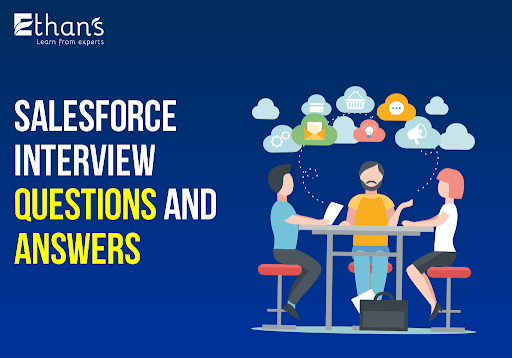
While awaiting the first break as a Salesforce professional, it is normal to anticipate the questions you would be asked during the interview. And that’s obvious too! Salesforce interviews are challenging given the criticality of responsibility involved in the job. Companies want to ensure they onboard the best talent that can help them make the most from the CRM. If you’ve completed or are about to complete your Salesforce classes in Pune, we empathize with your current situation. Accordingly, we’ve compiled some commonly asked Salesforce interview Q&As. 10 Commonly Asked Salesforce Interview Questions and Their Answers The questions may differ depending on the position you’ve applied for, the responsibilities your prospective employer wants you to handle, and various other specific factors. Nevertheless, here’s a list of the questions you can expect during your Salesforce interview and their responses on which you can build your answers. What is Salesforce? Yes. This is the most basic question. However, the basics matter! The interviewer wants to check how solid your fundamental understanding of Salesforce is. Instead of a long explanation, you can cut it short. Salesforce is a widely used CRM product that helps businesses manage relationships and interactions with clients and prospects. It enables companies to track customer interactions, streamline sales processes, and manage multiple business tasks from a central point. What is a custom object and what does it allow the user to do? It refers to database tables that store data related to a particular company on the Salesforce website. Once you define a custom object, you (the subscriber) can perform multiple tasks, including the following. Create custom fields Track events and tasks Build page layouts Build page layouts Analyze custom object data Build dashboards and reports Share custom tabs, custom apps, custom objects, and related components. So, its a Custom Objects For Salesforce. What factors can result in data loss in Salesforce? Some common factors include changing data and date-time, changing from the multi-select picklist, checkbox, auto-number to other types, changing to auto-number except for text, migrating to percent, currency, and number from other data types, changing from text-area to email, URL, text, and phone, and changing from any type (except picklist) to multi-select picklist. What is a static resource in Salesforce? A static resource allows subscribers to upload zip files, jar files, images, CSS files, and JavaScript that you can refer to on a Visualforce page. The maximum static resource in Salesforce is 250 MB. What is an Audit Trail in Salesforce? Audit Trail is a function that helps gain information or track all recent setup changes done by the administration in the company. The system preserves data for up to six months in the Audit Trail. What is a profile in Salesforce? It is a collection of permissions and settings that define everything you can do as a user in Salesforce, providing authority to access certain records. You can find various types of profiles that can help access leads, contacts, campaigns, etc. What is Apex in Salesforce? Apex is an object-oriented programming language that enables flow execution and transaction control statements in Salesforce in combination API calls. It uses a syntax similar to Java. Additionally, Apex allows developers to add business logic to various system events like button clicks, Visualforce pages, and record updates. One can initiate the code by requests from web services and from triggers on objects. What are governor limits? These control how much data a shared database can store. Whenever the Apex code goes beyond the limit, it issues a runtime exception. Some examples of governor limits are, Number of records an SOQL query can retrieve is 50,000. The number of sendEmail methods allowed is 10. Hence, its a Governor Limit of salesforce. How can you integrate into external REST web services? You can do it with HTTP callouts to invoke the external API. The XMLStreamWriter and JSON classes can be used to create payloads to match the external API’s specifics. What is a roll-up summary field? These are special fields on the master side of the master-detail relationship. They have their values calculated depending on an aggregate of the detail side of the relationship. It enables you to skin using Apex when you want to aggregate record values, part of a master-detail relationship. Of course, there’s much more to Salesforce interview questions and answers. However, the type of questions will depend on the company’s requirements and the type of expertise they expect. The best Salesforce training institute in Pune ensures comprehensive preparation by enlisting questions and answers to help its students prepare better for the interview. At Ethan’s Tech, we nurture a team of Salesforce specialist trainers who conduct extensive mock interviews for effective preparation that increases the chances of cracking the interview. This preparation is part of our Salesforce classes in Pune. Ethan’s Tech can help you launch your career in Salesforce and leverage the enormous opportunities in this field. Call us at +91 95133 92223 to learn more.


Salesforce Developer Salary in India

Salesforce Developer Salary in India

A global leader in the CRM space, Salesforce has a customer base of nearly 150,000 companies, which is expanding by the day. Hence, every company using Salesforce or planning to use it looks for Salesforce developers to create apps and solutions with its products and technologies. Such a massive demand makes Salesforce development a promising career option. But what about the Salesforce developer’s salary? Does it offer salaries as lucrative as its career opportunities? As an aspirant pursuing Salesforce from the best Salesforce training institute in Pune, you must be wondering about it. So, here are some insights into this regard. What do Salesforce Developers Do? Salesforce developers fundamentally design, build, and customize applications within the platform to meet a company’s needs. Since companies use Salesforce for processes as critical as customer data management, streamlining business processes, and enhancing customer interactions, Salesforce developers play a crucial role in helping companies design and develop applications supporting their customer management endeavors. Some of their key responsibilities include the following. Creating custom features and applications with Salesforce’s proprietary languages, including Apex and Visualforce. Designing, developing, and managing integrations within the platform. Optimize the platform’s functionality, enhance user experience, and streamline various business processes associated with it. Working closely with business analysts and end-users to discuss their requirements for new applications and enhancements. Working with Salesforce APIs for seamless data exchange between Salesforce and various other external platforms. Ensuring application quality and performance. Testing, debugging and resolving technical issues as they surface. Qualifications Required to Become a Salesforce Developer in India Salesforce development requires specific qualifications, including, Bachelor’s degree in computer science, IT, or a related field Proficiency in Visualforce, Apex, Lightning Components, and various other Salesforce development tools Understanding of web development technologies like CSS, JavaScript, and HTML Salesforce certifications, for example, a Salesforce course in Pune with Platform Developer I and II credentials Excellence communication, analytical, and problem-solving skills Ability to work collaboratively and address imminent requirements effectively How Much is Salesforce Developer Salary in India? Salesforce developers handle various crucial responsibilities, making them vital assets for an organization. Accordingly, these professionals draw a promising salary. However, it must be noted that Salesforce developer salary in India varies depending on different factors like the employer’s paying capacity, workplace location, developer’s experience, expertise, understanding of Salesforce, and more. The average salary in India is 7 lakhs per annum. Nevertheless, the Salesforce developer salary range in India (based on experience) is as follows. Experience Approximate Average Salary Range in Indian Rupees Fresher (0-2 years of experience) 2-5 lakhs per annum 1-5 years of experience 15-16 lakhs per annum Senior Developer 22-25 lakhs and more per annum The city wise Salesforce developer salary in India is as follows. Mumbai: Rs. 8-9 lakhs per annum Hyderabad: Rs. 8-9 lakhs per annum Noida: Rs. 9-10 lakhs per annum Ahmedabad: Rs. 8-9 lakhs per annum Bangalore: 7-8 lakhs per annum Nagpur: 4-5 lakhs per annum Note: Salaries are approximate and should be used only for indicative purposes. The salaries vary greatly depending on the different factors mentioned above. Unlock Salesforce Career Opportunities and Handsome Salaries with the Best Salesforce Training Institute in Pune! Salesforce developer salary in India is highly subjective and depends on different factors. Besides, amidst competition, it is pretty challenging to emerge as a standout candidate, worthy of high pay. However, although challenging, it isn’t as impossible, particularly when you undergo Salesforce training in Pune with the best Salesforce training institute in Pune like Ethan’s Tech.  At Ethan’s Tech, we conduct comprehensive Salesforce classes in Pune that cover the latest curriculum, practical exposure, and various other professional aspects, making you a capable Salesforce developer. Our Salesforce course is intelligently designed to help you unlock an endless horizon of remunerative career opportunities worldwide. Call us at +91 95133 92223 to learn more.
Boosting Efficiency and Productivity with Salesforce

salesforce course in pune

Introduction In today’s fast-paced business landscape, efficiency and productivity are essential for success. Organizations across various industries are constantly seeking ways to streamline their processes and optimize their workflows. One of the most powerful tools in this endeavor is Salesforce, a leading customer relationship management (CRM) platform that goes beyond managing customer interactions to revolutionize how businesses operate. In this article, we’ll explore how Salesforce can significantly boost efficiency and productivity across different aspects of an organization.  Streamlined Data Management Efficiency begins with effective data management. Salesforce provides a centralized platform to store and organize customer information, interactions, and transactions. This eliminates the need for multiple data silos, reducing the risk of data duplication and errors. With a single source of truth, teams can access accurate and up-to-date information, leading to better decision-making and improved collaboration. Salesforce’s intuitive user interface and customizable data fields allow organizations to tailor the platform to their specific needs. Custom objects, fields, and relationships can be created to match unique business processes, ensuring that data capture aligns with the organization’s objectives. Automation of Repetitive Tasks Repetitive manual tasks can hinder productivity and increase the likelihood of errors. Salesforce’s automation capabilities address this challenge by automating routine processes. With tools like Process Builder and Workflow Rules, organizations can define triggers and conditions to automatically perform actions such as sending emails, updating records, or assigning tasks. This not only saves time but also reduces the risk of human errors. Moreover, the introduction of Einstein Automation in Salesforce brings artificial intelligence (AI) into the mix, enabling predictive and proactive automation. By analyzing historical data, Einstein can suggest optimal workflows and actions, helping teams make informed decisions and respond to customer needs more efficiently. Enhanced Communication and Collaboration Effective communication is the cornerstone of productivity. Salesforce’s feature fosters real-time collaboration among team members. Users can create groups, share documents, and engage in discussions within the platform, reducing the need for external communication tools.  Personalized Customer Engagement Salesforce’s ability to provide a 360-degree view of each customer allows organizations to deliver personalized experiences. The platform’s Marketing Cloud and Service Cloud enable targeted marketing campaigns and efficient customer support, respectively. Using Marketing Cloud, businesses can segment their audience based on demographics, behaviors, and preferences, delivering tailored content and offers that resonate with individual recipients. Similarly, Service Cloud empowers customer service agents with comprehensive customer profiles, enabling them to resolve issues more effectively and enhance customer satisfaction.  Data-Driven Insights Efficiency is further enhanced by data-driven insights that empower organizations to make informed decisions. Salesforce’s robust reporting and analytics tools enable users to create custom reports, dashboards, and charts. These visualizations provide a clear overview of key performance indicators (KPIs), helping managers and executives identify trends, spot opportunities, and address challenges. Conclusion In a competitive business landscape, maximizing efficiency and productivity is a strategic imperative. Salesforce offers a comprehensive suite of tools that transform the way organizations manage data, automate processes, collaborate, engage with customers, and derive insights. By harnessing the power of Salesforce, businesses can optimize their operations, streamline workflows, and ultimately achieve higher levels of success. As technology continues to evolve, Salesforce’s commitment to innovation ensures that it remains a driving force behind improved efficiency and productivity across industries.

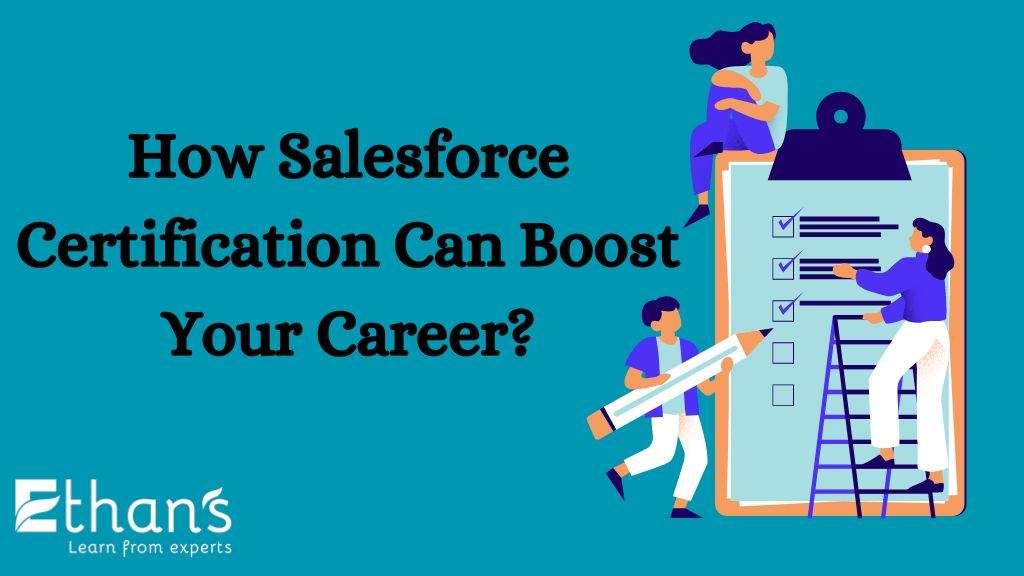
How Salesforce Certification Can Boost Your Career?

salesforce course in pune

In today’s rapidly evolving job market, staying ahead of the competition and acquiring the right skills is crucial for career advancement. One industry that has seen tremendous growth in recent years is customer relationship management (CRM), and Salesforce has emerged as the leading player in this field. As businesses increasingly adopt Salesforce to streamline their processes and enhance customer engagement, the demand for skilled Salesforce professionals has surged.  Elevate Your Career with In-Demand Skills If you are looking to boost your career and open up exciting opportunities, obtaining a Salesforce certification can be a game-changer. In this article, we will explore the benefits of Salesforce certification and how it can propel your career to new heights.  Demonstrates Expertise and Credibility: Salesforce certifications validate your knowledge and skills in specific areas of the Salesforce platform, such as administration, development, marketing, or consultancy. When employers see that you possess a recognized certification, it acts as tangible proof of your expertise and commitment to your profession. Hiring managers are more likely to trust certified professionals because they know that these individuals have undergone rigorous training and have passed a comprehensive exam to prove their proficiency. This enhanced credibility can set you apart from other candidates and increase your chances of landing better job opportunities.  Opens New Career Doors: The versatility of Salesforce makes it applicable to a wide range of industries and job roles. Whether you are interested in sales, marketing, customer service, or IT, Salesforce offers certifications tailored to suit your career aspirations. For instance, a Salesforce Administrator certification is ideal for individuals who want to manage and customize Salesforce applications, while a Salesforce Developer certification is perfect for those keen on designing and implementing customized solutions. With the right certification, you can explore various career paths and transition into different roles within your organization or across different companies. Boosts Earning Potential: Salesforce certifications can significantly impact your earning potential. As businesses recognize the value of Salesforce in driving revenue and customer satisfaction, they are willing to offer competitive salaries to professionals who can effectively implement and manage the platform. According to various industry reports, Salesforce-certified professionals earn higher salaries compared to their non-certified counterparts. Furthermore, as you gain more certifications and expertise, your earning potential will continue to grow, making it a sound long-term investment in your career. Enhances Professional Development: Obtaining a Salesforce certification is not just about adding a badge to your resume. The process of preparing for the exam involves extensive learning and skill-building. Salesforce provides a wealth of resources, including training modules, documentation, and hands-on practice environments. Engaging with these materials and preparing for the certification exams will enhance your understanding of Salesforce and its various functionalities. This acquired knowledge can be applied directly to your current role, making you more efficient and effective at your job.  Keeps You Updated on the Latest Trends: The technology landscape is ever-evolving, and staying up-to-date with the latest trends is crucial to maintaining a successful career. Salesforce regularly updates its platform with new features and functionalities, and its certifications are continually revised to reflect these changes. By pursuing Salesforce certifications, you are ensuring that your skills remain relevant and aligned with the latest industry standards. This adaptability makes you an asset to any organization and keeps you at the forefront of the industry. Time to Break Salesforce certifications can be a powerful catalyst for career growth and professional success. They not only validate your skills but also provide you with the knowledge and confidence to excel in your role. Whether you are starting your career or looking to take it to the next level, investing in Salesforce certification can open doors to exciting opportunities, higher earning potential, and continuous professional development.  Embrace the opportunities that Salesforce certifications offer, and you’ll find yourself well-positioned for a rewarding and thriving career in the dynamic world of CRM. Boost your career with Salesforce training in Pune at Ethans Tech. Gain in-demand skills for better job prospects and growth opportunities

Why You Should Learn Salesforce

salesforce classes in pune

Are you considering a career in the field of customer relationship management (CRM)? Look no further than Salesforce! In this article, we will explore the top 10 reasons why learning Salesforce can benefit you both personally and professionally. Salesforce is a cloud-based CRM platform that helps organizations streamline their sales, marketing, and customer service processes. With its extensive range of features and capabilities, Salesforce has become a leading choice for businesses across various industries. So, let’s dive into the reasons why learning Salesforce can be a game-changer for you. Understanding Salesforce: A Brief Overview Salesforce is a comprehensive CRM platform that enables businesses to manage their customer interactions effectively. It offers a wide range of tools and features to streamline sales processes, improve marketing campaigns, and enhance customer service. Salesforce operates on the cloud, providing accessibility, scalability, and security to organizations of all sizes. Top Reasons Why You Should Learn Salesforce Now, let’s explore the top 9 reasons why learning Salesforce is a smart choice. 1. Growing Demand for Salesforce Professionals The demand for Salesforce professionals is soaring, and this trend shows no signs of slowing down. Companies worldwide are adopting Salesforce as their preferred CRM solution, creating a substantial need for skilled individuals who can implement, customize, and manage the platform. By learning Salesforce, you position yourself as a valuable asset in the job market, opening doors to a plethora of exciting career opportunities. 2. Lucrative Career Opportunities Salesforce offers a wide range of career opportunities across various job roles. Whether you aspire to be a Salesforce administrator, consultant, developer, or architect, there is a role that suits your skills and interests. With the right training and certification, you can pursue high-paying positions in esteemed organizations, making Salesforce a gateway to a financially rewarding career. 3. Versatility and Transferable Skills One of the significant advantages of learning Salesforce is the versatility of the skills you acquire. Salesforce skills are highly transferable, meaning they can be applied to various industries and job functions. The knowledge gained from working with Salesforce can be leveraged to excel in sales, marketing, customer service, and even business analysis. This versatility opens up a world of opportunities for professional growth and career advancement. 4. Enhanced Sales and Marketing Efficiency Salesforce provides a suite of tools designed to boost sales and marketing efficiency. From lead generation and management to email marketing and analytics, Salesforce equips businesses with the resources to drive revenue growth. By mastering Salesforce, you gain the ability to streamline sales processes, target the right audience, track campaign performance, and make data-driven decisions, giving you a competitive edge in the market. 5. Automation and Time-Saving Abilities Time is a valuable resource in any business, and Salesforce helps you save plenty of it. With its automation capabilities, Salesforce allows you to automate repetitive tasks, such as data entry, email notifications, and follow-ups. By automating these processes, you can focus on high-value activities, such as building relationships with customers and closing deals. This time-saving ability not only increases productivity but also improves work-life balance. 6. Seamless Collaboration and Communication Salesforce fosters seamless collaboration and communication within teams. Its collaborative features enable users to share information, assign tasks, and work together towards a common goal. Salesforce Chatter, a social collaboration tool, facilitates real-time communication and encourages knowledge sharing. By learning Salesforce, you become adept at leveraging these collaborative features, enhancing teamwork and productivity. 7. Customization and Scalability Every business has unique needs, and Salesforce recognizes that. It offers a highly customizable platform that can be tailored to meet specific business requirements. Whether it’s creating custom objects, fields, or workflows, Salesforce allows you to build a CRM solution that aligns with your organization’s processes. Furthermore, Salesforce’s scalability ensures that the platform can grow alongside your business, accommodating increasing data volumes and expanding user bases. 8. Access to a Vast Community and Resources As a Salesforce learner, you gain access to a vast community of professionals, developers, and experts. The Salesforce community is known for its helpfulness and knowledge-sharing culture. Whether you have questions, need guidance, or seek inspiration, the Salesforce community is always there to support you. Additionally, Salesforce provides comprehensive documentation, online tutorials, and training materials to assist you in your learning journey. 9. Continuous Learning and Professional Growth Learning Salesforce is a never-ending journey. The platform continually evolves, introducing new features, updates, and enhancements. By embracing Salesforce, you commit to continuous learning and professional growth. With regular updates and releases, Salesforce ensures that its users stay at the forefront of CRM innovation, allowing you to expand your skill set and stay ahead in the competitive job market. Conclusion In conclusion, learning Salesforce offers a multitude of benefits, both personally and professionally. From lucrative career opportunities and transferable skills to enhanced sales efficiency and seamless collaboration, Salesforce empowers individuals and businesses to achieve their goals. By acquiring Salesforce skills, you position yourself as a valuable asset in the job market, with access to a vast community and continuous learning opportunities. So, take the leap and embark on an exciting journey of growth and success with Salesforce.

Elevate Your Marketing Strategy with Salesforce

Salesforce Marketing Cloud

Salesforce Marketing Cloud is a powerful marketing automation platform that enables businesses to create and manage effective marketing campaigns across various channels. With a range of features and capabilities, Salesforce Marketing Cloud empowers marketers to engage with their audience, build lasting relationships, and drive business growth. In this article, we will explore the key aspects of Salesforce Marketing Cloud, its benefits, features, and how it can revolutionize your marketing efforts. Salesforce Marketing Cloud is a cloud-based marketing platform developed by Salesforce, one of the leading providers of customer relationship management (CRM) solutions. It offers a suite of tools and functionalities that help businesses automate and streamline their marketing activities. From email marketing and social media advertising to mobile messaging and customer journey mapping, Salesforce Marketing Cloud covers various aspects of modern marketing. Benefits of Salesforce Marketing Cloud Implementing Salesforce Marketing Cloud can provide several benefits for businesses. Firstly, it offers a unified view of customer data, allowing marketers to gain valuable insights into customer behavior and preferences. This data-driven approach enables personalized and targeted marketing campaigns, resulting in higher engagement and conversions. Secondly, Salesforce Marketing Cloud provides a seamless omnichannel experience. With the ability to connect and engage with customers across multiple channels such as email, social media, SMS, and more, businesses can deliver consistent messaging and experiences throughout the customer journey. Additionally, Salesforce Marketing Cloud offers advanced automation capabilities, allowing marketers to create complex workflows and personalized customer journeys. This automation streamlines marketing operations, saves time, and increases efficiency. Key Features of Salesforce Marketing Cloud Salesforce Marketing Cloud encompasses a wide range of features that empower marketers to execute successful campaigns. Some of the key features include: Segmentation and Targeting Salesforce Marketing Cloud enables marketers to segment their audience based on various attributes such as demographics, behavior, purchase history, and more. This segmentation allows for precise targeting and ensures that the right message reaches the right audience at the right time. Personalization and Customization Personalization is a crucial aspect of modern marketing, and Salesforce Marketing Cloud excels in this area. Marketers can create highly personalized content, tailored to individual customers, based on their preferences and behavior. This level of customization fosters deeper connections and enhances the overall customer experience. Email Marketing Email marketing remains a vital channel for reaching and engaging customers. Salesforce Marketing Cloud offers robust email marketing capabilities, allowing marketers to design visually appealing emails, automate email campaigns, and track email performance with detailed analytics. Social Media Marketing Social media has become an integral part of marketing strategies, and Salesforce Marketing Cloud integrates seamlessly with popular social media platforms. Marketers can create, schedule, and manage social media posts, run targeted ad campaigns, and track social media engagement – all from a single platform. Mobile Marketing With the increasing use of smartphones, mobile marketing is more important than ever. Salesforce Marketing Cloud enables marketers to send personalized SMS messages, push notifications, and in-app messages, ensuring that they reach customers wherever they are. Automation and Journey Builder Salesforce Marketing Cloud’s Automation Studio and Journey Builder allow marketers to automate various marketing tasks and create personalized customer journeys. From welcome campaigns to post-purchase nurturing, marketers can design and implement sophisticated workflows that engage customers at every touchpoint. Analytics and Reporting Measuring the success of marketing campaigns is essential for optimizing performance. Salesforce Marketing Cloud provides robust analytics and reporting capabilities, allowing marketers to track key metrics, gain actionable insights, and make data-driven decisions to improve campaign effectiveness. Creating Effective Marketing Campaigns with Salesforce Marketing Cloud Salesforce Marketing Cloud offers a comprehensive set of tools and features to help marketers create effective marketing campaigns. Let’s explore some of the essential steps involved: Segmentation and Targeting Segmenting your audience based on relevant attributes is crucial for targeted marketing. By dividing your customer base into smaller, more manageable groups, you can tailor your messaging and content to resonate with each segment. Salesforce Marketing Cloud provides intuitive segmentation options, allowing you to define criteria and create dynamic audience segments. Personalization and Customization Personalization is key to capturing your audience’s attention and building lasting relationships. Salesforce Marketing Cloud empowers marketers to personalize content by leveraging customer data and preferences. From personalized subject lines in emails to dynamically generated web content, the platform enables you to deliver tailored experiences that drive engagement and conversions. Email Marketing Email marketing continues to be one of the most effective channels for reaching and nurturing leads. Salesforce Marketing Cloud’s Email Studio provides a user-friendly interface to create visually appealing emails, segment your audience, automate email workflows, and analyze email performance. With drag-and-drop functionality and customizable templates, creating professional and engaging emails is a breeze. Social Media Marketing Social media platforms offer immense opportunities for businesses to connect with their target audience. Salesforce Marketing Cloud integrates with popular social media channels, allowing you to manage, schedule, and analyze your social media posts. With advanced targeting options and powerful ad campaign management, you can optimize your social media marketing efforts and maximize reach and engagement. Mobile Marketing Mobile devices are an integral part of our lives, and mobile marketing should be a part of your marketing strategy. Salesforce Marketing Cloud’s Mobile Studio enables you to engage customers on their smartphones through SMS messaging, push notifications, and in-app messaging. Delivering timely, personalized messages directly to your customers’ devices can significantly impact their engagement and conversions. Automation and Journey Builder Automation is a game-changer for marketers, allowing them to deliver relevant messages at scale while saving time and effort. Salesforce Marketing Cloud’s Automation Studio and Journey Builder provide powerful automation capabilities. You can create personalized customer journeys that trigger different messages based on customer behavior, ensuring a seamless and consistent experience across channels. Analytics and Reporting Measuring the success of your marketing campaigns is crucial for ongoing optimization. Salesforce Marketing Cloud’s Analytics Builder offers a comprehensive suite of reporting tools that enable you to track key metrics, visualize data, and gain actionable insights. From email performance to customer engagement, you can monitor campaign … Read more

Keys Roles and Responsibilities of a Salesforce Administrator

Key Responsibilities of a Salesforce Administrator

Are you interested in the dynamic world of customer relationship management (CRM)? Do you have a passion for technology and a knack for problem-solving? If so, you might want to consider a career as a Salesforce Administrator. In this article, we will explore the key roles and responsibilities of a Salesforce Administrator and understand why they are crucial for businesses utilizing the Salesforce platform. Salesforce has emerged as one of the leading CRM platforms, empowering businesses to effectively manage their customer relationships and drive growth. A Salesforce Administrator plays a pivotal role in maximizing the benefits of this powerful platform. They are responsible for managing various aspects of Salesforce, ensuring its smooth operation, and supporting users’ needs within the organization. What is a Salesforce Administrator? A Salesforce Administrator is an individual who oversees the day-to-day functioning of the Salesforce CRM platform. They act as a liaison between the technical team and end-users, ensuring the platform aligns with the organization’s goals and requirements. Salesforce Administrators possess a deep understanding of the platform’s capabilities and use their expertise to customize, configure, and maintain Salesforce to meet the unique needs of the business. Key Responsibilities of a Salesforce Administrator Managing User Access and Security One of the primary responsibilities of a Salesforce Administrator is managing user access and security. They control user permissions, ensuring that only authorized personnel have access to sensitive data. By implementing robust security measures, such as role hierarchies, profiles, and permission sets, Salesforce Administrators safeguard critical information and maintain data integrity. Customizing and Configuring Salesforce Salesforce offers extensive customization options to tailor the platform according to specific business requirements. Salesforce Administrators leverage this capability to configure custom objects, fields, and workflows. They create and manage page layouts, record types, and validation rules to enhance user experience and streamline processes. Through customization, Salesforce Administrators optimize Salesforce to align with the organization’s unique workflows and data structure. Data Management and Maintenance Effective data management is essential for any CRM system. Salesforce Administrators are responsible for data import, cleansing, and maintenance. They ensure data accuracy, integrity, and consistency by defining data validation rules and implementing data quality controls. Administrators also handle data migration, backup, and recovery processes to safeguard vital information and minimize data loss risks. Creating Reports and Dashboards Salesforce provides robust reporting and analytics capabilities that enable organizations to gain insights into their business performance. Salesforce Administrators create and customize reports and dashboards, empowering users with actionable data. They design visually appealing and interactive dashboards that offer real-time snapshots of key metrics, facilitating data-driven decision-making at all levels of the organization. Training and Support As Salesforce is adopted by various teams within an organization, Salesforce Administrators play a crucial role in training and supporting users. They conduct training sessions, develop user documentation, and provide ongoing support to address user queries and concerns. Administrators ensure that users have the knowledge and resources required to utilize Salesforce effectively, maximizing user adoption and productivity. Collaborating with Stakeholders Salesforce Administrators act as a bridge between different stakeholders, such as sales, marketing, and IT departments. They collaborate with these teams to understand their needs and translate them into Salesforce configurations and enhancements. By effectively communicating and aligning with stakeholders, Salesforce Administrators contribute to the overall success of Salesforce implementation and adoption. Monitoring and Enhancing Performance Monitoring the performance of Salesforce is a critical responsibility of Salesforce Administrators. They proactively identify performance bottlenecks, conduct system audits, and optimize Salesforce to ensure optimal speed and efficiency. Administrators also troubleshoot issues, resolve user complaints, and stay updated with Salesforce best practices to continuously enhance system performance. Staying Up-to-Date with Salesforce Updates Salesforce is a rapidly evolving platform, with regular updates and new features being introduced. Salesforce Administrators stay up-to-date with these changes, evaluating their impact on the organization and implementing necessary updates. They actively participate in Salesforce communities, forums, and events to exchange knowledge and keep abreast of the latest trends, ensuring that the organization maximizes the benefits of new Salesforce functionalities. Skills and Qualifications of a Salesforce Administrator To excel as a Salesforce Administrator, certain skills and qualifications are essential. Strong problem-solving abilities, attention to detail, and excellent communication skills are crucial for understanding user requirements and effectively addressing them. Proficiency in Salesforce configuration, customization, and data management is a must. Additionally, Salesforce Administrators should possess a deep understanding of CRM concepts, business processes, and sales methodologies. Salesforce offers various certifications, such as Salesforce Administrator Certification, which validate the skills and expertise of administrators. Challenges Faced by Salesforce Administrators Being a Salesforce Administrator comes with its fair share of challenges. Handling diverse user requirements, managing data complexity, and keeping pace with platform updates can be demanding. Administrators need to navigate through these challenges while maintaining data security, user satisfaction, and system performance. However, with the right skills, knowledge, and support, these challenges can be overcome, leading to successful Salesforce implementations. Importance of a Salesforce Administrator for Businesses Salesforce Administrators play a crucial role in enabling businesses to leverage the full potential of the Salesforce CRM platform. They ensure that Salesforce aligns with the unique needs of the organization, driving productivity, efficiency, and customer satisfaction. By customizing Salesforce, managing data, creating insightful reports, and supporting users, Salesforce Administrators contribute to improved sales processes, informed decision-making, and overall business growth. Explore the pivotal roles and responsibilities of a Salesforce Administrator, including managing user access, automating workflows, and generating actionable insights. Discover how integrating data science enhances predictive analytics and decision-making within Salesforce, empowering your organization to drive smarter strategies and achieve business goals. Conclusion Salesforce Administrator is a key player in managing and optimizing the Salesforce CRM platform. Their roles and responsibilities encompass various aspects, including user access and security, customization, data management, reporting, training, and collaboration. Through their expertise and skills, Salesforce Administrators ensure the seamless functioning of Salesforce, enabling businesses to drive growth, enhance customer relationships, and make data-driven decisions.